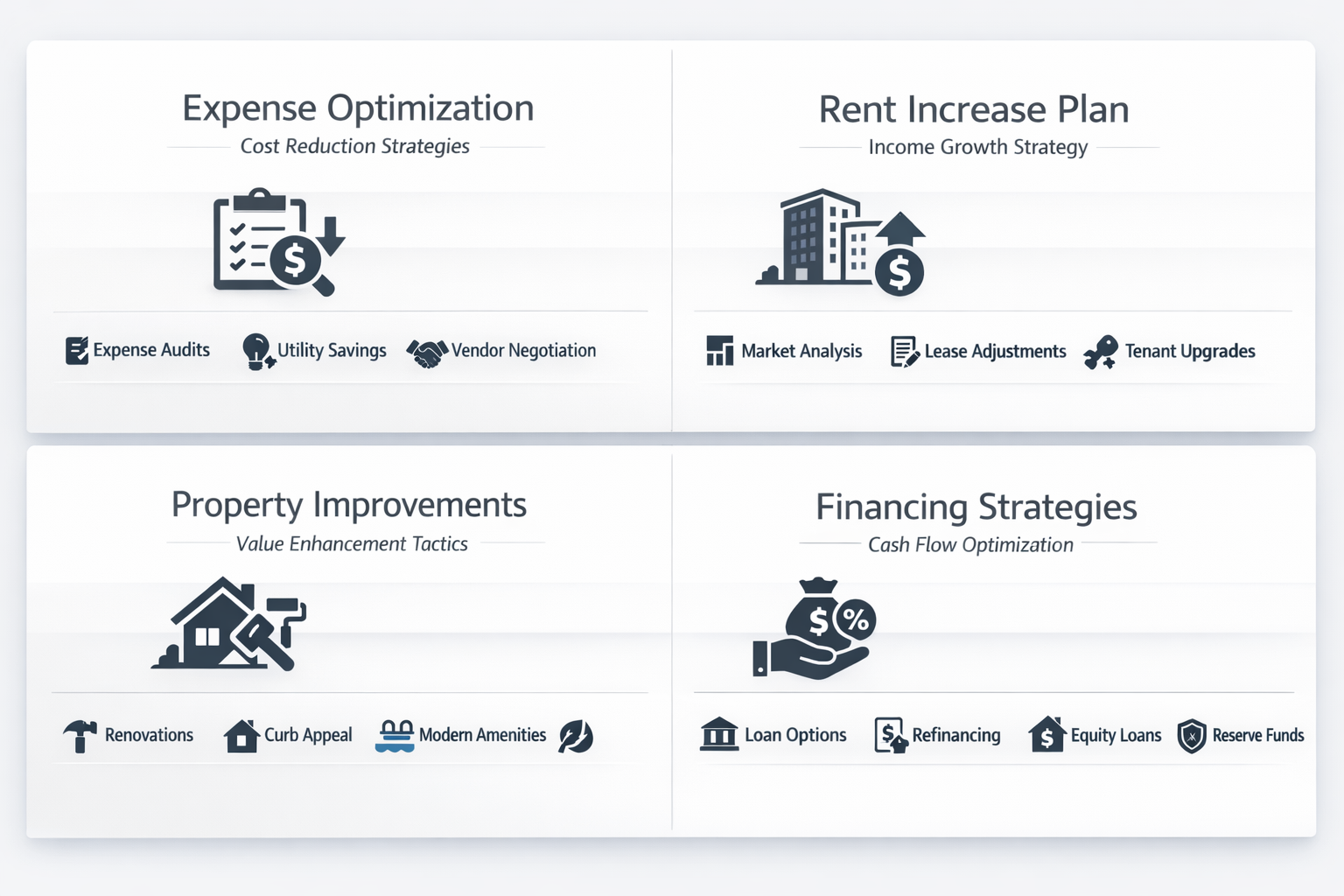
Real estate investors often encounter properties with promising potential but challenging debt service coverage ratios. Low DSCR deal structuring has become increasingly important as lenders adapt their criteria and investors seek creative ways to make marginal deals profitable. The evolving DSCR lending landscape in 2026 presents new opportunities for strategic investors who understand how to structure deals effectively, even when initial cash flow metrics don't meet traditional thresholds.
Understanding how to approach these challenging deals can unlock significant investment opportunities that other investors might overlook. With the right expense reduction strategies, rent increase plans, and approval tactics, properties that initially appear financially unfeasible can transform into profitable long-term investments.
Understanding Low DSCR Scenarios
Q: What exactly qualifies as a low DSCR situation that requires special structuring?
A low DSCR scenario typically occurs when a property's net operating income doesn't comfortably cover the proposed debt service payments. While traditional DSCR loans might require ratios of 1.25 or higher, low deal structuring becomes necessary when properties fall between 0.75 and 1.10. These situations often arise with value-add properties, recent acquisitions with below-market rents, or properties in transitioning neighborhoods where current income doesn't reflect future potential.
The key insight from current market conditions is that lenders are becoming more flexible with lower acceptable DSCR ratios, though this typically comes with corresponding adjustments in interest rates and required down payments. This flexibility creates opportunities for investors who can demonstrate clear paths to improved cash flow through strategic improvements and management optimization.
Expense Reduction Strategies
Expense reduction strategies form the foundation of successful low DSCR deal structuring by directly improving net operating income without requiring significant capital investment. Smart investors focus on systematic cost optimization that delivers measurable results.
Utility expense optimization: Implementing energy-efficient systems and negotiating better utility rates can reduce monthly operating costs by 15-25%. This includes LED lighting conversions, programmable thermostats, and water-saving fixtures that lower both utility bills and maintenance requirements.
Property management efficiency: Streamlining management processes through technology and vendor consolidation often reduces administrative costs while improving service quality. Self-managing investors can leverage property management software to handle routine tasks more efficiently.
Insurance and tax optimization: Regular review of insurance policies and property tax assessments can yield significant savings. Working with specialists to challenge property tax valuations and optimize insurance coverage frequently reduces annual expenses by thousands of dollars.
Maintenance cost control: Establishing preventive maintenance schedules and building relationships with reliable contractors helps avoid emergency repairs while negotiating better rates for routine services.
Strategic Rent Increase Planning
A well-structured rent increase plan serves as the primary driver for transforming low DSCR properties into profitable investments. This approach requires careful market analysis and strategic timing to maximize income growth while maintaining tenant stability.
Market analysis foundation: Conducting thorough comparable rent studies helps identify the gap between current rents and market potential. Properties with 20-30% below-market rents often present the best opportunities for DSCR improvement through strategic increases.
Phased implementation approach: Rather than implementing dramatic rent increases immediately, successful investors typically plan graduated increases over 12-24 months. This approach reduces tenant turnover costs while steadily improving cash flow metrics.
Value-add justification: Pairing rent increases with property improvements creates tenant acceptance and justifies higher rents. Simple upgrades like updated appliances, fresh paint, or improved common areas can support 10-15% rent increases.
Lease renewal optimization: Timing rent adjustments with natural lease renewal cycles minimizes vacancy risk while allowing for market-rate adjustments. This strategy often proves more effective than waiting for tenant turnover.
Property Improvement ROI Analysis
Strategic property improvements can significantly impact both rental income potential and overall property valuation, making them crucial components of low DSCR deal structuring. The key lies in identifying improvements that deliver maximum return on investment.
Kitchen and bathroom updates: These improvements typically deliver the highest rent premiums, often justifying 15-25% increases in monthly rent. Focus on cost-effective updates like new countertops, fixtures, and appliances rather than complete renovations.
Curb appeal enhancements: Exterior improvements including landscaping, painting, and entrance upgrades create strong first impressions that support higher rent levels and reduce vacancy periods.
Technology integration: Adding smart home features, improved internet infrastructure, and energy-efficient systems appeals to modern tenants and justifies premium pricing while reducing long-term operating costs.
Financing Structure Optimization
Optimizing financing structures for low DSCR deals requires understanding how different loan terms and structures can improve cash flow metrics. Current market conditions offer several approaches that weren't widely available in previous years.
Extended amortization schedules: Negotiating longer loan terms reduces monthly debt service payments, directly improving DSCR calculations. While this increases total interest costs, it can make marginal deals financially viable during the initial years when implementing improvement strategies.
Interest-only periods: Some lenders now offer initial interest-only periods for DSCR loans, particularly for properties with clear value-add potential. This structure provides breathing room while implementing rent increases and expense reduction strategies.
Hybrid product exploration: The evolution of DSCR lending has introduced hybrid products that combine traditional underwriting with cash flow analysis. These products might offer more favorable terms for investors who can demonstrate strong overall financial capacity alongside property-specific cash flow challenges.
Multiple property portfolios: Lenders increasingly consider overall portfolio performance rather than evaluating each property in isolation. Strong-performing properties can help offset weaker DSCR ratios on value-add acquisitions.
Lender Approval Strategy Development
Developing an effective approval optimization strategy for low DSCR deals requires presenting a compelling narrative that demonstrates the property's potential rather than just its current performance. This approach has become increasingly important as lenders adapt their criteria.
Comprehensive business plan presentation: Creating detailed improvement plans with timelines, cost estimates, and projected income increases helps lenders understand the investment thesis. Include market comparables showing rent potential and improvement ROI analysis.
Track record documentation: Highlighting previous successful value-add projects provides credibility for proposed improvement plans. Lenders are more likely to approve challenging deals when investors can demonstrate proven execution capability.
Conservative projections with upside potential: Presenting realistic but conservative financial projections builds lender confidence while maintaining flexibility for better-than-expected performance. Include sensitivity analysis showing how the deal performs under various scenarios.
Multiple lender approach: With increasing competition among DSCR lenders, shopping multiple options often reveals significant differences in underwriting criteria and loan terms. Some lenders specialize in value-add scenarios and understand low DSCR structuring better than others.
Successful low DSCR deal structuring requires a comprehensive approach that combines strategic expense management, systematic rent optimization, and creative financing solutions. The evolving lending landscape in 2026 offers more flexibility than previous years, but investors must demonstrate clear paths to improved cash flow performance.
The key to mastering these challenging deals lies in viewing them as transformation opportunities rather than problematic investments. Properties with low initial DSCR ratios often represent the best value-add potential, particularly in markets where competition for stabilized assets drives prices beyond reasonable return thresholds.
Smart investors who develop expertise in low DSCR deal structuring position themselves to capitalize on opportunities that others overlook, building portfolios with significant upside potential while managing downside risk through careful analysis and strategic planning.