Short Term Rental Income Documentation for Real Estate Investors
Short term rental income documentation has become increasingly critical for real estate investors seeking DSCR loans in today's competitive financing landscape. Unlike traditional rental properties with consistent monthly lease agreements, short-term rentals present unique challenges when demonstrating income stability to lenders.
The complexity of documenting Airbnb statements, occupancy reports, and seasonal income patterns can make or break your loan approval. Many investors struggle with presenting their short-term rental income in a format that satisfies lender requirements while accurately reflecting the property's earning potential.
Understanding proper documentation strategies becomes essential when DSCR loans focus on property performance rather than personal income. This approach typically favors investors who can effectively demonstrate their property's ability to generate sufficient cash flow to service the debt.
Documentation Best Practices for Short-Term Rental Success
Documentation best practices for short-term rental success require systematic organization and comprehensive record-keeping that lenders can easily evaluate. Proper documentation may significantly improve your chances of securing favorable DSCR loan terms.
Maintain detailed monthly income summaries that break down gross rental income, occupancy rates, and average daily rates across all booking platforms
Organize platform statements chronologically from all booking services, ensuring no gaps in income history that could raise lender concerns
Document all operational expenses separately including cleaning fees, maintenance costs, and platform commissions to provide clear net operating income calculations
Create seasonal performance reports that highlight peak and off-season trends, helping lenders understand income fluctuations throughout the year
Common Documentation Mistakes That Hurt Loan Applications
Common documentation mistakes that hurt loan applications often stem from incomplete records or poorly organized financial data that creates uncertainty for lenders reviewing DSCR loan applications.
Don't submit incomplete platform statements that skip months or fail to include all booking channels, as gaps in documentation raise red flags about property performance
Don't mix personal expenses with property costs in your financial records, which can distort the true profitability and debt service coverage ratio calculations
Don't ignore seasonal income variations without providing context, leaving lenders uncertain about the property's ability to maintain consistent cash flow
Don't overlook tax classification implications that might affect how income is reported and potentially impact loan qualification requirements
Essential Platform Statement Requirements for Lenders
Essential platform statement requirements for lenders typically include comprehensive income documentation that demonstrates consistent earning potential across multiple booking channels and timeframes.
Complete booking platform reports covering at least 12-24 months of operating history, showing gross income, fees, and net deposits to your bank accounts
Occupancy rate documentation that details booking percentages, average stay lengths, and seasonal patterns that help lenders assess income stability
Rate analysis summaries including average daily rates, weekend premiums, and peak season adjustments that justify income projections for underwriting
Multi-platform consolidation when using multiple booking services, providing combined income totals that accurately reflect total property performance
Bank statement correlation showing how platform deposits match actual received funds, accounting for any processing delays or fee deductions
Seasonal Income Analysis and Reporting Methods
Seasonal income analysis and reporting methods help lenders understand the cyclical nature of short-term rental properties and may improve their confidence in approving DSCR loans for these investments.
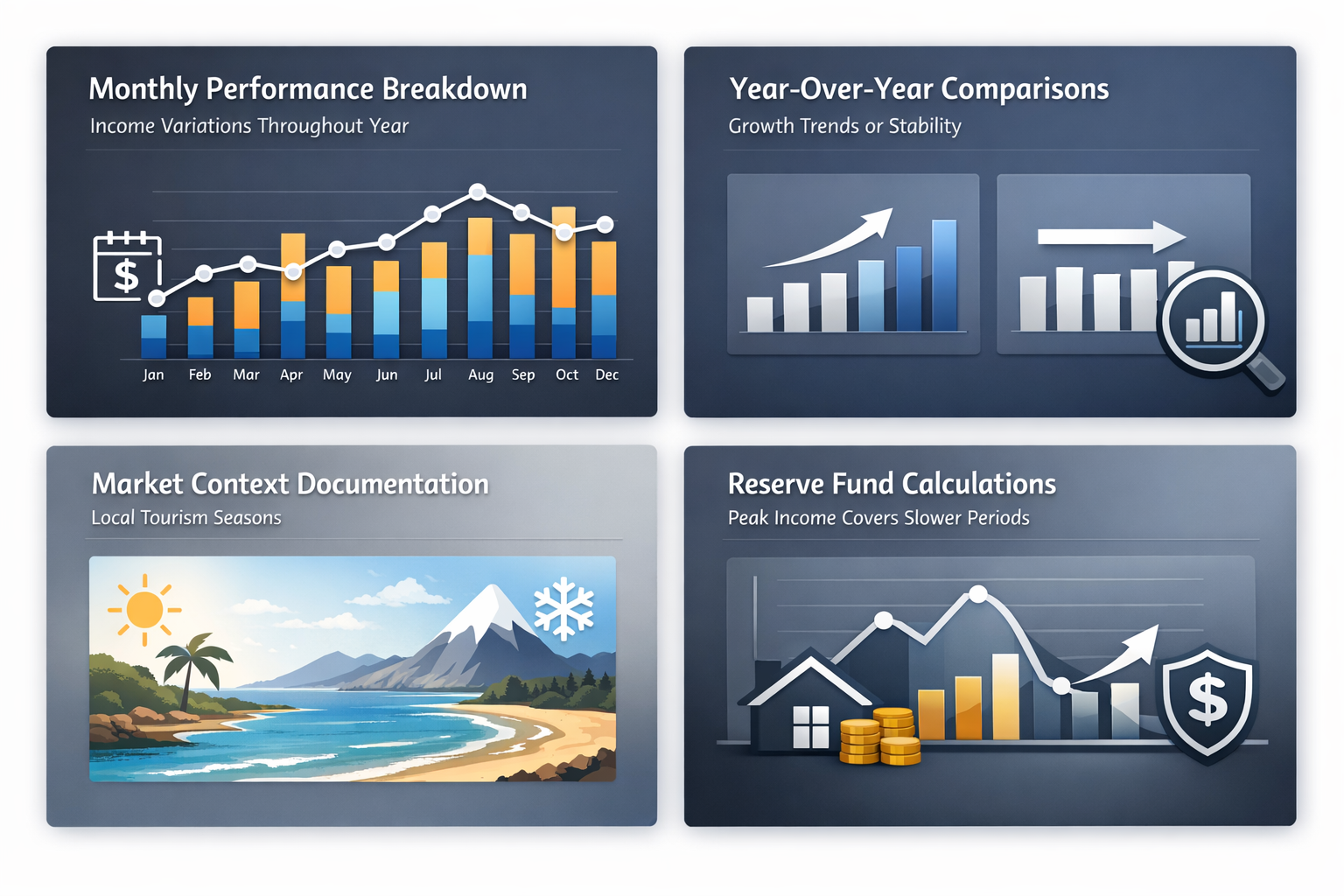
Monthly performance breakdowns showing income variations throughout the year, highlighting peak seasons and identifying potential cash flow challenges during slower periods
Year-over-year comparisons that demonstrate growth trends or stability in seasonal patterns, providing lenders with predictable income forecasting data
Market context documentation explaining local tourism seasons, events, or economic factors that drive demand fluctuations in your specific area
Reserve fund calculations showing how peak season income covers slower periods, demonstrating the property's ability to maintain debt service throughout annual cycles
Tax Classification Impact on Income Documentation
Tax classification impact on income documentation can significantly affect how lenders evaluate short term rental income documentation and determine loan eligibility for DSCR financing programs.
Rental activity classification under IRS guidelines may allow for different expense deductions and loss treatments that affect net operating income calculations
Business activity designation might require additional documentation but could provide greater flexibility in expense categories and depreciation schedules
14-day rule implications for properties with limited personal use, which may affect how income and expenses are reported and validated by lenders
Schedule E versus Schedule C reporting differences that lenders consider when evaluating the consistency and legitimacy of reported rental income
Mastering short term rental income documentation requires attention to detail, consistent record-keeping, and understanding of lender expectations for DSCR loan applications. The complexity of documenting seasonal income patterns and multi-platform revenue streams might seem daunting, but systematic organization typically pays dividends in loan approval rates.
Successful investors often find that investing time in proper documentation creates long-term benefits beyond loan applications. Well-organized financial records may help optimize tax strategies, improve operational efficiency, and provide valuable insights for portfolio expansion decisions.
As the short-term rental market continues evolving, lenders are becoming more sophisticated in evaluating these income streams. Staying ahead of documentation requirements and maintaining professional-grade financial records positions investors for success in securing the financing needed to grow their real estate portfolios.