Today's rental financing in high rate markets presents both challenges and unexpected opportunities for savvy real estate investors. With interest rates forecasted to stabilize between 5.5% and 6.5% throughout 2026, investors are adapting their strategies and discovering new financing products that can help maintain profitability despite elevated borrowing costs.
The landscape has evolved significantly, with DSCR lending undergoing major innovations and hybrid products emerging to address rate pressure concerns. Understanding these changes and implementing targeted strategies can mean the difference between struggling with cash flow and building a resilient rental portfolio that thrives even in higher rate environments.
Essential DSCR Loan Advantages for High Rate Environments
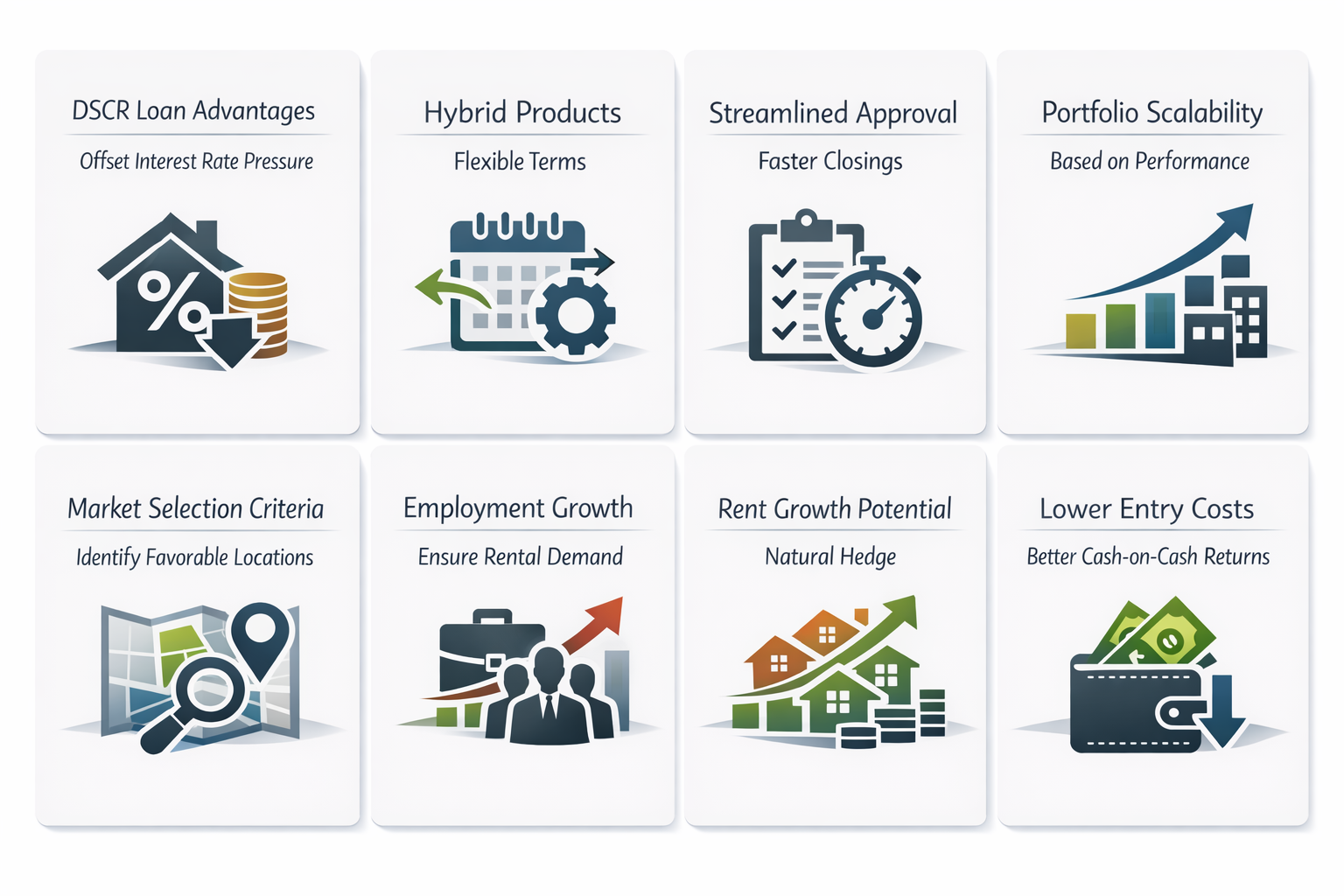
Essential DSCR loan advantages for high rate environments include several key benefits that can help offset interest rate pressure on rental property investments. These advantages have become increasingly important as traditional financing becomes more challenging.
Qualification based on property cash flow rather than personal income: This feature allows investors to secure financing even when personal debt-to-income ratios might be strained by higher rates across their portfolio
Access to hybrid products that blend traditional and alternative lending features: These innovative structures can provide more flexible terms and potentially better rates than standard investment loans
Streamlined approval process with institutional capital backing: Many DSCR lenders have strengthened their capital sources, enabling faster closings that help investors compete in competitive markets
Portfolio scalability without traditional employment verification: Investors can continue expanding their rental portfolios based on property performance metrics rather than W-2 limitations
Market Selection Criteria for Optimal DSCR Performance
Market selection criteria for optimal DSCR performance focus on identifying locations where rental financing in high rate markets can still generate positive returns. Specific markets have emerged as particularly favorable for DSCR loan strategies.
Target markets with DSCR ratios between 1.0-1.25x: Markets like San Antonio, Dallas, and Tampa offer solid economic fundamentals that support these favorable debt service coverage ratios
Focus on areas with strong employment growth and population trends: These fundamentals help ensure consistent rental demand that can support higher debt service payments
Evaluate local rent growth potential versus acquisition costs: Markets where rent appreciation may outpace interest rate increases provide natural hedge against rate pressure
Consider markets with lower entry costs that allow for better cash-on-cash returns: This approach helps maintain profitability even with elevated interest rates
Risk Management Protocols for Investor Protection
Risk management protocols for investor protection have become increasingly critical as DSCR loan demand rises and investor activity intensifies. These protocols help navigate the heightened scrutiny and potential compliance challenges in today's market.
Implement thorough due diligence procedures for all property acquisitions: Enhanced documentation and verification processes help protect against fraud risks that may increase with growing DSCR loan usage
Maintain detailed financial records and rental income documentation: Proper documentation supports loan applications and provides protection during potential audits or reviews
Work with experienced legal and tax professionals familiar with investment property regulations: Professional guidance helps ensure compliance with evolving lending standards and regulatory requirements
Establish contingency reserves for market fluctuations and rate adjustments: Additional cash reserves provide buffer against unexpected changes in market conditions or financing terms
Strategic Timing for Acquisitions and Refinancing
Strategic timing for acquisitions and refinancing becomes crucial when managing rental financing in high rate markets. Understanding rate forecasts and market cycles can help optimize investment decisions.
Monitor the forecasted rate stability between 5.5% and 6.5% for strategic planning: This anticipated stability can inform decisions about when to lock in rates versus waiting for potential decreases
Evaluate refinancing opportunities for existing portfolio properties with favorable cash flow: Properties with strong DSCR performance may qualify for better terms or hybrid products that weren't previously available
Consider acquisition timing based on seasonal market patterns and seller motivation: Higher rates may create opportunities to negotiate better purchase prices that offset increased borrowing costs
Coordinate multiple property transactions to leverage relationship pricing with lenders: Bulk transactions or portfolio approaches may yield better terms than individual property financing
Loan Product Comparison Framework for Investment Properties
A loan product comparison framework for investment properties helps investors navigate the various financing options available for rental properties. Each loan type offers unique benefits that may be more suitable depending on investment strategy and market conditions.
Compare DSCR loans against bridge and portfolio loan options based on investment timeline: DSCR loans typically work best for long-term rental strategies, while bridge loans might suit fix-and-flip or renovation projects
Evaluate interest rate structures including fixed versus adjustable rate products: In high rate markets, the choice between rate stability and potential future decreases becomes particularly important
Analyze loan-to-value ratios and down payment requirements across different lenders: Higher rate environments may require larger down payments, but some products offer more favorable LTV ratios
Review prepayment penalties and exit strategy flexibility for each loan type: Understanding these terms helps ensure financing aligns with long-term investment goals and potential market changes
Deal Structuring Techniques to Combat Interest Rate Pressure
Deal structuring techniques to combat interest rate pressure involve creative approaches that can help maintain profitability despite elevated borrowing costs. These techniques leverage the evolving DSCR lending landscape and hybrid product innovations.
Utilize seller financing or creative terms to reduce initial borrowing requirements: Combining seller financing with DSCR loans can reduce the total amount subject to current high rates
Structure deals with renovation components that can justify higher rental income: Value-add strategies can improve DSCR ratios and support higher debt service payments through increased rental yields
Negotiate purchase prices based on current rate environment impact on property values: Higher rates typically reduce buyer competition, creating opportunities for better acquisition pricing
Consider joint ventures or partnership structures that can provide additional equity and reduce loan amounts: Shared equity arrangements can minimize interest rate exposure while maintaining investment opportunities
Key Investment Insights for High Rate Success
Key investment insights for high rate success emphasize that rental financing in high rate markets requires a strategic shift rather than a complete strategy overhaul. The most successful investors are adapting their approaches while taking advantage of reduced competition and new product innovations. Focus on markets with strong fundamentals, leverage DSCR loan advantages, and maintain rigorous due diligence standards to navigate this environment effectively. Remember that today's challenging rate environment may present tomorrow's opportunities for those who position themselves correctly and maintain access to capital through relationships with specialized lenders.
Rental financing in high rate markets demands a more sophisticated approach than traditional low-rate environments, but opportunities remain abundant for prepared investors. The evolution of DSCR lending, combined with strategic market selection and innovative deal structuring, can help maintain strong returns even with elevated borrowing costs.
Success in this environment comes down to thorough preparation, risk management, and leveraging the right financing products for each specific investment situation. As the market continues to adapt to rate stability forecasts through 2026, investors who master these strategies will be well-positioned to build resilient rental portfolios that can weather various market conditions.
The key is staying informed about product innovations, maintaining strong lender relationships, and focusing on fundamentally sound markets where rental demand supports higher debt service requirements. With the right approach, today's challenging rate environment can become tomorrow's competitive advantage.