A properly prepared rent roll checklist for approval can be the difference between swift loan approval and lengthy delays in your next investment deal. For real estate investors seeking DSCR loans or rental property financing, your rent roll serves as the primary proof of income that lenders scrutinize most carefully. This comprehensive document verification tool demonstrates the financial health of your investment property and validates your ability to service debt through rental income.
Understanding how to create and present a lender-ready rent roll involves more than simply listing tenant names and monthly rents. It requires careful attention to tenant list accuracy, precise lease matching with current agreements, and thorough income verification that withstands lender scrutiny. Getting these elements right can speed up your loan approval process and potentially improve your financing terms.
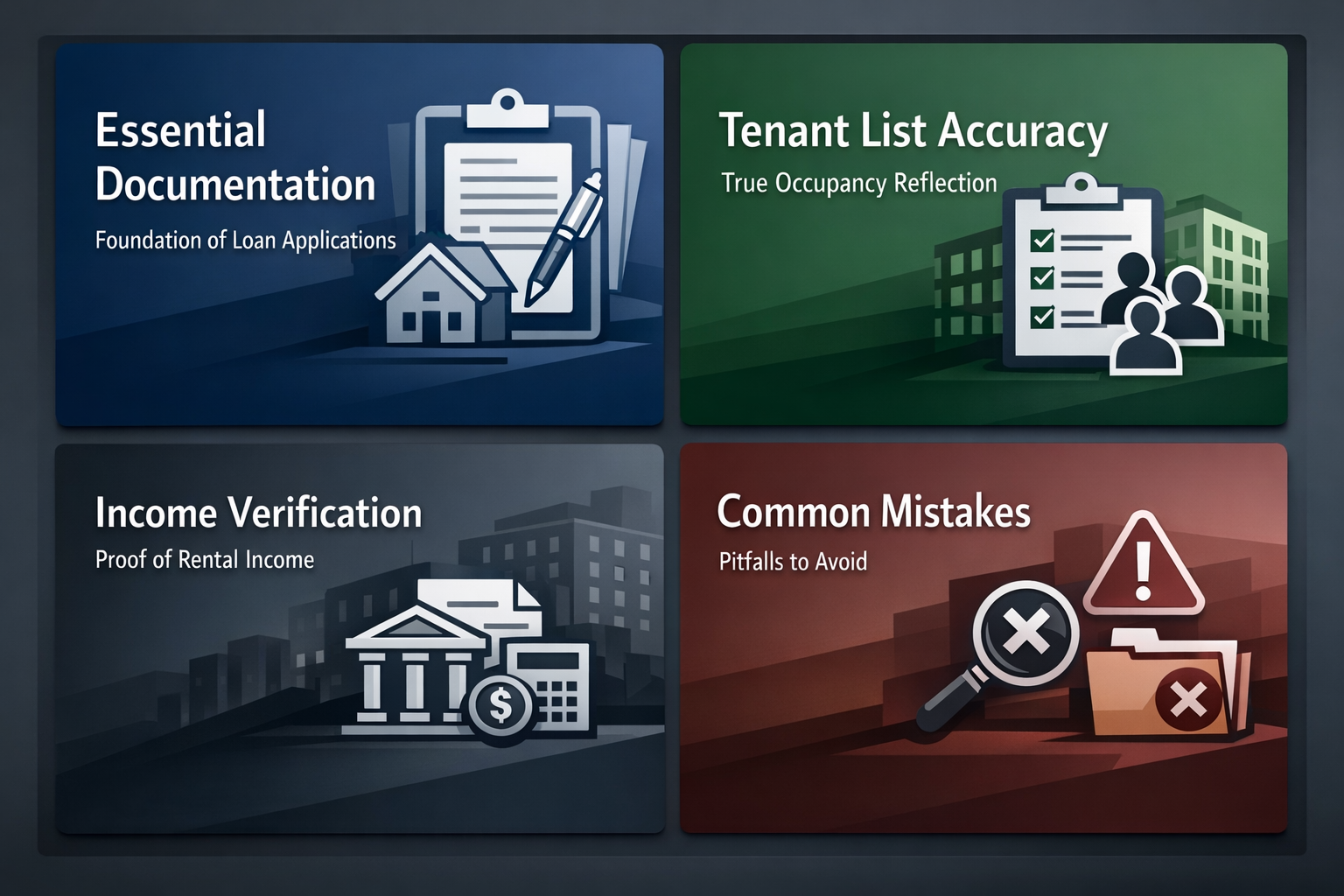
Essential Rent Roll Documentation Requirements
Essential rent roll documentation requirements form the foundation of any successful loan application for investment properties. Lenders typically examine these documents to verify the consistency and reliability of your rental income stream, which directly impacts their lending decisions.
Complete tenant contact information: Include full names, current addresses, phone numbers, and lease start dates for all occupied units to demonstrate proper tenant screening and management practices.
Current lease agreements: Provide fully executed, signed lease documents that match exactly with the rent roll figures, ensuring no discrepancies between stated and actual rental terms.
Payment history records: Document at least 12 months of rent collection data showing consistent payment patterns, late payments, and any collection issues that might affect future income projections.
Security deposit tracking: Maintain detailed records of all security deposits held, including amounts and designated holding accounts, as these funds cannot be counted toward operational income.
Tenant List Accuracy and Verification Methods
Tenant list accuracy and verification methods ensure that your rent roll reflects the true occupancy and income potential of your investment property. Lenders often cross-reference tenant information with lease agreements and payment records to identify any inconsistencies that might indicate inflated income projections.
Monthly occupancy reconciliation: Cross-check your tenant roster against actual lease agreements monthly to catch any unreported vacancies, lease terminations, or rental rate changes that could affect income calculations.
Lease expiration tracking: Monitor upcoming lease renewals and expiration dates to provide lenders with realistic projections about potential vacancy periods and their impact on cash flow.
Rent adjustment documentation: Keep detailed records of any rent increases, decreases, or concessions offered to tenants, as these changes must be reflected accurately in your current rent roll.
Third-party verification: Consider using property management software or having your property manager provide signed attestations to the accuracy of tenant information and payment histories.
Income Verification and Bank Statement Matching
Income verification and bank statement matching provide the concrete proof that lenders need to validate your rent roll claims. This process involves demonstrating that the rental income listed on your rent roll actually appears as deposits in your business bank accounts over a consistent period.
Deposit correlation analysis: Match each rent payment listed on your rent roll with corresponding bank deposits, accounting for any processing delays or payment methods that might affect timing.
Operating account separation: Maintain dedicated business accounts for rental income to clearly distinguish property revenue from personal funds or other business activities during the verification process.
Electronic payment documentation: Provide records of online rent payments, ACH transfers, or other electronic collection methods that demonstrate consistent tenant payment patterns and reduce collection risks.
Cash payment protocols: Document any cash rent payments with proper receipts and immediate bank deposits to ensure these transactions can be verified through your banking records.
Step-by-Step Rent Roll Preparation Process
The step-by-step rent roll preparation process ensures that you present your property's income information in a format that lenders can quickly review and approve. Following this systematic approach helps minimize back-and-forth requests for additional documentation.
Gather all lease agreements and amendments: Collect every signed lease document, lease renewals, and any modifications that affect rental terms, ensuring you have complete documentation for each tenant relationship.
Compile 12 months of payment records: Extract detailed payment histories from your property management system or manual records, including dates, amounts, and payment methods for each tenant over the past year.
Create standardized formatting: Organize information in a clear, professional spreadsheet format that includes unit numbers, tenant names, lease terms, monthly rent amounts, and any relevant notes about payment history or lease status.
Reconcile totals and verify accuracy: Double-check all calculations, ensure monthly rent totals match your bank deposits, and verify that all information aligns with your supporting documentation before submission.
Common DSCR Loan Documentation Mistakes to Avoid
Common DSCR loan documentation mistakes can delay your approval process or result in less favorable lending terms. Understanding these pitfalls helps you prepare a stronger application that meets lender requirements from the start.
Inconsistent rent roll dates: Ensure your rent roll reflects the same time period as your supporting bank statements and lease documentation to avoid confusion about current income levels and occupancy rates.
Including non-rental income: Separate rental income from other revenue sources like laundry facilities, parking fees, or storage rentals, as lenders may evaluate these income streams differently for qualification purposes.
Omitting vacancy allowances: Acknowledge realistic vacancy rates in your projections rather than assuming 100% occupancy, as lenders typically expect conservative income estimates that account for normal turnover periods.
Inadequate lease term documentation: Provide complete lease agreements rather than summaries or excerpts, as lenders need to verify actual lease language, terms, and conditions that affect income stability.
Maximizing Your Approval Chances Through Professional Presentation
Maximizing your approval chances through professional presentation demonstrates your competence as an investor and makes the lender's job easier. A well-organized rent roll package can significantly speed up the underwriting process and potentially improve your loan terms. Lenders often view thorough documentation as an indicator of responsible property management and lower investment risk.
Professional presentation involves creating clean, organized spreadsheets with consistent formatting and clear headers that make information easy to locate and verify. Including executive summaries that highlight key metrics like average rent per unit, occupancy percentages, and payment collection rates can help underwriters quickly assess your property's performance. Additionally, providing context for any irregularities or seasonal variations in your rental income shows proactive management and helps prevent unnecessary questions during the review process.
Creating an effective rent roll checklist for approval requires attention to detail, accurate documentation, and professional presentation that instills confidence in potential lenders. By focusing on tenant list accuracy, ensuring proper lease matching, and providing thorough income verification, you position your DSCR loan application for faster approval and better terms.
Remember that your rent roll serves as more than just an income statement. It's a comprehensive picture of your property management capabilities and the investment's financial stability. Taking the time to prepare this documentation properly can save weeks in the approval process and potentially save thousands in financing costs over the life of your loan.
As DSCR lending products continue to evolve, maintaining high standards in your documentation practices will help you adapt to changing lender requirements and secure the financing you need to grow your real estate investment portfolio.