How Rent Growth Slowdown Affects DSCR Loan Approvals for Investors
The landscape of real estate investment financing is shifting as rent growth slowdown and DSCR approvals become increasingly interlinked. For property investors navigating today's market, understanding this relationship could mean the difference between securing favorable financing and missing out on lucrative opportunities.
DSCR loans have become a cornerstone for investors who don't rely on traditional W-2 income verification. Instead, these loans focus on a property's ability to generate sufficient cash flow to cover debt payments. However, with regional rent cooling affecting markets nationwide, lenders are adjusting their underwriting criteria and becoming more sensitive to income stability projections.
This evolving dynamic presents both challenges and opportunities. While some investors might face tighter approval standards, others may find new pathways to financing as lenders adapt their requirements. Let's explore how savvy investors can position themselves for success in this changing environment.
Current DSCR Loan Market Conditions
Current DSCR loan market conditions reveal a mixed landscape for real estate investors seeking financing in 2026. Understanding these conditions helps investors make informed decisions about when and where to pursue investment opportunities.
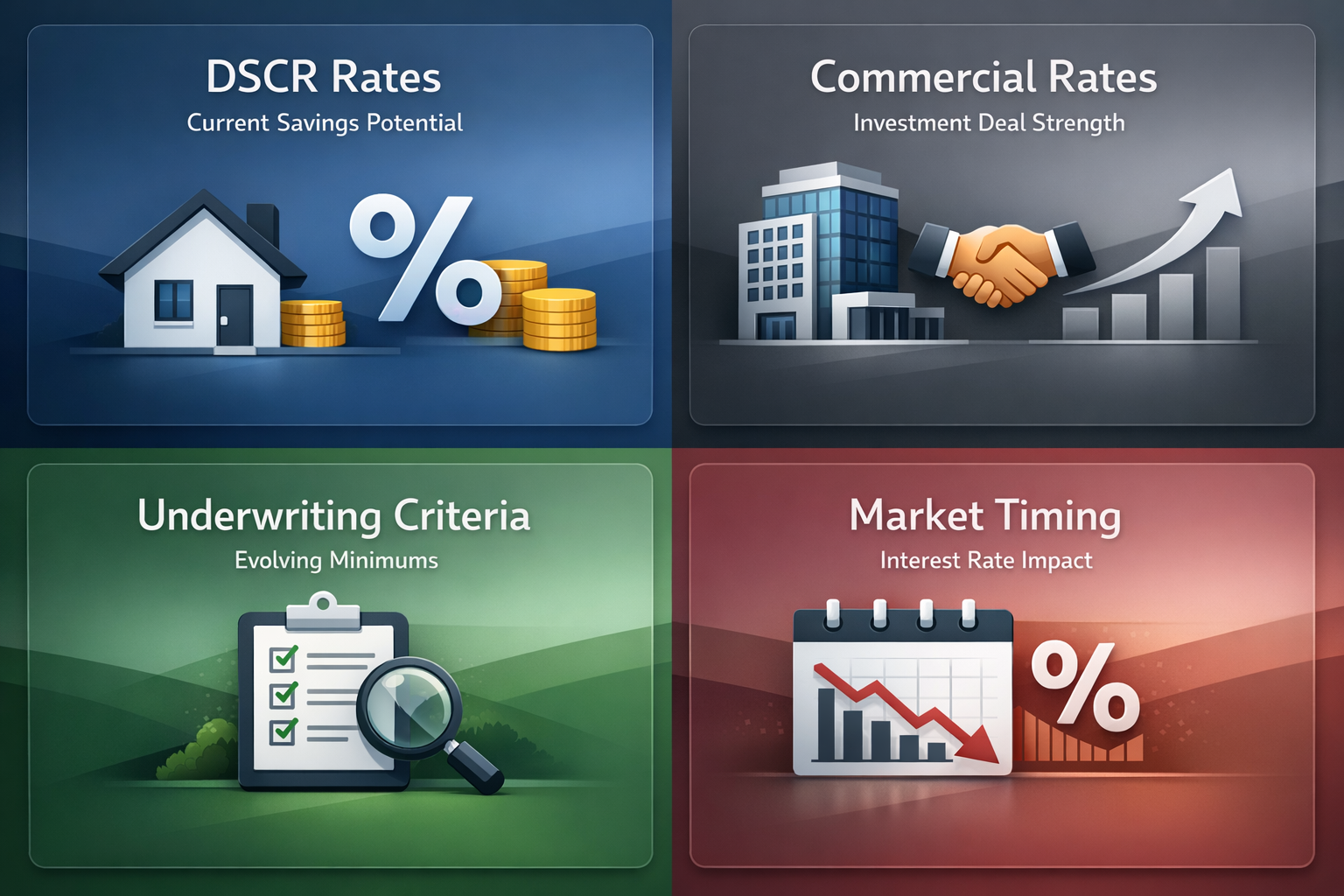
Residential DSCR rates have decreased to a range of 6.00% to 7.50%, representing significant potential savings compared to previous years and creating opportunities for both new acquisitions and refinancing existing properties
Commercial DSCR loan rates currently span from 7.25% to 10.75%, with the final rate depending heavily on the strength of individual investment deals and the borrower's overall financial profile
Underwriting criteria are evolving with some lenders implementing lower minimum DSCR ratios, potentially opening doors for more investors to qualify for financing despite regional rent cooling
Market timing considerations are becoming increasingly important as interest rate fluctuations can dramatically impact the affordability and overall yield of investment properties
Regional Rent Cooling Impact on Approvals
Regional rent cooling impact on approvals has become a critical factor that real estate investors must navigate carefully. As certain markets experience slower rent growth, lenders are adjusting their approach to evaluating investment properties and their income-generating potential.
Income stability projections are receiving heightened scrutiny from lenders who want to ensure properties can maintain adequate cash flow even if rent growth slows or stagnates in specific regions
Market-specific analysis is becoming more important as lenders may favor certain geographic areas over others based on rental market resilience and historical performance data
Property cash flow requirements might be adjusted upward in markets showing signs of rent cooling to provide additional buffer for debt service coverage
Geographic diversification strategies are gaining importance as investors spread risk across multiple markets to offset potential rent growth slowdowns in individual regions
Underwriting Sensitivity Factors in 2026
Underwriting sensitivity factors in 2026 reflect lenders' heightened awareness of market volatility and changing rental dynamics. These factors directly influence how lenders evaluate DSCR loan applications and determine approval likelihood.
Economic indicator monitoring has intensified as lenders track broader economic conditions that could impact rental markets, including employment rates, population growth, and local economic development
Property type preferences may shift based on which asset classes demonstrate more stable income streams during periods of regional rent cooling
Borrower experience evaluation is carrying more weight in approval decisions, with seasoned investors potentially receiving more favorable terms due to their track record of managing properties through various market cycles
Documentation requirements might become more stringent as lenders seek additional assurance about projected rental income and market conditions in specific areas
Strategic Market Selection for DSCR Success
Strategic market selection for DSCR success requires investors to identify locations where favorable financing conditions align with resilient rental fundamentals. This approach helps balance the challenges of slowing rent growth with the opportunities present in today's lending environment.
Top market identification involves researching areas that lenders view favorably for DSCR loans, typically regions with diverse economic bases and stable rental demand patterns
Risk-opportunity balance requires evaluating markets where rent cooling might be temporary or where other factors compensate for slower rental growth, such as strong job growth or population influx
Financing condition optimization means targeting markets where lenders offer competitive terms and are comfortable with local rental market dynamics
Long-term projection analysis involves looking beyond current rent trends to identify markets with strong fundamentals that could weather temporary slowdowns and resume growth
Timing Your DSCR Applications Effectively
Timing your DSCR applications effectively can significantly impact both approval likelihood and the terms you receive. With changing market conditions affecting lender sentiment, strategic timing becomes crucial for investment success.
Rate environment monitoring helps investors identify optimal windows for applications when interest rates may be more favorable, potentially saving thousands over the loan term
Market cycle awareness enables investors to apply during periods when lenders are more confident about specific geographic areas or property types
Seasonal considerations might influence approval timelines and lender capacity, with certain times of year potentially offering faster processing or more competitive terms
Economic data releases can impact lender sentiment and approval criteria, making it valuable to time applications around positive economic indicators that support rental market income stability
The relationship between rent growth slowdown and DSCR approvals represents both a challenge and an opportunity for today's real estate investors. While regional rent cooling has introduced new complexities to the financing landscape, informed investors can still secure favorable terms by understanding lender perspectives and market dynamics.
Success in this environment requires a strategic approach that combines market knowledge, timing awareness, and adaptability to changing underwriting criteria. Investors who stay informed about interest rate trends, focus on markets with strong fundamentals, and maintain flexibility in their financing approach are likely to thrive despite slower rent growth in some regions.
As we move forward, the key lies in viewing these market shifts not as obstacles, but as opportunities to refine investment strategies and build more resilient portfolios. By working with experienced DSCR lenders who understand both current market conditions and long-term investment goals, investors can continue to grow their real estate holdings effectively.