How Remote Work Driven Rental Demand Is Reshaping Investment Strategies
The landscape of rental property investment has experienced significant transformation as remote work driven rental demand continues to influence market dynamics across the country. For real estate investors, understanding these shifts could mean the difference between a profitable portfolio and missed opportunities.
Remote work trends have fundamentally altered what tenants seek in rental properties, creating new challenges and opportunities that directly impact DSCR loan qualifications and investment returns. As traditional urban centers experience changing demand patterns, suburban markets are emerging as attractive alternatives for both tenants and investors.
This evolution in rental demand patterns affects everything from property valuations to financing conditions, making it essential for investors to adapt their strategies accordingly. Let's examine how these trends are creating new pathways to investment success.
Essential Tips for Capitalizing on Remote Work Rental Trends
Remote work rental trends are creating new investment opportunities that smart real estate investors can leverage for better returns. Understanding these shifts helps position your portfolio for long-term success in changing markets.
Focus on space and connectivity features: Remote work driven rental demand has shifted tenant priorities toward larger living spaces and reliable high-speed internet access. Properties that accommodate home office setups typically command higher rents and experience lower vacancy rates.
Target flexible lease arrangements: Many remote workers now seek flexible lease terms that align with their changing work situations. Offering month-to-month options or shorter-term leases might attract quality tenants willing to pay premium rates for flexibility.
Prioritize suburban markets over urban centers: Suburban areas are experiencing increased demand as remote workers seek affordability and space. These markets often provide more predictable rental income streams that support favorable DSCR loan terms and reduced investment risk.
Evaluate neighborhood employment diversity: Areas becoming suburban employment centers due to remote work trends offer enhanced stability for rental investments. These locations typically experience lower vacancy risks and more consistent income streams for DSCR loan qualifications.
Investment Strategy Adjustments for Market Success
Investment strategy adjustments are becoming necessary as remote work driven rental demand reshapes traditional real estate markets. Successful investors are adapting their approaches to align with these evolving tenant preferences and market conditions.
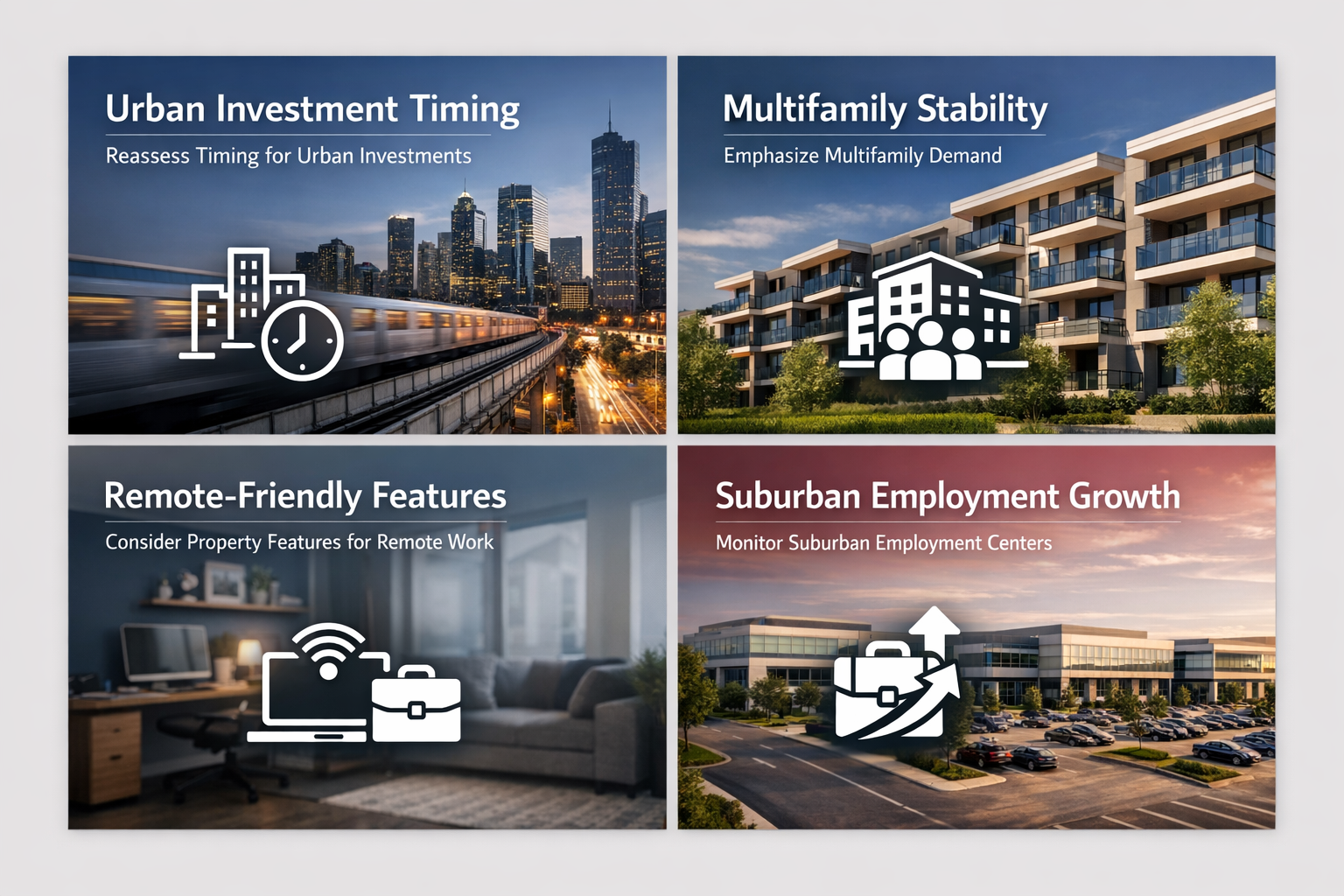
Reassess urban investment timing: Urban retail vacancies are rising compared to suburban markets, potentially affecting neighboring residential property values. Consider timing your urban investments carefully or focusing resources on suburban opportunities where vacancy rates tend to be more stable.
Emphasize multifamily stability: Despite remote work shifts, multifamily demand remains strong due to slowed construction and resilient renter demand. These properties often provide stable income streams that support favorable DSCR loan terms and help manage interest rate impacts effectively.
Consider remote-friendly property features: Properties with dedicated office spaces, reliable internet infrastructure, and quiet environments are becoming increasingly valuable. These features can justify higher rent levels and attract longer-term tenants in remote work driven rental markets.
Monitor suburban employment growth: Areas experiencing suburban employment center development offer promising investment opportunities. These locations typically provide wider options for affordable properties with predictable rental income and reduced vacancy risks.
DSCR Loan Optimization in Remote Work Markets
DSCR loan optimization becomes more achievable when investors understand how remote work driven rental demand affects income predictability and risk assessment. These market shifts can actually improve loan qualification prospects in the right circumstances.
Leverage suburban income stability: Suburban properties catering to remote workers often demonstrate more predictable rental income streams than urban alternatives. This stability can improve DSCR calculations and lead to better loan terms from lenders who recognize reduced vacancy risks.
Document remote work amenities: Properties equipped with remote work features can command premium rents that strengthen DSCR ratios. Lenders may view these properties more favorably when evaluating loan applications, particularly in markets where remote work demand is established.
Focus on employment center proximity: Investing near emerging suburban employment centers can enhance DSCR loan prospects due to diverse tenant demand and income stability. These areas often experience consistent rental growth that supports long-term investment success.
Consider multifamily DSCR advantages: Multifamily properties in remote-friendly markets may offer enhanced DSCR loan conditions due to diversified income streams and stable occupancy rates. This strategy can provide better financing terms and reduced overall investment risk.
Strategic Market Selection for Maximum Returns
Strategic market selection has become more critical as remote work driven rental demand creates winners and losers across different geographic areas. Understanding these patterns helps investors make informed decisions about where to focus their resources.
Prioritize growing suburban employment hubs: Areas experiencing suburban employment center development often provide the best combination of affordability and growth potential. These markets typically offer higher DSCR loan approval rates and better interest rates due to reduced risk profiles.
Evaluate urban vacancy trends carefully: While urban areas face challenges with retail vacancies, some neighborhoods maintain strong residential demand. Focus on urban areas with diverse economic bases and strong remote work infrastructure if pursuing city investments.
Target areas with housing construction delays: Markets experiencing slowed construction often see sustained rental demand that benefits existing property owners. This dynamic can support higher rent growth and improved DSCR loan performance over time.
Consider long-term demographic shifts: Remote work trends may continue evolving, making it important to invest in areas with sustainable competitive advantages. Look for locations with quality schools, amenities, and infrastructure that attract diverse tenant demographics beyond just remote workers.
Risk Management in Evolving Rental Markets
Risk management becomes increasingly important as remote work driven rental demand continues to reshape traditional market assumptions. Successful investors are developing strategies to protect their portfolios while capitalizing on emerging opportunities.
Diversify across suburban and urban markets: While suburban areas show strong growth, maintaining some urban exposure can provide portfolio balance. Focus urban investments on areas with strong fundamentals and diverse employment bases that extend beyond traditional office work.
Monitor changing tenant preferences closely: Remote work driven rental demand may continue evolving as companies adjust their work policies. Stay informed about tenant preferences in your markets and be prepared to adapt property features or marketing strategies accordingly.
Maintain flexible property improvement budgets: Properties may need updates to remain competitive in remote work markets, such as internet infrastructure upgrades or space reconfigurations. Budget for these improvements to maintain competitive positioning and rental income stability.
Track local employment diversification: Areas overly dependent on remote work trends may face volatility if work patterns change again. Invest in markets with diverse employment bases that can support rental demand patterns regardless of remote work policy shifts.
Financing Advantages in Remote Work Markets
Financing advantages often emerge for investors who understand how remote work driven rental demand affects lender perceptions and risk assessments. These market shifts can create opportunities for better loan terms and conditions.
Enhanced DSCR loan approval prospects: Suburban properties targeting remote workers often demonstrate stable cash flows that lenders view favorably. This stability can translate into higher loan amounts and better interest rates for qualified investors.
Improved property valuation outcomes: Properties with remote work amenities may receive higher appraisals due to increased rental income potential. These valuations can support larger loan amounts and better loan-to-value ratios for investment purchases or refinancing.
Reduced vacancy risk assessments: Lenders may view properties in suburban growth markets as lower risk due to diversified tenant demand and employment stability. This perception can lead to more favorable underwriting decisions and loan terms.
Stronger rental income documentation: Properties catering to remote workers often achieve consistent occupancy rates and rent growth that strengthen loan applications. This documentation helps support DSCR calculations and overall loan approval prospects.
Remote work driven rental demand represents both an opportunity and a challenge for today's real estate investors. Those who adapt their strategies to focus on suburban growth markets, multifamily stability, and remote-friendly property features are positioning themselves for success in this evolving landscape.
The key to capitalizing on these trends lies in understanding how they affect DSCR loan qualifications and long-term income predictability. By focusing on markets with strong fundamentals, diverse employment bases, and growing remote work populations, investors can build portfolios that thrive regardless of future workplace policy changes.
As urban vacancy shifts continue and suburban employment centers expand, the investors who recognize and act on these patterns early will likely achieve the strongest returns. The rental market transformation driven by remote work isn't just a temporary trend - it's reshaping the fundamentals of real estate investment for years to come.