Real estate investors face unprecedented challenges in today's fluctuating interest rate environment. With rates potentially swinging dramatically within weeks, implementing effective rate lock strategies in volatile markets has become essential for protecting your investment returns and maintaining deal profitability.
The difference between strategic timing and poor execution can cost investors thousands over the life of a loan. Recent market examples show how one investor's timing mistake resulted in an additional $18,000 in costs over 30 years, while another's strategic approach saved $210 monthly through proper rate lock decisions.
Understanding how to navigate rate locks, timing analysis, and pricing protection mechanisms will help you secure favorable financing terms while managing interest risk control across your portfolio.
Essential Rate Lock Components for Investment Properties
Essential rate lock components for investment properties require careful evaluation of several key factors that directly impact your financing costs and deal viability. Understanding these fundamentals helps investors make informed decisions about when and how to secure their rates.
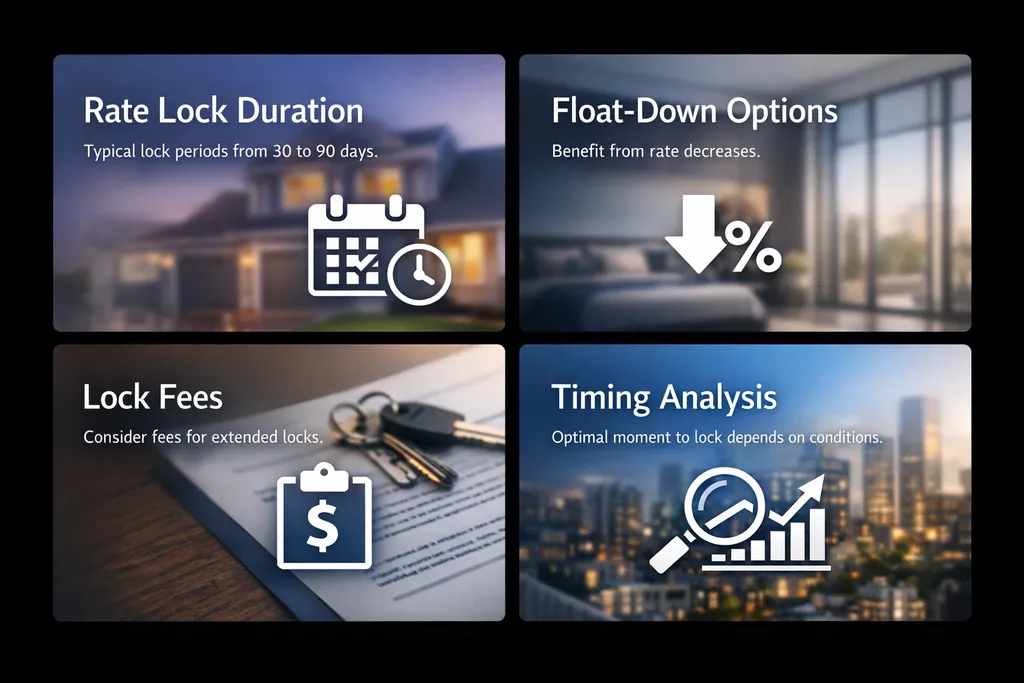
Lock Period Duration: Typical lock periods range from 30 to 90 days, with extensions available for complex investment transactions that may require additional processing time
Float-Down Options: These provisions allow investors to benefit from rate decreases during the lock period while maintaining protection against increases, providing flexibility in volatile conditions
Lock Fees and Costs: Some lenders may charge fees for extended lock periods or float-down features, which should be factored into your overall investment calculations
Rate Lock Timing: The optimal moment to lock depends on market conditions, loan processing timelines, and your risk tolerance for potential rate movements
Market Timing Analysis for DSCR and Investment Loans
Market timing analysis for DSCR and investment loans becomes particularly crucial when current rates for debt service coverage ratio loans typically range from 6.5% to 8.00% in 2026. This spread reflects varying market conditions and borrower qualifications.
Interest Rate Trends: Monitor Federal Reserve announcements, economic indicators, and mortgage market movements that could signal upcoming rate changes affecting your investment strategy
Seasonal Patterns: Real estate markets often experience cyclical patterns that may influence both property values and lending rates, impacting optimal timing decisions
Deal Timeline Coordination: Align your rate lock timing with property closing dates, inspection periods, and due diligence timelines to avoid unnecessary extensions or expired locks
Portfolio Strategy Integration: Consider how rate lock decisions fit within your broader investment portfolio and refinancing plans across multiple properties
Pricing Protection Strategies During Market Volatility
Pricing protection strategies during market volatility help investors maintain deal profitability even when interest rates fluctuate unexpectedly. These approaches provide insurance against adverse rate movements while preserving opportunities for favorable changes.
Staggered Lock Approach: Lock portions of your loan at different times to average out rate fluctuations and reduce concentration risk from timing a single lock perfectly
Float-Down Utilization: Leverage float-down options strategically when rates drop significantly, typically when decreases exceed the cost of the float-down feature
Extension Strategy Planning: Build extension costs into your deal analysis upfront to avoid rushed decisions if closing timelines extend beyond your initial lock period
Alternative Loan Product Evaluation: Compare rate lock terms across different investment loan types including DSCR loans, bank statement programs, and portfolio lending options
Step-by-Step Rate Lock Implementation Process
A systematic step-by-step rate lock implementation process ensures you capture favorable rates while avoiding costly timing mistakes that have impacted other investors in volatile markets.
Pre-Approval Rate Assessment: Obtain rate quotes from multiple lenders and understand their lock policies, fees, and terms before committing to a specific loan program or institution
Market Condition Analysis: Evaluate current economic indicators, pending Federal Reserve meetings, and market sentiment to determine if rates are likely to rise or fall in the near term
Lock Decision Execution: Execute your rate lock at the optimal moment based on your analysis, ensuring all documentation is complete and lock terms are clearly understood
Monitoring and Management: Track rate movements during your lock period and be prepared to utilize float-down options or plan for extensions if market conditions or closing timelines change
Interest Risk Control Techniques for Investment Portfolios
Interest risk control techniques for investment portfolios become essential when managing multiple properties and various loan types simultaneously, helping investors maintain consistent returns across their holdings.
Portfolio Rate Diversification: Stagger loan origination dates and rate lock periods across your portfolio to minimize exposure to any single interest rate environment or market condition
Cash Flow Stress Testing: Model your properties' cash flows at various interest rate scenarios to determine maximum acceptable rates while maintaining positive cash flow targets
Refinancing Timeline Coordination: Plan refinancing schedules strategically to take advantage of favorable rate environments while avoiding concentration of loan maturities during potential high-rate periods
Hedging Through Loan Structure: Consider mixing fixed-rate locks with adjustable-rate products based on your hold strategy and market outlook for each individual property investment
Advanced Timing Strategies for Fix and Flip Financing
Advanced timing strategies for fix and flip financing require different considerations than traditional rental property loans, given the shorter hold periods and faster transaction timelines typical in rehabilitation projects.
Construction Timeline Integration: Coordinate rate locks with renovation schedules and expected completion dates, accounting for potential delays that could affect refinancing or sale timelines
Exit Strategy Rate Planning: Consider end-buyer financing conditions and retail mortgage rates that might affect your property's marketability and final sale price at project completion
Bridge Loan Timing: Time bridge loan rate locks to coincide with property acquisition while planning transition to permanent financing or sale based on market conditions
Seasonal Market Coordination: Align project timelines and rate lock strategies with seasonal real estate market patterns that affect both construction costs and resale opportunities
Key Takeaways for Successful Rate Lock Strategy
Successful rate lock strategies in volatile markets require balancing timing precision with risk management across your investment portfolio. The difference between strategic planning and reactive decisions can significantly impact your long-term investment returns and cash flow stability. By implementing systematic approaches to timing analysis, pricing protection, and interest risk control, investors can navigate uncertain rate environments while securing favorable financing terms. Remember that rate lock decisions should align with your overall investment strategy, property timelines, and risk tolerance rather than attempting to perfectly time market movements.