Qualifying Rentals Without Tax Returns: A Strategic Guide for Real Estate Investors
The landscape of rental property financing has evolved dramatically, creating new opportunities for real estate investors who struggle with traditional income documentation requirements. Qualifying rentals without tax returns is becoming increasingly accessible through innovative loan products and alternative verification methods that focus on property performance rather than personal income history.
For many investors, tax returns don't accurately reflect their true income potential or might be complicated by write-offs, depreciation, and business structures. This shift toward cash flow-based lending represents a significant advantage for those looking to expand their rental portfolios without the constraints of conventional mortgage underwriting.
Understanding DSCR Income Method for Rental Properties
The DSCR income method represents a fundamental shift in how lenders evaluate rental property investments. This approach focuses on the property's ability to generate sufficient cash flow to cover mortgage payments rather than relying on the borrower's personal income documentation.
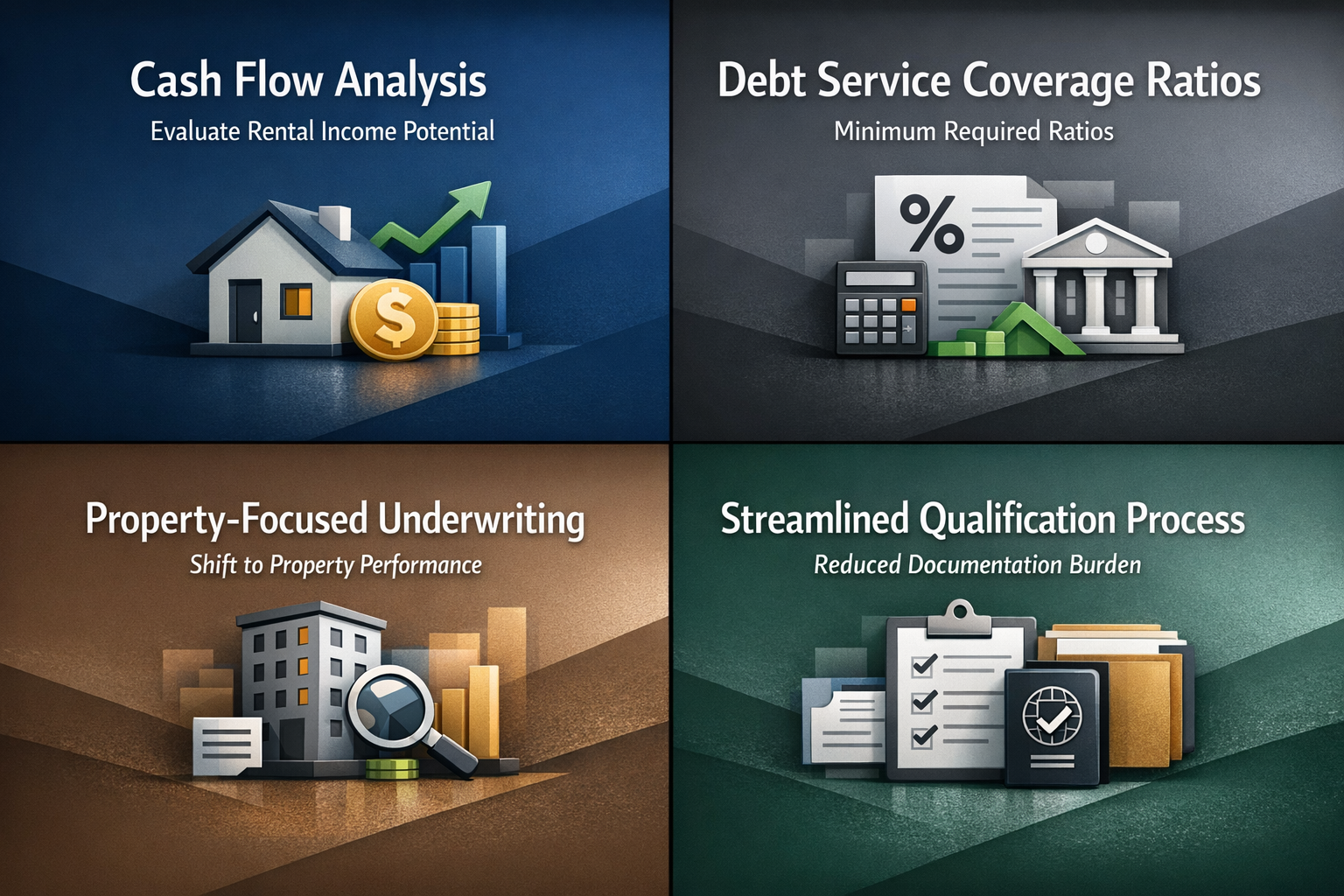
Cash flow analysis: Lenders evaluate the rental income potential using market rents, lease agreements, or appraisal rent schedules to determine if the property can support the mortgage payment
Debt service coverage ratios: Most lenders require a DSCR of 1.0 or higher, meaning the rental income must equal or exceed the mortgage payment, though some programs may accept ratios as low as 0.75
Property-focused underwriting: The emphasis shifts from personal income verification to property performance metrics, making it possible for investors to qualify based on the investment's merit
Streamlined qualification process: This method typically reduces the documentation burden significantly compared to traditional mortgage products that require extensive personal income verification
Essential Documentation Alternatives for Investment Loans
Documentation alternatives have expanded significantly, providing multiple pathways for investors to demonstrate their financial capacity without traditional tax returns. These alternatives focus on demonstrating cash flow and asset strength rather than W-2 income.
Bank statement programs: Lenders may accept 12 to 24 months of business or personal bank statements to calculate average monthly deposits as income verification
Profit and loss statements: Self-employed investors can often provide prepared P&L statements along with supporting bank statements to demonstrate business income
Asset-based qualification: Some programs allow qualification based on liquid assets, with lenders calculating a theoretical income stream from investment accounts or cash reserves
Rent rolls and lease agreements: Current rental income from existing properties can be documented through lease agreements and rent rolls rather than showing this income on tax returns
Cash Flow Validation Strategies That Work
Cash flow validation has become more sophisticated, with lenders accepting various methods to verify a property's income potential. These strategies help investors demonstrate rental viability without relying on personal income documentation.
Appraisal rent schedules: Professional appraisers provide market rent analysis that lenders use to determine the property's income potential, which may be more favorable than existing lease rates
Market rent studies: Third-party rent studies from local property management companies can establish realistic rental income expectations for underwriting purposes
Existing lease documentation: Current leases, rent rolls, and deposit records provide concrete evidence of the property's income-generating capacity
Property management statements: Professional property management companies can provide income and expense statements that help establish the property's financial performance history
Credit and Down Payment Requirements for Alternative Financing
While qualifying rentals without tax returns offers flexibility in income documentation, lenders typically maintain specific requirements for creditworthiness and down payments. Understanding these requirements helps investors prepare appropriately for the application process.
Credit score thresholds: Most DSCR loans and alternative documentation loans require minimum credit scores ranging from 620 to 680, though some specialized programs may accept lower scores with compensating factors
Down payment expectations: Investment property loans without tax returns often require 20% to 25% down payments, with some programs accepting as little as 15% for strong borrowers
Cash reserves requirements: Lenders frequently require 2 to 6 months of mortgage payments in reserves, demonstrating the investor's ability to handle vacancy or unexpected expenses
Debt-to-income considerations: Even without tax returns, lenders may still evaluate overall debt obligations using alternative documentation methods to ensure manageable debt levels
Strategic Refinancing from Hard Money to DSCR Loans
The transition from short-term financing to permanent DSCR loans represents a strategic opportunity for investors to stabilize their financing costs and eliminate the pressure of traditional income documentation. This refinancing strategy can significantly improve cash flow and investment returns.
Rate reduction opportunities: Moving from hard money loans with rates often exceeding 10% to DSCR loans with more competitive rates can substantially improve property cash flow
Extended terms benefits: DSCR loans typically offer 30-year amortization compared to short-term hard money products, reducing monthly payment obligations and improving cash-on-cash returns
Stabilized financing structure: Permanent financing eliminates the risk of short-term loan maturity and provides predictable payment schedules for long-term investment planning
Portfolio expansion capability: Lower carrying costs from permanent financing may free up capital for additional property acquisitions, accelerating portfolio growth strategies
Qualifying rentals without tax returns has become a viable and strategic option for real estate investors seeking to expand their portfolios without traditional income documentation constraints. The evolution of DSCR loans and alternative documentation methods has created pathways for investors to secure financing based on property performance rather than personal income verification.
Success in this approach requires understanding the specific requirements and documentation alternatives that lenders accept. By focusing on cash flow validation, maintaining strong credit profiles, and preparing appropriate down payments, investors can access competitive financing options that align with their investment strategies.
The mortgage market's continued evolution toward flexible underwriting criteria suggests these alternatives will become even more prevalent. Real estate investors who adapt to these changing opportunities may find themselves better positioned to capitalize on rental property investments while avoiding the complexities of traditional income documentation requirements.