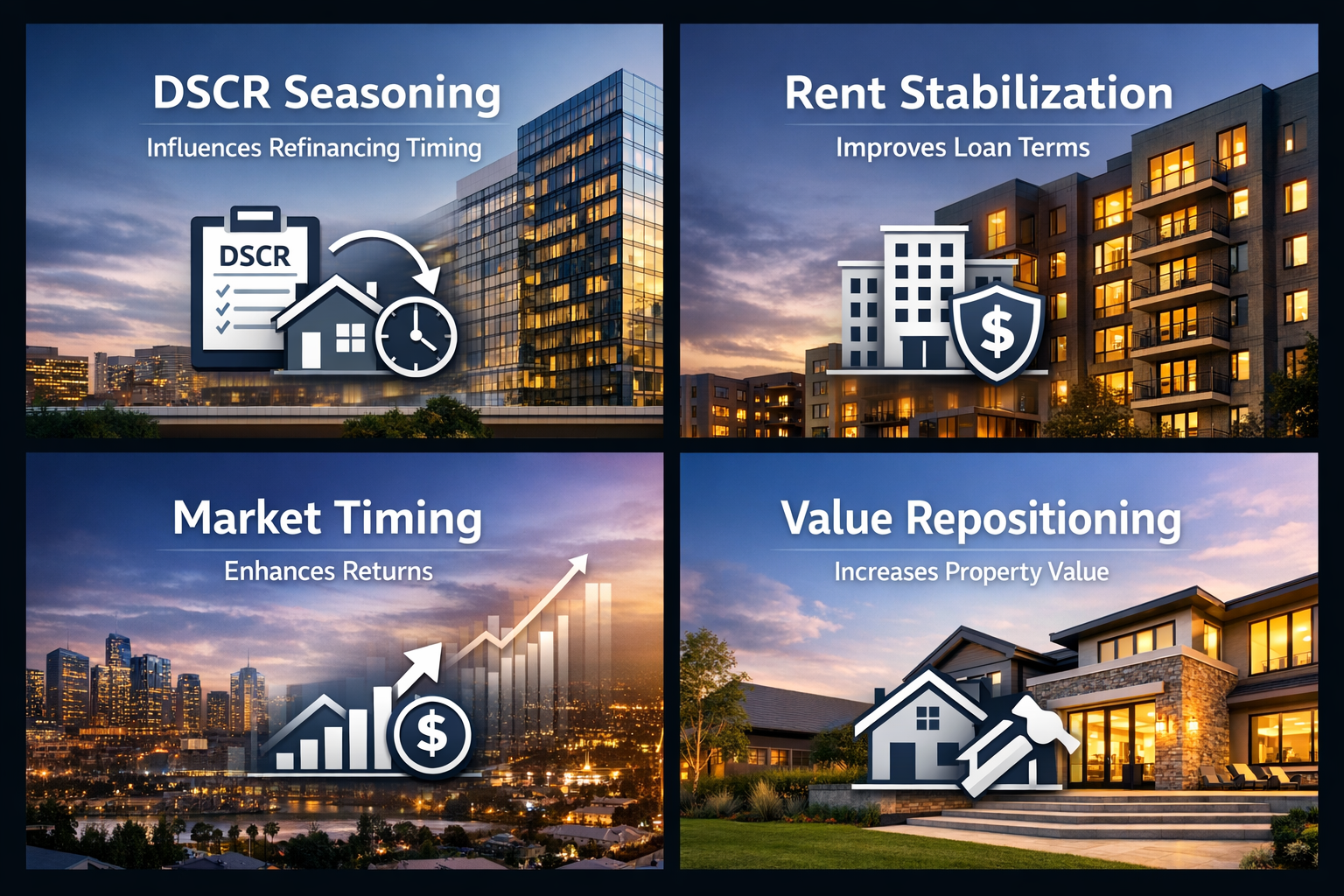
Timing your rental property refinancing can dramatically impact your investment returns. A well-executed rental refinance timing strategy involves understanding market cycles, DSCR requirements, and property performance metrics to maximize cash flow and equity extraction. Smart investors recognize that refinancing isn't just about securing lower rates, it's about strategically positioning properties for optimal financial performance.
The difference between a mediocre refinance and an exceptional one often comes down to timing. Market conditions, property seasoning requirements, and cash flow stability all play crucial roles in determining when to pull the trigger on a refinance. Understanding these factors helps investors avoid costly mistakes and capitalize on opportunities that enhance their portfolio's performance.
Understanding DSCR Seasoning Requirements for Optimal Timing
DSCR seasoning requirements significantly influence your rental refinance timing strategy. Different loan types carry varying seasoning periods that affect when you can access refinancing options.
Short-term rental properties: Typically require 6-12 months of operating history before refinancing eligibility, allowing lenders to assess actual rental performance and cash flow stability
Traditional DSCR loans: May offer more flexible seasoning requirements, with some programs allowing refinancing without traditional waiting periods for cash-out transactions
Conventional refinancing: Often requires longer seasoning periods, making DSCR loans attractive for investors seeking quicker capital recycling opportunities
Performance documentation: Lenders typically want to see consistent rental income and property management during the seasoning period to validate investment viability
This seasoning period isn't just a waiting game. It's an opportunity to optimize your property's performance metrics and position yourself for the most favorable refinancing terms possible.
Rent Stabilization Strategies That Improve Refinancing Outcomes
Rent stabilization forms a critical component of any successful rental refinance timing strategy. Lenders evaluate rental income consistency when determining loan terms and qualification ratios.
Lease structure optimization: Implementing longer-term leases with reliable tenants demonstrates income predictability that lenders value during the underwriting process
Market rate alignment: Ensuring rental rates reflect current market conditions helps justify property valuations and supports stronger DSCR calculations
Occupancy rate management: Maintaining high occupancy rates throughout the pre-refinancing period shows effective property management and reduces lender concerns about vacancy risks
Documentation systems: Establishing comprehensive rental income records and lease agreements streamlines the refinancing application process and demonstrates professional management practices
These stabilization efforts create a foundation that supports not only current cash flow but also positions the property favorably for refinancing evaluation and future appreciation.
Market Timing Considerations for Maximum Leverage
Strategic market timing can significantly enhance your rental refinance timing strategy returns. Understanding broader economic cycles and real estate market conditions helps optimize refinancing decisions.
Interest rate environments: Monitoring rate trends and refinancing during favorable periods can result in substantial long-term savings and improved cash flow performance
Property value cycles: Timing refinancing when property values peak in local markets maximizes equity extraction opportunities and loan-to-value positioning
Lending market conditions: Taking advantage of periods when lenders offer competitive terms or relaxed qualification standards can improve financing outcomes
Economic indicators: Considering employment rates, population growth, and development patterns in your investment markets helps predict optimal refinancing windows
Market timing requires balancing multiple factors, but investors who master this skill often achieve superior returns compared to those who refinance based solely on immediate needs or arbitrary timelines.
Value Repositioning Through Strategic Property Improvements
Value repositioning can dramatically enhance your rental refinance timing strategy by increasing property values and rental income potential before refinancing.
Targeted renovations: Focusing on improvements that increase both property value and rental rates creates dual benefits that enhance DSCR ratios and loan qualification metrics
Energy efficiency upgrades: Installing modern systems and appliances can reduce operating costs while increasing property appeal and market value for appraisal purposes
Curb appeal enhancements: Strategic exterior improvements often provide high returns on investment and create positive first impressions during property appraisals
Unit optimization: Reconfiguring spaces to maximize rental potential or adding value-added amenities can justify higher rental rates and improve overall property performance
These repositioning strategies work best when implemented with clear refinancing timelines in mind, allowing sufficient time for improvements to impact both appraisals and rental income documentation.
Implementation Timeline for Optimal Refinancing Results
A structured implementation timeline ensures your rental refinance timing strategy delivers maximum results through systematic preparation and execution.
Pre-refinancing preparation (6-12 months): Begin rent stabilization efforts, complete value-add improvements, and establish consistent documentation systems while monitoring market conditions for optimal timing windows
Market analysis and lender research (3-6 months): Evaluate multiple lending options, compare DSCR requirements and terms, and align refinancing timeline with favorable market conditions and property performance metrics
Application and processing phase (30-60 days): Submit applications with comprehensive documentation, coordinate property appraisals, and manage the underwriting process while maintaining property performance standards
Closing and post-refinancing optimization (ongoing): Complete the refinancing transaction and immediately begin implementing strategies for the next potential refinancing cycle or portfolio expansion opportunity
This timeline approach ensures every aspect of your refinancing strategy aligns with both market opportunities and property-specific factors that influence loan terms and approval outcomes.
Mastering rental refinance timing strategy requires balancing multiple factors including DSCR seasoning requirements, rent stabilization, market conditions, and value repositioning opportunities. Successful investors recognize that refinancing isn't just a financial transaction but a strategic tool for portfolio optimization and wealth building.
The key to exceptional results lies in treating refinancing as an ongoing strategic process rather than a reactive response to immediate needs. By implementing systematic approaches to property management, market analysis, and timing optimization, investors can consistently achieve superior refinancing outcomes that enhance long-term portfolio performance and profitability.