How Mortgage Tech Automation in Underwriting is Reshaping Real Estate Investment
The landscape of real estate investment financing is experiencing a technological revolution. Mortgage tech automation in underwriting has emerged as a powerful force, transforming how lenders evaluate DSCR loans, fix and flip financing, and rental property loans. This shift toward ai underwriting tools is creating unprecedented opportunities for investors to secure capital faster and more efficiently than ever before.
For real estate investors, understanding these fintech shifts means the difference between capitalizing on deals quickly and watching opportunities slip away. The integration of automated systems in mortgage underwriting is not just improving approval efficiency, it's fundamentally changing how investment properties are evaluated and financed.
As we navigate through 2026, savvy investors are leveraging these technological advances to build stronger portfolios, secure better loan terms, and accelerate their investment timelines. Let's explore how these innovations are reshaping the investor lending landscape.
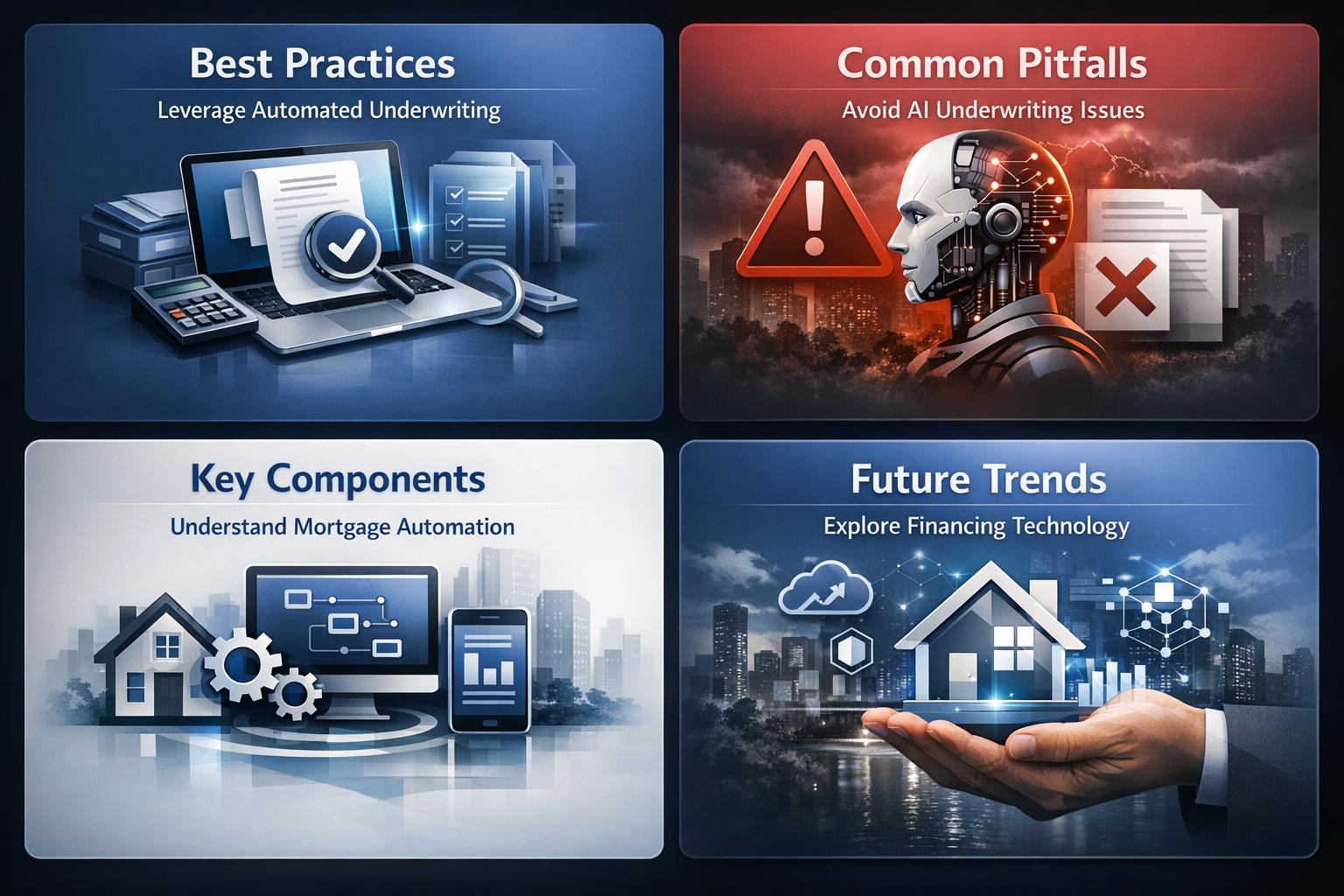
Best Practices for Leveraging Automated Underwriting
Smart real estate investors who understand best practices for leveraging automated underwriting can position themselves for faster loan approvals and better terms. These technological advances require a strategic approach to maximize their benefits.
Maintain accurate financial documentation: Automated systems can process clean, well-organized financial records much faster, leading to quicker DSCR loan evaluations and decisions.
Understand DSCR ratio requirements: With ratios of 1.25 or higher typically providing access to better rates, investors should structure their deals to meet or exceed these benchmarks for optimal automated processing.
Prepare comprehensive property data: AI underwriting tools can analyze rental income potential more effectively when provided with detailed market comparisons and property performance metrics.
Stay current with credit profiles: Automated systems may flag credit issues faster, so maintaining strong credit scores helps ensure smooth processing through these advanced systems.
Common Pitfalls to Avoid with AI Underwriting
While automated underwriting systems offer significant advantages, there are common pitfalls to avoid with AI underwriting that could delay or derail your investment financing. Understanding these potential issues helps investors navigate the process more effectively.
Don't submit incomplete applications: Automated systems may reject applications faster when key information is missing, whereas human underwriters might request additional documentation.
Avoid inconsistent financial data: AI tools can quickly identify discrepancies between different financial documents, potentially triggering additional review processes that slow down approval.
Don't ignore property condition issues: Automated valuation models might not account for unique property conditions that could affect rental income projections for DSCR calculations.
Avoid rushing the process: Despite faster processing capabilities, attempting to shortcut proper documentation and due diligence can lead to automated rejections or unfavorable terms.
Key Components of Modern Mortgage Automation Systems
Understanding the key components of modern mortgage automation systems helps investors appreciate how these technologies streamline the lending process and improve approval efficiency for investment properties.
Risk Assessment Algorithms: These systems analyze borrower profiles and property data to evaluate lending risk more consistently, potentially offering more predictable outcomes for DSCR loan applications.
Income Verification Tools: Automated systems can verify rental income potential and existing cash flow from investment properties, supporting faster decision-making for portfolio expansion.
Document Processing Capabilities: AI-powered document review can extract and verify information from financial statements, tax returns, and property records with greater speed and accuracy.
Compliance Monitoring: Built-in regulatory compliance checks help ensure that loan products meet current requirements while maintaining processing speed.
Integration Platforms: Modern systems connect multiple data sources and third-party services to create comprehensive borrower and property profiles for more informed lending decisions.
Impact on DSCR Loan Processing Times
The impact on DSCR loan processing times has been one of the most significant benefits of mortgage tech automation in underwriting. These improvements are creating competitive advantages for investors who can move quickly on profitable deals.
Initial Application Review: Automated systems can evaluate basic DSCR loan eligibility within hours rather than days, allowing investors to know their preliminary approval status much faster.
Property Cash Flow Analysis: AI tools can analyze rental income potential and calculate debt service coverage ratios more quickly, supporting faster decision-making for time-sensitive investment opportunities.
Documentation Verification: Automated document review processes can verify financial information and property details concurrently, reducing the traditional sequential review timeline.
Credit and Background Checks: Integrated systems can pull and analyze credit reports, background information, and public records simultaneously, compressing what used to be separate verification steps.
Future Trends in Investment Property Financing Technology
Looking ahead, future trends in investment property financing technology suggest even more sophisticated tools and processes that could benefit real estate investors. These developments may reshape how DSCR loans and other investment financing products are structured and delivered.
Predictive Analytics for Market Performance: Advanced algorithms might analyze local market trends and predict rental income potential with greater accuracy, supporting more precise DSCR calculations and loan terms.
Blockchain Integration for Documentation: Distributed ledger technology could streamline property title verification and transaction history, potentially reducing due diligence timelines for investment property loans.
Enhanced Portfolio Management Tools: Integrated platforms may offer comprehensive portfolio analysis capabilities, helping lenders evaluate overall investor performance when considering new loan applications.
Real-Time Market Data Integration: Dynamic pricing and terms based on current market conditions could allow for more responsive loan products that adapt to changing investment environments.
The evolution of mortgage tech automation in underwriting represents a fundamental shift in how real estate investors access capital. With AI underwriting tools streamlining processes and improving approval efficiency, investors who understand and leverage these technologies gain significant competitive advantages in today's market.
As fintech shifts continue to reshape the lending landscape, staying informed about these developments becomes crucial for investment success. The combination of faster processing times, more consistent evaluation criteria, and improved access to financing creates opportunities that didn't exist just a few years ago.
For real estate investors focused on building and expanding their portfolios, embracing these technological advances while maintaining sound investment fundamentals positions them for continued success. The future of investment property financing is being written today, and those who adapt will be best positioned to capitalize on the opportunities ahead.