Mixed use properties present unique opportunities for real estate investors seeking diversified income streams and enhanced returns. However, the complexity of managing both residential and commercial components requires strategic planning, particularly when it comes to mixed use property income split allocation. Understanding how to properly divide income between different property uses can significantly impact your tax liability, financing options, and overall investment performance.
The evolving landscape of DSCR lending and innovative mortgage products has made mixed use properties increasingly attractive to investors. With proper income allocation strategies, these properties can offer superior cash flow potential while providing valuable tax optimization opportunities that might not be available with single-use investments.
Understanding Mixed Use Property Income Allocation
Understanding mixed use property income allocation requires careful consideration of how different property components generate revenue. The process involves strategically dividing income between residential and commercial uses to optimize both tax benefits and financing opportunities.
Q: How do I determine the proper income split for my mixed use property?
The income split typically depends on the actual use and square footage allocation between commercial and residential spaces. Most investors calculate this based on proportional square footage, rental rates, and the property's primary use designation. This calculation affects everything from tax reporting to loan underwriting, so accuracy is crucial for compliance and optimization.
Key Factors Influencing Commercial Income Allocation
Key factors influencing commercial income allocation can make or break your investment strategy. Several critical elements determine how effectively you can split income between different property uses.
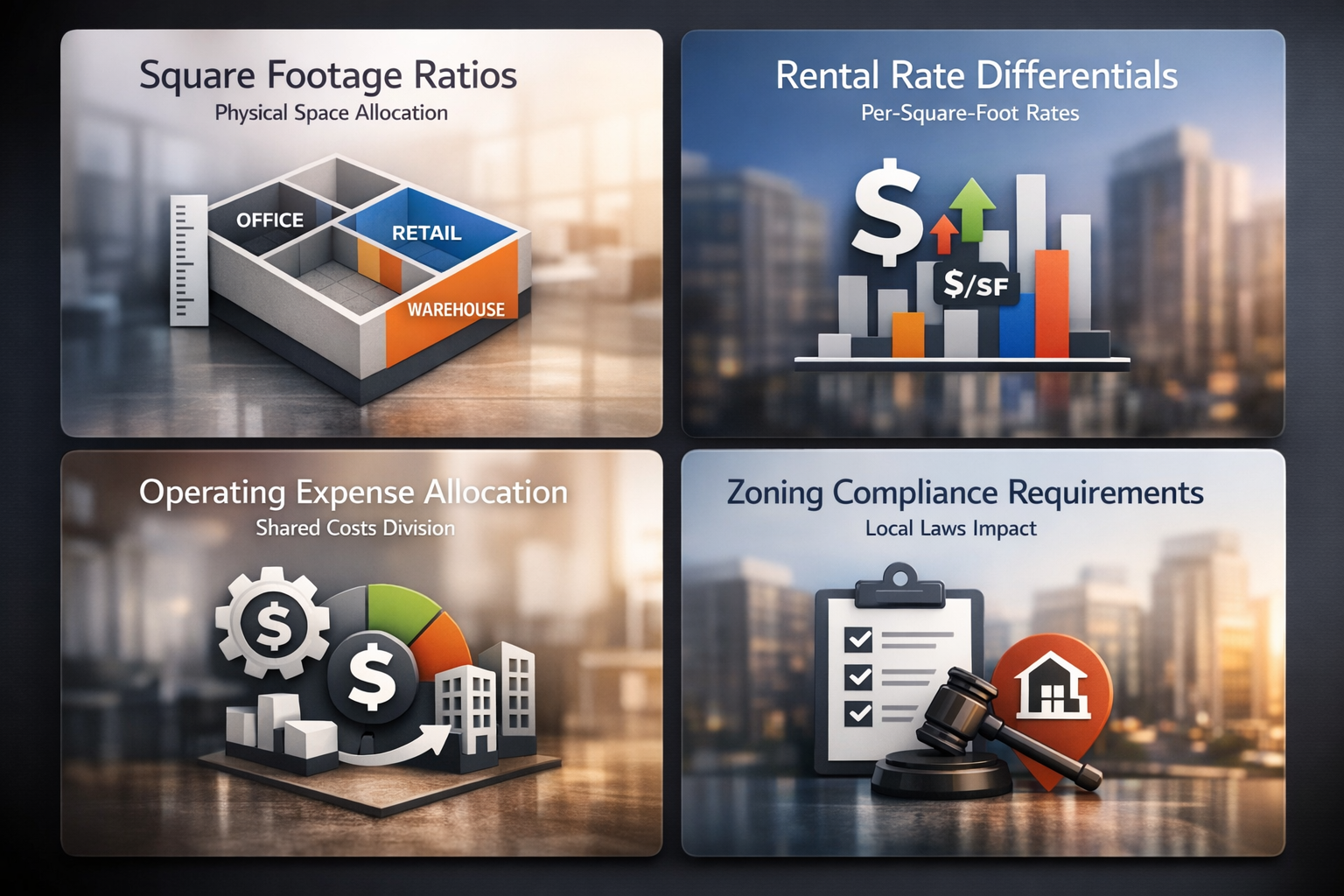
Square Footage Ratios: The physical space dedicated to commercial versus residential use forms the foundation of income allocation calculations
Rental Rate Differentials: Commercial spaces often command higher per-square-foot rates, affecting the proportional income distribution
Operating Expense Allocation: Shared utilities, maintenance, and management costs must be properly divided between commercial and residential components
Zoning Compliance Requirements: Local zoning laws may dictate minimum percentages for commercial or residential use, directly impacting income potential
Tax Optimization Through Strategic Income Division
Tax optimization through strategic income division represents one of the most compelling advantages of mixed use property investment. Proper classification and allocation can significantly enhance your overall returns.
Depreciation Benefits: Commercial and residential components may qualify for different depreciation schedules, potentially accelerating tax deductions
Expense Deduction Maximization: Strategic allocation allows investors to optimize deductible expenses across both property uses
Cost Segregation Opportunities: Mixed use properties often present enhanced cost segregation potential, allowing for accelerated depreciation on specific components
Section 1031 Exchange Flexibility: Proper income allocation documentation can provide more options for like-kind exchanges in future transactions
DSCR Lending Considerations for Mixed Use Properties
DSCR lending considerations for mixed use properties have evolved significantly as lenders adapt to market demands. The continued strong demand for DSCR loans into 2026 presents opportunities for mixed use property investors.
Cash Flow Analysis: Lenders increasingly focus on combined cash flow from both commercial and residential components when evaluating loan applications
Income Stability Assessment: Mixed income streams may provide more stability, potentially improving loan terms and approval odds
Hybrid Product Availability: New lending products specifically designed for mixed use properties may offer more favorable terms than traditional commercial loans
Essential Steps for Proper Income Documentation
Essential steps for proper income documentation ensure compliance and optimize your investment's financial performance. Following a systematic approach protects your interests and maximizes benefits.
Establish Clear Use Percentages: Document the exact percentage of space allocated to commercial versus residential use through professional measurements and architectural plans
Implement Separate Accounting Systems: Maintain distinct income and expense tracking for each property component to support allocation decisions
Create Detailed Lease Structures: Structure commercial and residential leases to clearly reflect market rates and proper income attribution
Maintain Professional Property Management: Consider professional management to ensure proper documentation and compliance with different regulatory requirements for each use type
Underwriting Approach for Maximum Financing Success
An effective underwriting approach for maximum financing success requires presenting your mixed use property investment in the most favorable light. Lenders evaluate these properties differently than single-use investments.
Present Comprehensive Cash Flow Analysis: Provide detailed projections showing combined income streams and how they support debt service requirements
Demonstrate Market Knowledge: Show understanding of both commercial and residential rental markets in your area to support income projections
Highlight Risk Mitigation: Emphasize how diversified income sources reduce overall investment risk compared to single-tenant commercial properties
Provide Professional Property Analysis: Include professional appraisals that properly value both commercial and residential components
Document Compliance History: Show track record of proper zoning compliance and successful management of mixed use properties if applicable
Mastering mixed use property income split strategies positions real estate investors to capitalize on one of the most dynamic segments of the investment market. With proper planning and documentation, these properties can deliver superior returns through diversified income streams, enhanced tax benefits, and improved financing terms.
The continued evolution of DSCR lending products and the market's reset toward cash flow-focused investments creates an favorable environment for mixed use property investors. By understanding commercial income allocation principles, maintaining proper documentation, and working with knowledgeable lenders, investors can unlock the full potential of these complex but rewarding investments.
Success in mixed use property investment requires attention to detail, professional guidance, and a thorough understanding of both residential and commercial real estate markets. Those who master these elements will find themselves well-positioned to build wealth through this sophisticated investment strategy.