Master DSCR Cash Flow Analysis for Rental Property Success
Real estate investors face a critical challenge when evaluating rental properties: determining whether a property can generate enough cash flow to service its debt. DSCR cash flow analysis provides the answer by measuring a property's ability to cover mortgage payments through rental income alone. This analysis has become increasingly important as lenders shift toward cash flow-based lending, with DSCR loan origination volume showing significant growth in recent years.
Understanding how to conduct a comprehensive DSCR cash flow analysis can mean the difference between a profitable investment and a financial burden. Unlike traditional mortgages that focus on personal income, DSCR loans evaluate the property's income potential, making this analysis essential for building a successful rental portfolio.
DSCR cash flow analysis forms the backbone of property-based lending decisions. This analytical approach examines whether a rental property generates sufficient income to cover its debt obligations, providing lenders and investors with a clear picture of financial viability.
Property Income Focus: The analysis centers on rental income rather than borrower personal income, making it ideal for investors with multiple properties or complex income structures
Debt Coverage Measurement: DSCR calculations typically require a minimum ratio of 1.25, meaning the property must generate 25% more income than needed for debt service
Market-Based Evaluation: Lenders often use market rent analysis to determine income potential, even if current rents are below market rates
Investment Strategy Alignment: This approach aligns perfectly with buy-and-hold strategies where cash flow sustainability is paramount
Essential Components of Rental Income Review
A thorough rental income review requires examining multiple income sources and potential revenue streams. This comprehensive approach ensures accurate cash flow projections for DSCR calculations.
Primary Rental Income: Base monthly rent represents the most stable income source, typically calculated using current lease agreements or market rent studies
Additional Revenue Streams: Pet fees, parking charges, storage rentals, and laundry income can significantly impact overall property performance
Vacancy Rate Considerations: Most lenders apply vacancy factors ranging from 5% to 10% to account for periods between tenants
Seasonal Adjustments: Properties in tourist areas may require seasonal income analysis to capture fluctuating rental rates throughout the year
Calculating Accurate Expense Ratios
Expense ratio calculations directly impact DSCR results and loan approval decisions. Understanding which expenses to include and how to project them accurately is crucial for realistic cash flow analysis.
Operating Expenses: Property taxes, insurance, maintenance, and management fees typically consume 25% to 40% of rental income
Capital Reserves: Setting aside funds for major repairs and replacements helps maintain long-term cash flow stability
Utility Responsibilities: Whether landlord or tenant pays utilities significantly affects net operating income calculations
Professional Services: Property management, accounting, and legal fees should be factored into expense projections even if not currently used
Advanced Profitability Check Strategies
Beyond basic DSCR calculations, sophisticated profitability checks help investors identify the most promising opportunities and avoid potential pitfalls in their analysis.
Market Comparison Analysis: Comparing similar properties in the area provides context for income and expense projections
Stress Testing Scenarios: Modeling different vacancy rates, expense increases, and interest rate changes reveals investment resilience
Exit Strategy Evaluation: Considering potential appreciation and refinancing opportunities adds another dimension to profitability analysis
Step-by-Step DSCR Calculation Process
Following a systematic approach to DSCR calculation ensures accuracy and consistency in your analysis. This process helps investors and lenders evaluate properties using standardized methods.
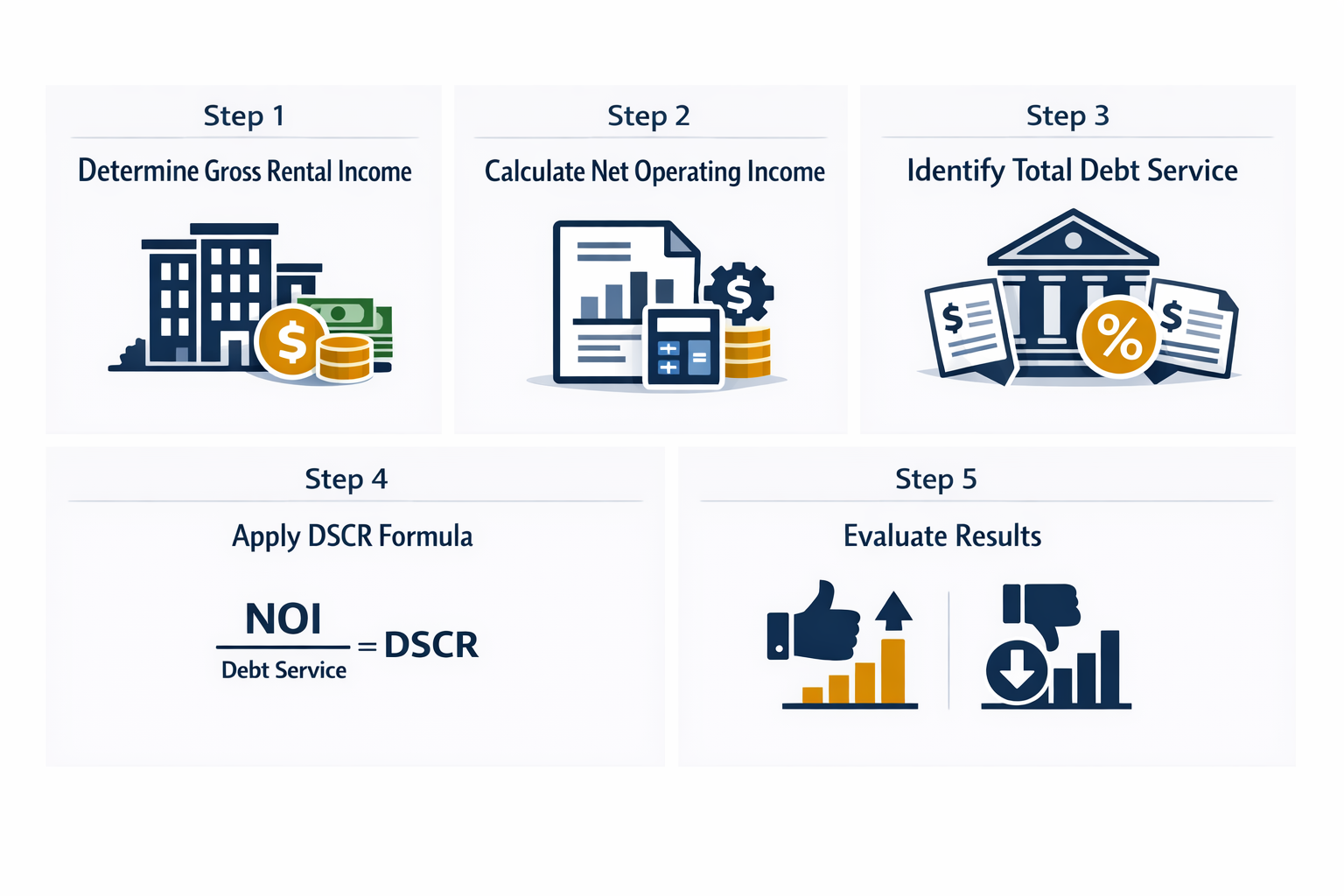
Determine Gross Rental Income: Start with market rent or current lease amounts, including all additional income sources like parking or pet fees
Calculate Net Operating Income: Subtract operating expenses including taxes, insurance, maintenance, and vacancy allowances from gross income
Identify Total Debt Service: Include principal, interest, taxes, and insurance (PITI) payments for the proposed loan amount
Apply DSCR Formula: Divide net operating income by total debt service to determine the debt service coverage ratio
Evaluate Results: Compare the calculated ratio against lender requirements, typically 1.25 or higher for approval
Common Analysis Mistakes to Avoid
Even experienced investors can make calculation errors that lead to inaccurate DSCR results. Recognizing these common mistakes helps ensure more reliable cash flow analysis and better investment success.
Underestimating Expenses: Failing to account for all operating costs, including irregular maintenance and capital improvements, skews profitability projections
Overestimating Rental Income: Using optimistic rent projections without considering market conditions and tenant quality can lead to disappointing results
Ignoring Vacancy Factors: Assuming 100% occupancy rarely reflects reality, and most lenders require vacancy allowances in calculations
Mixing Personal and Property Finances: DSCR analysis should focus solely on property performance, not borrower income or other investments
Neglecting Market Research: Using outdated comparable rent data or expense assumptions can significantly impact income calculations accuracy
Mastering DSCR cash flow analysis empowers real estate investors to make data-driven decisions about rental property acquisitions and refinancing. By focusing on property-specific income and expenses rather than personal financial metrics, this approach aligns perfectly with the growing trend toward cash flow-based lending.
Success in today's competitive investment market requires thorough analysis of rental income potential, accurate expense projections, and realistic profitability assessments. Investors who develop expertise in these areas position themselves to take advantage of favorable lending terms and identify properties with strong cash flow potential.
As DSCR loan products continue gaining popularity among real estate investors, the ability to conduct comprehensive cash flow analysis becomes increasingly valuable. This skill not only improves loan approval chances but also helps build a more profitable and sustainable rental property portfolio.