Is DSCR Loan Better Than Conventional Investment Loan for Real Estate Investors?
Real estate investors face a critical decision when financing investment properties: is DSCR loan better than conventional investment loan for their specific situation? This choice could impact your monthly cash flow by hundreds of dollars and determine how quickly you can scale your portfolio. DSCR loans offer property-focused underwriting that might help investors with strong rental income but complex personal finances, while conventional loans typically provide lower interest rates for those who qualify through traditional income verification. Understanding the trade-offs between these financing options helps investors align their loan choice with their investment strategy, risk tolerance, and growth objectives.
Key Qualification Differences Between DSCR and Conventional Loans
Key qualification differences between DSCR and conventional loans reveal fundamentally different approaches to investment property financing. These differences often determine which investors can access each loan type and how quickly they can close on properties.
Personal Income Focus: Conventional loans require detailed personal income verification including tax returns, W-2s, and debt-to-income ratio calculations, while DSCR loans focus primarily on the property's rental income potential
Credit Requirements: Both loan types typically require good credit, though conventional loans might offer slightly more flexibility in credit scoring for borrowers with strong income documentation
Documentation Complexity: DSCR loans often streamline the documentation process by eliminating personal income verification, which may appeal to self-employed investors or those with multiple income streams
Portfolio Scaling: DSCR loan qualification criteria based on property performance rather than personal debt-to-income ratios could enable faster portfolio expansion for active investors
Interest Rate Premium Analysis
Interest rate premium analysis shows DSCR loans typically carry higher costs than conventional investment loans. This rate difference directly impacts your investment returns and monthly cash flow projections.
Rate Spreads: DSCR loans may carry premiums ranging from 0.25% to 1.5% above conventional loan rates, depending on market conditions and lender pricing
Monthly Payment Impact: The higher interest rates on DSCR loans could increase monthly payments by approximately $350 compared to conventional loans on similar loan amounts
Long-term Costs: Over the life of a 30-year loan, the rate premium on DSCR financing might add tens of thousands in additional interest expense
Market Positioning: DSCR loan rates reflect the increased risk lenders perceive when underwriting based on property income rather than borrower income verification
Property Performance vs Personal Income Focus
Property performance versus personal income focus represents the core philosophical difference between these loan types. This distinction affects which investors benefit most from each financing option.
Cash Flow Emphasis: DSCR loans evaluate deals based on rental income coverage ratios, which might benefit investors purchasing properties in strong rental markets
Personal Financial Privacy: DSCR financing allows investors to keep personal financial details private while still accessing investment property loans
Deal-Specific Underwriting: Each property's income potential drives DSCR loan approval rather than the borrower's overall financial picture
Investment Strategy Alignment: Property-focused underwriting could support investors whose personal income doesn't reflect their investment acumen or property selection skills
Portfolio Scaling Considerations
Portfolio scaling considerations reveal how loan choice impacts your ability to grow your real estate investment business. The underwriting approach affects how many properties you can finance and how quickly you can expand.
Debt-to-Income Limitations: Conventional loans count all property payments against your personal debt-to-income ratio, which might limit portfolio size for active investors
Asset-Based Growth: DSCR loans enable portfolio expansion based on individual property performance rather than cumulative debt obligations
Speed of Acquisition: Streamlined documentation requirements for DSCR loans might accelerate the closing process for experienced investors
Investment Velocity: Property-focused underwriting could support faster deal evaluation and execution for investors targeting multiple acquisitions
Step-by-Step Loan Comparison Process
A step-by-step loan comparison process helps investors systematically evaluate whether DSCR or conventional financing better serves their investment goals. This structured approach ensures you consider all relevant factors.
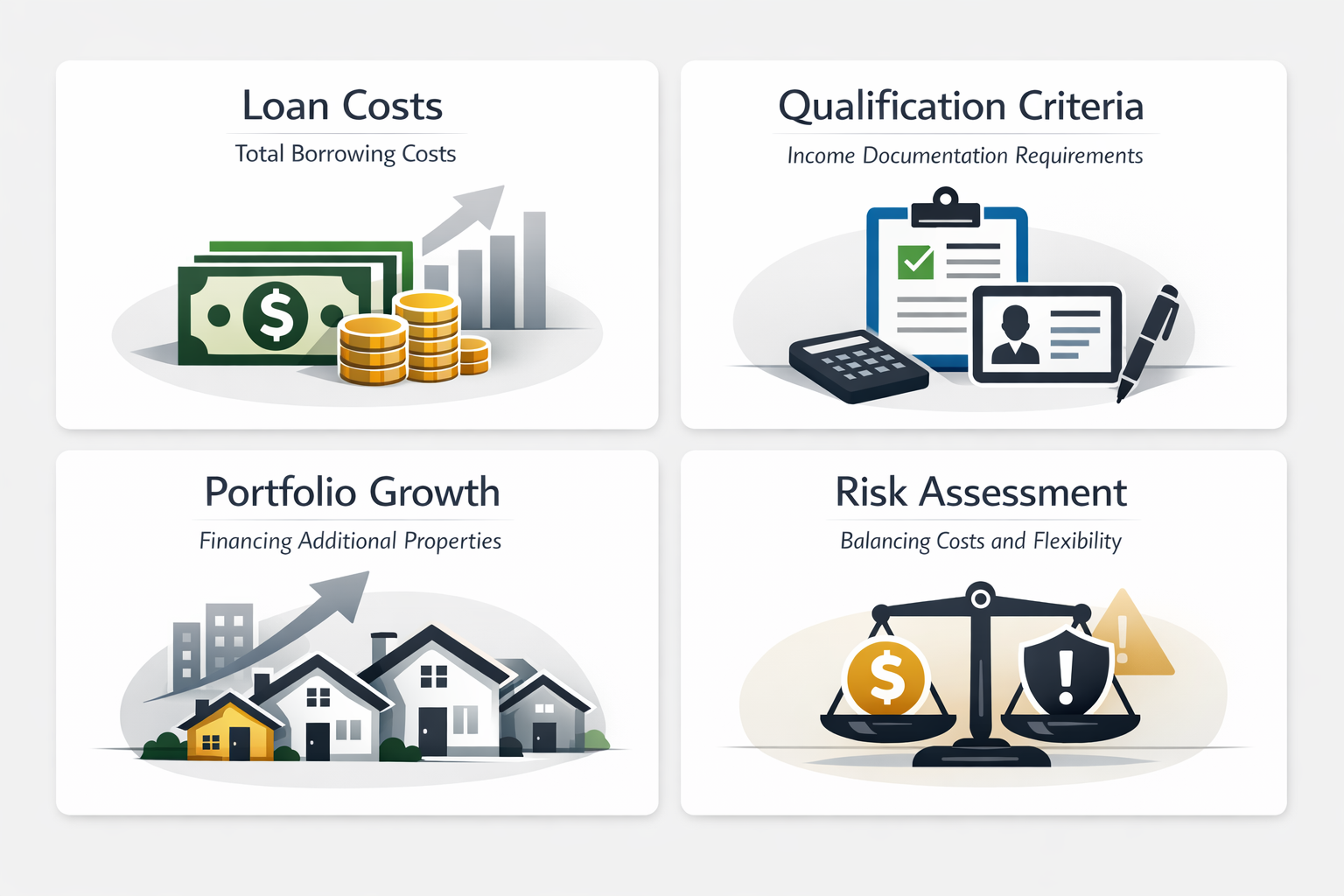
Calculate Total Borrowing Costs: Compare interest rates, fees, and monthly payments between both loan types to determine the true cost difference over your expected holding period
Assess Qualification Requirements: Evaluate your ability to meet conventional loan income documentation versus DSCR property performance requirements
Project Portfolio Growth: Consider how each loan type affects your ability to finance additional properties based on debt-to-income limitations or property-specific underwriting
Analyze Risk Tolerance: Balance the higher costs of DSCR loans against the flexibility and potential scaling advantages they might provide
When Each Loan Type Makes Sense
Understanding when each loan type makes sense helps investors match their financing choice to their specific situation and investment strategy. Different investor profiles may benefit from different approaches.
Choose Conventional Loans When: You have strong, documented personal income, want the lowest possible interest rates, and don't plan rapid portfolio expansion that might strain debt-to-income ratios
Select DSCR Loans When: You're self-employed with complex income documentation, plan aggressive portfolio scaling, or purchase properties with strong rental income that covers the higher interest costs
Consider Market Timing: Interest rate environments and lender competition might temporarily favor one loan type over another, affecting the optimal choice for current deals
Evaluate Exit Strategy: Your planned holding period and exit strategy should influence whether paying higher DSCR rates makes sense for the added flexibility
Determining whether DSCR loans are better than conventional investment loans depends on your individual circumstances, investment strategy, and portfolio goals. Conventional loans typically offer lower interest rates and might suit investors with strong personal income documentation who prioritize minimizing borrowing costs. DSCR loans could benefit investors who value qualification flexibility, plan rapid portfolio expansion, or have complex personal income situations that make conventional loan documentation challenging. The rate premium on DSCR loans, which might add $350 to monthly payments, should be weighed against the potential advantages in scaling speed and qualification ease. Successful real estate investors often use both loan types strategically, choosing the financing approach that best supports each specific deal and their overall investment objectives.