Real estate investors are increasingly turning to income only rental qualification methods as traditional mortgage requirements become more restrictive. This approach focuses on the property's cash flow potential rather than personal income documentation, making it particularly attractive for seasoned investors with complex financial portfolios. With DSCR underwriting methods gaining traction in 2026, understanding how rent based approval processes work can significantly impact your ability to scale your investment portfolio efficiently.
The shift toward property-centric financing represents a fundamental change in how lenders evaluate investment opportunities. Rather than scrutinizing tax returns and employment history, lenders now prioritize the rental income potential and debt service coverage ratios of individual properties. This evolution in underwriting has opened new doors for investors who might otherwise struggle with traditional qualification requirements.
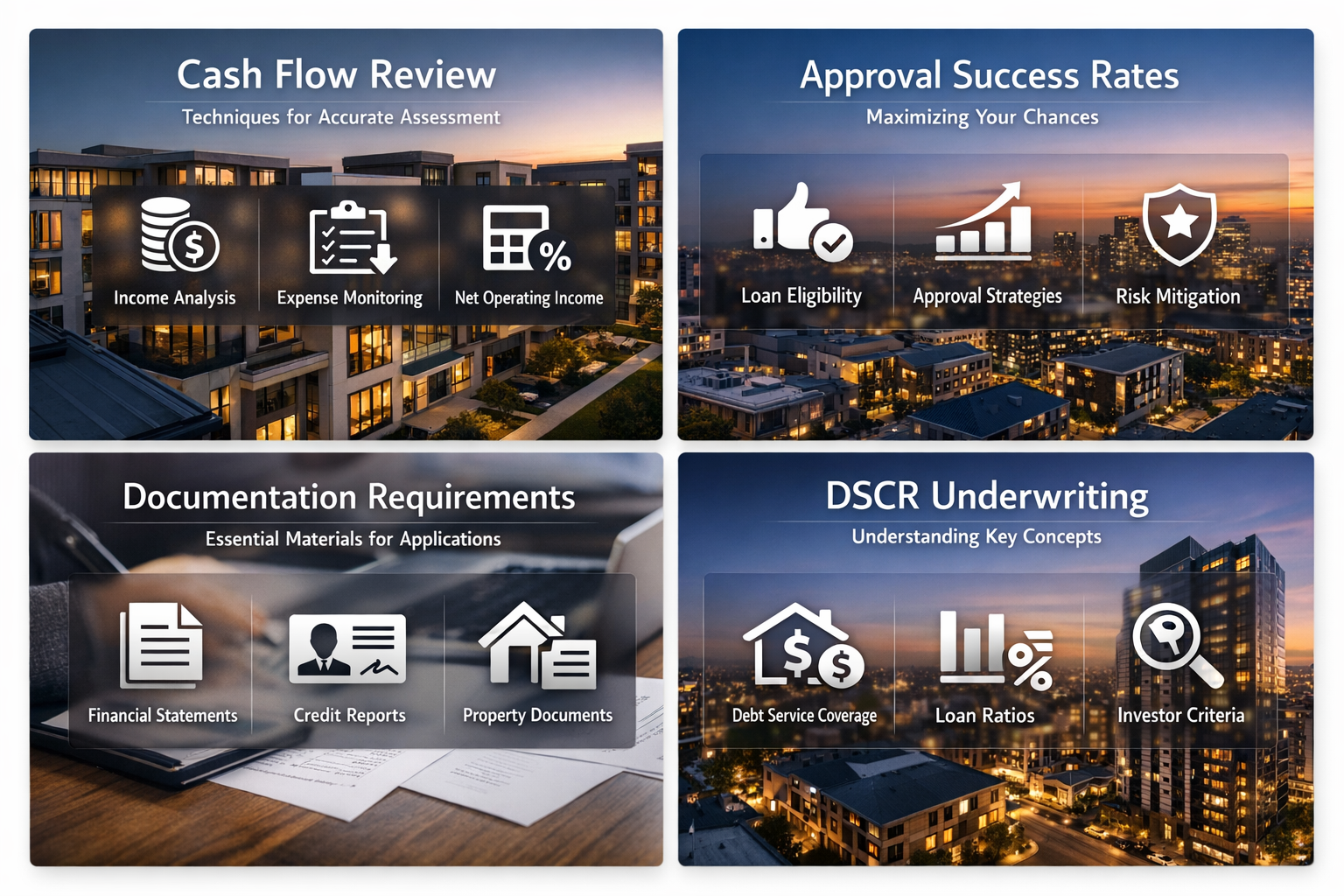
Understanding DSCR Underwriting Methods
DSCR underwriting methods represent a fundamental shift in how lenders evaluate rental property investments. This approach focuses entirely on the property's ability to generate sufficient rental income to cover its debt obligations, typically requiring a debt service coverage ratio of 1.0 or higher.
Automated valuation models are increasingly being used to streamline the assessment of rental income potential, improving accuracy in cash flow projections
Lenders evaluate market rents rather than personal income, making the process more straightforward for investors with multiple properties
The underwriting timeline may be shorter since personal financial documentation requirements are reduced
Property-specific metrics take precedence over borrower employment history or tax return complexity
Modern DSCR underwriting leverages technology to enhance precision in rental income assessment. Advanced automated valuation models help lenders quickly determine fair market rents for specific properties, reducing the guesswork traditionally associated with rental income projections. This technological integration has made the entire process more efficient and reliable for both lenders and investors.
Rent Based Approval Process Fundamentals
Rent based approval processes have revolutionized how investors approach financing decisions. Instead of focusing on personal income documentation, these systems evaluate the rental potential of individual properties to determine loan eligibility and terms.
Market rent analysis becomes the cornerstone of the approval process, often utilizing comparative rental data from similar properties
Lease agreements or rental history may be required to establish income stability and tenant quality
Property condition and location factors directly influence rental income projections and approval decisions
Vacancy assumptions are typically built into the analysis to account for realistic income fluctuations
The rent based approval system allows investors to qualify for financing based on each property's individual merit. This approach proves particularly beneficial for investors who own multiple properties or have non-traditional income sources that might complicate standard mortgage applications. Lenders can make faster decisions when they focus on concrete rental market data rather than complex personal financial situations.
Essential Documentation Requirements
While income only rental qualification reduces traditional documentation burdens, investors still need to prepare specific materials to support their applications. Understanding these requirements can significantly expedite the approval process.
Property appraisals or automated valuation reports that include rental income estimates
Current lease agreements or rental history demonstrating established income streams
Property tax records and insurance documentation to verify operating expenses
Bank statements showing sufficient reserves for property management and maintenance
Property management agreements if applicable, showing professional oversight of rental operations
Thorough preparation of documentation remains crucial even with simplified qualification requirements. Investors who organize their paperwork in advance typically experience faster closing times and smoother approval processes. The key difference lies in the focus shifting from personal financial documentation to property-specific information that demonstrates cash flow potential.
Strategic Cash Flow Review Techniques
Cash flow review processes have become more sophisticated as lenders develop better methods for analyzing rental property performance. These techniques help ensure accurate assessment of a property's ability to service its debt obligations.
Conduct comprehensive market rent analysis using multiple data sources to establish realistic income projections for the subject property
Calculate total debt service requirements including principal, interest, taxes, insurance, and any additional financing obligations
Factor in reasonable vacancy rates and maintenance reserves to create conservative cash flow projections that account for real-world scenarios
Review comparable rental properties in the immediate area to validate income assumptions and identify potential market trends
Effective cash flow review requires balancing optimistic projections with realistic market conditions. Investors who present well-researched cash flow analyses often find that lenders respond more favorably to their applications. The goal is demonstrating thorough understanding of the property's income potential while acknowledging the inherent risks in rental property investment.
Maximizing Approval Success Rates
Success with income only rental qualification depends on presenting a compelling case for each property's cash flow potential. Strategic preparation and professional presentation can significantly improve approval odds.
Work with experienced mortgage professionals who specialize in investor financing and understand the nuances of DSCR underwriting
Present conservative rental income projections that account for vacancy periods, maintenance costs, and market fluctuations
Demonstrate property management experience or professional management arrangements that reduce lender risk concerns
Maintain adequate cash reserves to cover unexpected expenses and show financial stability beyond the subject property
Choose properties in strong rental markets with established demand and stable occupancy rates
The most successful investors approach income only rental qualification as a business presentation rather than a simple loan application. They provide comprehensive property analysis, demonstrate market knowledge, and show clear understanding of rental property investment fundamentals. This professional approach helps build lender confidence in both the property and the investor's capabilities.
Income only rental qualification represents a significant opportunity for real estate investors to streamline their financing processes while focusing on what matters most: property cash flow potential. As DSCR underwriting methods continue to evolve and improve through technological advances, investors who master these processes will find themselves better positioned to capitalize on market opportunities.
The shift toward rent based approval systems reflects the mortgage industry's growing recognition that rental properties should be evaluated on their own merits rather than solely on borrower personal income. This evolution creates new possibilities for portfolio growth and investment strategy optimization.
Success with income only rental qualification requires thorough preparation, realistic cash flow projections, and professional presentation of property analysis. Investors who embrace these requirements and work with knowledgeable lenders typically find that the process becomes more predictable and efficient than traditional mortgage applications. As market conditions continue to evolve, this financing approach may become increasingly valuable for serious real estate investors seeking to scale their portfolios effectively.