The rental property investment landscape is experiencing a significant shift toward income based rental mortgage products that evaluate deals based on property performance rather than borrower income alone. This financing approach is gaining momentum as traditional lending models struggle to accommodate the diverse income structures of today's real estate investors.
DSCR mortgage structure models focus on the property's ability to generate sufficient cash flow to cover debt obligations, creating opportunities for investors who might not qualify under conventional income verification standards. As we move through 2026, this cash flow driven approval process is becoming increasingly popular among lenders and investors alike.
Understanding how these investor financing models work can help you capitalize on rental property opportunities that might otherwise remain out of reach through traditional mortgage channels.
Essential Tips for Income Based Rental Mortgage Success
Maximizing your success with income based rental mortgage products requires strategic preparation and market awareness. These financing solutions are reshaping how investors approach rental property acquisitions.
Focus on property cash flow potential: Lenders evaluate the rental income against mortgage payments through debt service coverage ratios. Properties with strong rental demand in your target markets typically perform better in underwriting processes.
Prepare comprehensive rental analysis: Document comparable rents, occupancy rates, and operating expenses for your target property. This data strengthens your loan application by demonstrating the property's income-generating capacity to lenders.
Consider market timing advantages: Current market conditions favor DSCR loans as lenders adapt to changing borrower profiles. The growing acceptance of these products may provide more favorable terms and expanded availability throughout 2026.
Evaluate multiple lenders: Different institutions offer varying DSCR requirements and loan terms. Shopping around can help you secure better rates and conditions that align with your investment strategy and property portfolio goals.
Key Benefits of Cash Flow Driven Approval
Cash flow driven approval processes are transforming how investors access rental property financing. This approach offers distinct advantages over traditional income verification methods.
Simplified qualification process: Investors with complex income structures, including self-employed individuals and those with multiple revenue streams, often find DSCR loans more accessible. The focus shifts from personal tax returns to property performance metrics.
Portfolio expansion opportunities: These loans enable investors to acquire additional properties without personal income constraints limiting their growth. Each property's cash flow potential becomes the primary qualification factor rather than debt-to-income ratios.
Flexible borrower profiles: Non-traditional wage earners and investors with seasonal income variations may find better financing options through DSCR mortgage structure approaches. This flexibility is particularly valuable in today's evolving employment landscape.
Strategic Property Selection Tips
Choosing the right properties for income based rental mortgage financing requires careful market analysis and cash flow projections. Your property selection directly impacts loan approval chances and investment returns.
Target strong rental markets: Properties in areas with consistent rental demand and low vacancy rates typically meet DSCR requirements more easily. Research local employment trends, population growth, and rental market stability before making offers.
Calculate realistic operating expenses: Include property taxes, insurance, maintenance, and potential vacancy periods in your cash flow analysis. Conservative expense estimates help ensure your property meets minimum debt service coverage requirements over time.
Consider property condition impacts: Well-maintained properties with recent updates may command higher rents and attract quality tenants. Factor renovation costs into your acquisition strategy to optimize long-term cash flow performance.
Analyze comparable rental rates: Document current market rents for similar properties in your target area. This research supports your loan application and helps validate the property's income potential to underwriters.
Steps to Secure DSCR Mortgage Structure Financing
Successfully obtaining DSCR mortgage structure financing involves understanding lender requirements and preparing thorough documentation. Following these steps can improve your approval chances.
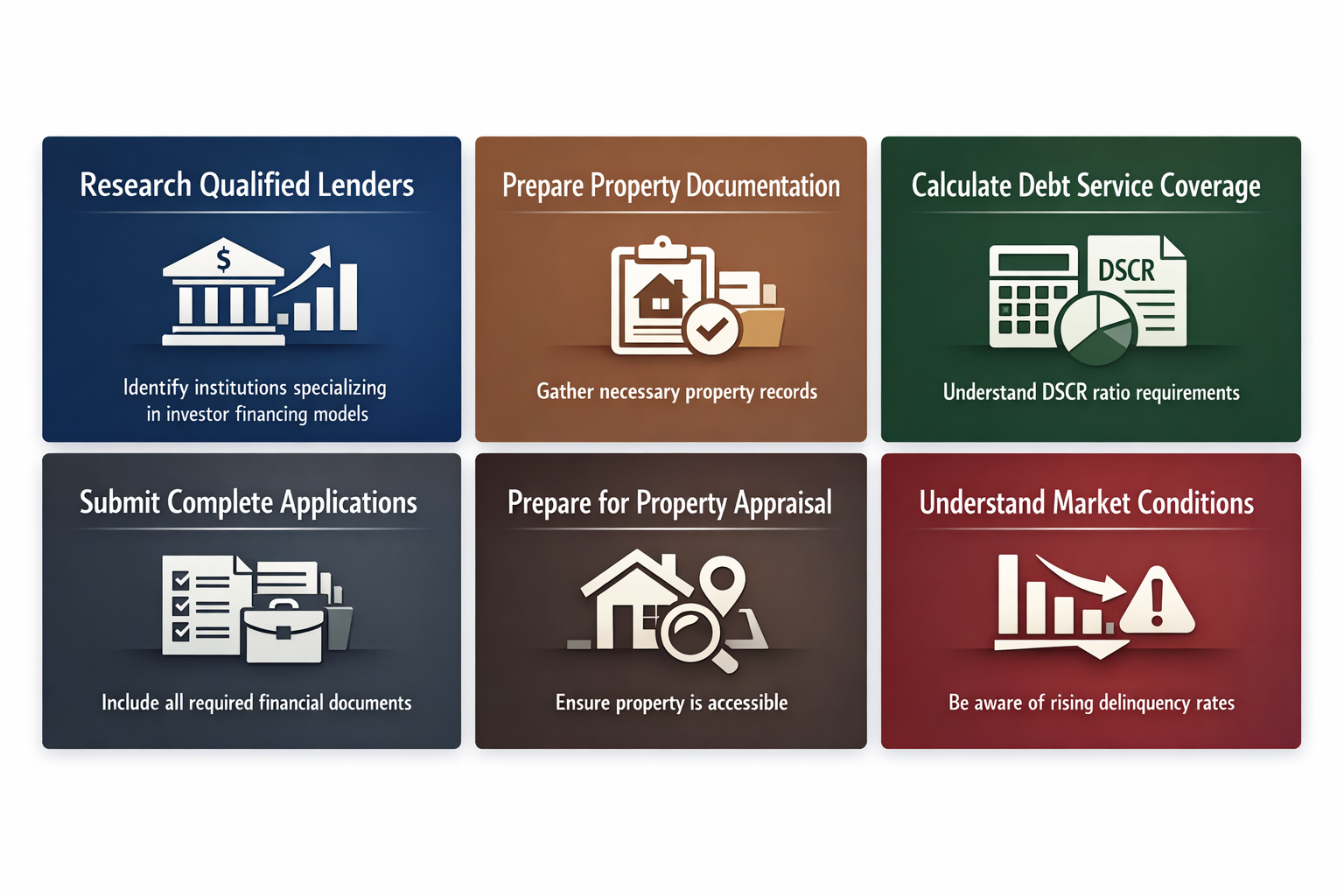
Research qualified lenders: Identify institutions that specialize in investor financing models and DSCR products. Not all lenders offer these programs, so targeting the right financial partners saves time and increases success rates.
Prepare property documentation: Gather lease agreements, rent rolls, operating expense records, and property condition reports. Comprehensive documentation demonstrates the property's income stability and helps justify your requested loan amount.
Calculate debt service coverage: Most lenders require DSCR ratios above 1.0, with many preferring ratios of 1.25 or higher. Understanding these requirements helps you evaluate deals before submitting applications.
Submit complete applications: Include all required financial documents, property analysis, and borrower information in your initial submission. Complete applications typically receive faster processing and better consideration from underwriting teams.
Prepare for property appraisal: Ensure the property is accessible and presentable for the appraisal process. The appraised value affects your loan-to-value ratio and overall financing terms.
Important Considerations for Investor Financing Model
Understanding the nuances of investor financing models helps you make informed decisions about rental property acquisitions and portfolio growth strategies.
Interest rate expectations: DSCR loans typically carry higher interest rates than owner-occupied mortgages due to their investment nature. Factor these rates into your cash flow projections and return calculations when evaluating potential deals.
Down payment requirements: Many DSCR lenders require larger down payments, often 20% to 25% or more. Plan your capital allocation accordingly and consider how down payment requirements affect your overall investment capacity.
Property management considerations: Consistent rental income is crucial for DSCR loan performance. Evaluate whether you'll self-manage or hire professional property management, as this decision affects your net operating income calculations.
Market condition awareness: While DSCR loan demand is expected to persist through 2026, rising delinquency rates in some markets warrant careful property selection and conservative underwriting approaches.
Market Outlook and Future Opportunities
The income based rental mortgage market continues evolving as lenders adapt to changing investor needs and economic conditions. Understanding these trends helps position your investment strategy effectively.
Growing lender acceptance: More financial institutions are adding DSCR products to their portfolios as demand increases. This expansion may lead to more competitive rates and terms as the market matures throughout 2026.
Technology integration: Streamlined application processes and faster underwriting through digital platforms are making DSCR loans more accessible. These improvements can reduce closing times and enhance the overall borrowing experience for investors.
Regulatory environment: While DSCR loans face some scrutiny due to rising delinquencies, their fundamental appeal to investors and lenders suggests continued availability. Monitor regulatory changes that might affect loan terms or qualification requirements.
Portfolio diversification benefits: These financing tools enable investors to diversify across different markets and property types without personal income limitations. This flexibility becomes increasingly valuable in changing economic conditions.
Economic resilience factors: Properties with strong cash flow performance tend to weather economic downturns better than those dependent on appreciation alone. DSCR loans align financing with this income-focused investment approach.
Income based rental mortgage products represent a fundamental shift in how real estate investors access financing for rental properties. The growing acceptance of DSCR mortgage structure approaches creates new opportunities for investors who understand how to leverage these tools effectively.
Success with cash flow driven approval processes requires careful property selection, thorough market analysis, and realistic cash flow projections. As the investor financing model continues gaining traction throughout 2026, staying informed about lender requirements and market trends will be crucial for maximizing your investment potential.
Whether you're expanding an existing portfolio or entering the rental property market for the first time, these financing solutions can help you achieve your investment goals when traditional mortgage options fall short. Focus on properties with strong income potential, work with experienced DSCR lenders, and maintain conservative underwriting standards to build a successful rental property portfolio.