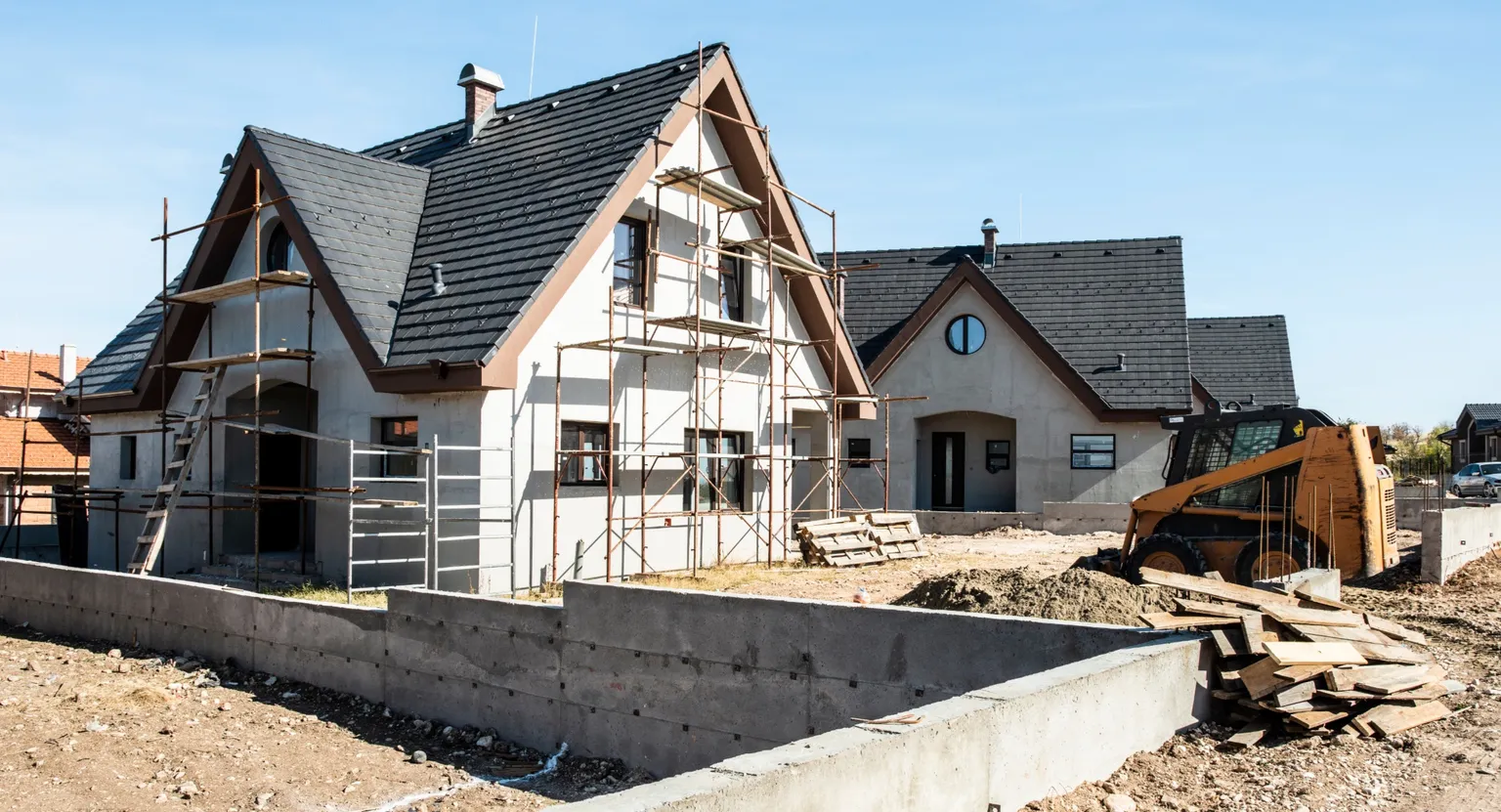
DSCR Construction Loans: How to Finance Build-to-Rent Properties
The Build-to-Rent (BTR) model has become one of the fastest-growing strategies in U.S. real estate investment. BTR home starts nationwide have increased by 134% since 2019, and renters accounted for roughly four in five new households in 2025, keeping demand for purpose-built rental properties high. For investors looking to build single-family or small multifamily rentals from the ground up, understanding how DSCR construction loans fit into the financing picture is critical.
What Is a DSCR Construction Loan?
A standard DSCR loan qualifies borrowers based on a completed property's rental income rather than personal income. Construction loans, by contrast, are short-term financing that fund a building project in phases before the property is producing any income. Historically, DSCR loans were exclusively used to purchase ready-to-rent investment properties, so if borrowers wanted to construct rental properties and lease them to tenants, they had to apply for a construction loan and then refinance into a DSCR loan at the end of the term.
This two-step process is still the most common approach, and it is worth understanding how both phases work.
The Construction Loan
Construction loans are short-term financing that fund a building project in phases. They use draw-based disbursement tied to completed work stages, carry interest-only payments during the construction period, and qualify based on the project's feasibility rather than the borrower's personal income.
Key things to know during this phase:
Loan-to-Cost (LTC): Construction lenders typically lend a percentage of the total project cost. Aggressive leverage can reach 85% LTC on construction loans, though this varies by lender, project type, and borrower profile.
Interest-only payments: During construction, borrowers typically pay interest only on the funds that have been drawn, not on the full loan amount. This keeps cash flow manageable while the project is being built.
Timeline: Construction loans are temporary by design. Once the project is complete and receives a Certificate of Occupancy, investors move to permanent financing.
Have a property in mind?
Tell us about the property and we will find the financing that fits you best.
Refinancing into a DSCR Loan
Once construction is complete and the property is ready to rent, investors refinance out of the construction loan into a long-term DSCR loan. The DSCR loan proceeds pay off the construction loan balance, leaving the investor with stable 30-year (or 40-year) financing based on the property's rental income.
The typical timeline for this transition is to apply for DSCR financing 90 days before construction completes, provide the DSCR lender with rental comps, floor plans, and projected rent details, and then lock a rate 30 to 60 days before completion.
For vacant new construction, lenders use an appraiser's rent schedule to estimate what the property will generate once leased, rather than requiring actual rent roll.
How DSCR Is Calculated on a New Construction Property
DSCR is calculated by dividing the monthly rental income by the monthly PITIA (principal, interest, taxes, insurance, and association dues):
DSCR = Monthly Rent / Monthly PITIA
On a newly completed property that is not yet leased, the lender uses market rent projections from a licensed appraiser. Most DSCR lenders require a minimum ratio of 1.00 to 1.20 for standard products, while a DSCR of 1.25 or higher generally unlocks the most competitive rates and terms.
Why Investors Use DSCR Loans for Build-to-Rent
No personal income documentation required. DSCR loans qualify based on the property's cash flow, not the borrower's W-2s or tax returns. This is especially useful for self-employed investors or those with complex income structures.
LLC-friendly. Unlike conventional mortgages, DSCR loans allow borrowers to hold title through an LLC or other business entity, which many investors prefer for asset protection.
No limit on financed properties. Conventional loans cap investors at 10 financed properties. DSCR lenders do not impose the same restriction, making them a natural fit for investors scaling a portfolio.
Interest-only options available. Some DSCR lenders offer interest-only periods on permanent financing, which can improve cash flow during the lease-up phase of a new build.
What to Watch Out For
Requalification risk. When using a separate construction loan followed by a DSCR refinance, there is a requalification risk, as there is no guarantee the DSCR lender will approve the refinance or provide the rates expected at the beginning of construction. Working with a lender early and understanding the DSCR terms upfront helps reduce this uncertainty.
Soft costs add up. Permits, architect fees, insurance, and construction management often run 20 to 25% of hard costs. Investors who underestimate soft costs can find their total project budget significantly higher than expected.
Market rent projections matter. On a vacant new build, the DSCR lender's appraisal of projected rent drives the entire qualification. Choosing markets with strong, verifiable rental demand is essential to hitting the DSCR ratio needed for favorable terms.
Build-to-Rent Market Context
The Sun Belt markets of Phoenix, Dallas, and Atlanta remain BTR epicenters due to favorable demographics, developable land, and continued institutional investment. BTR is also gaining traction in secondary markets where the current pipeline is more than double the size of what has been delivered over the past five years.
The average rent for a single-family unit in the U.S. reached $2,183 as of March 2026, up 3.6% year-over-year, with single-family rents rising in 49 of the 50 largest metro areas. Strong and broad-based rental demand continues to support the case for purpose-built rental investment.
Ready to Finance Your Build-to-Rent Project?
At Trulo Mortgage, we specialize in DSCR financing for investment properties, including newly constructed rentals transitioning from construction to permanent financing. We can help you understand the DSCR terms you can expect before your project is complete, so there are no surprises at the refinance stage.
Learn More About DSCR Loans