Refinancing a rental property can be one of the smartest moves an investor makes to improve cash flow, reduce monthly obligations, or pull equity out for the next deal. Yet many investors hesitate because the refinance process seems complicated or time-consuming. The truth is, when you understand how to refinance a rental property step by step, the path becomes far more manageable.
Whether you're looking to lower your interest rate, switch from an adjustable-rate mortgage to a fixed-rate loan, or access capital for another investment, rental property refinancing offers multiple strategic advantages. This guide walks you through each phase of the refinance process, the timeline you can expect, and the documentation needed to position yourself for approval.
Real estate investors who approach refinancing with preparation and clarity often secure terms that significantly enhance their portfolio performance. Let's break down exactly what you need to know.
Why Investors Choose to Refinance Rental Properties
Why investors choose to refinance rental properties comes down to strategy and opportunity. The decision to refinance isn't just about finding a lower rate, it's about aligning your financing with your current investment goals and market conditions.
Rental property refinancing can serve multiple purposes depending on where you are in your investment journey. Some investors refinance to reduce monthly debt service and increase cash flow from existing properties. Others use refinancing to access accumulated equity, which can then fund down payments on additional rental properties or cover major capital improvements.
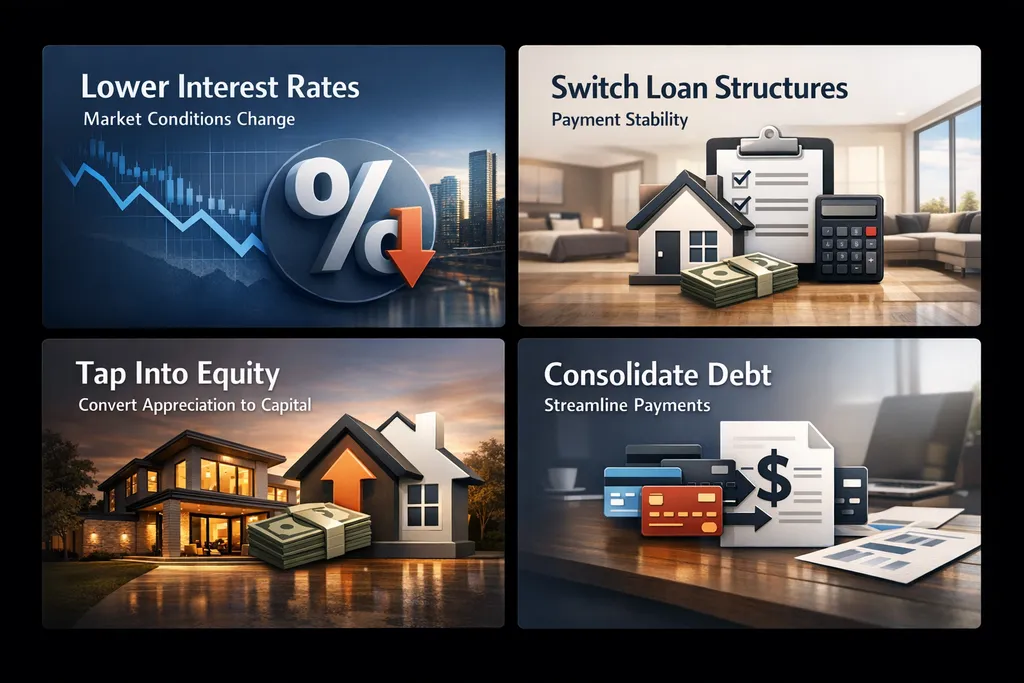
Lower interest rates: Market conditions change, and if rates have dropped since your original loan, refinancing might reduce your monthly payment and improve your debt service coverage ratio.
Switch loan structures: Moving from an adjustable-rate to a fixed-rate mortgage can provide payment stability, which is particularly valuable when managing multiple properties or planning long-term hold strategies.
Tap into equity: Cash-out refinancing allows you to convert property appreciation into working capital without selling the asset, keeping your portfolio intact while funding expansion.
Consolidate debt: Investors with multiple loans on different properties may refinance to streamline payments or negotiate better overall terms across their portfolio.
Understanding your specific objective before starting the refinance process helps you select the right loan product and lender. Different goals may require different documentation or loan types, so clarity upfront saves time and effort down the line.
Reviewing Your Current Loan and Investment Goals
Reviewing your current loan and investment goals is the essential first step in how to refinance a rental property step by step. Before you reach out to lenders or gather paperwork, you need a clear picture of where you stand and where you want to go.
Start by pulling out your existing mortgage documents. Look closely at your current interest rate, remaining balance, monthly payment, and any prepayment penalties that might apply if you refinance early. These details form the baseline for evaluating whether a new loan makes financial sense.
Assess your equity position: Calculate your property's current market value and subtract your outstanding loan balance to determine available equity, which influences refinancing options and loan-to-value ratios.
Clarify your financial objectives: Are you aiming to lower monthly payments, pull cash out for another deal, or simply lock in a predictable rate? Your goal shapes which loan products you should pursue.
Evaluate your portfolio strategy: Consider how this property fits into your broader investment plan and whether refinancing supports your timeline for acquisitions, renovations, or eventual sales.
Check prepayment terms: Some loans include penalties for early payoff, which could offset the benefits of refinancing if you're still within the penalty period.
This review phase also gives you time to think about whether refinancing aligns with market trends. If property values in your area have risen significantly, you might have more equity than expected. Conversely, if your investment goals have shifted since the original purchase, refinancing could be the tool that realigns your financing with your current strategy.
Understanding the Documentation Needed for Rental Property Refinancing
Understanding the documentation needed for rental property refinancing can make or break your timeline and approval odds. Lenders evaluating investment properties typically require more extensive records than they do for primary residences, so being prepared is crucial.
The refinance process for rental properties centers on proving both your ability to repay and the property's income-generating capacity. Lenders want to see that rental income covers the debt service, often measured through the debt service coverage ratio or DSCR. Gathering the right documents early helps you move through underwriting smoothly.
Lease agreements: Current signed leases demonstrate occupancy and verify the rental income you're claiming, which lenders use to calculate cash flow and DSCR.
Tax returns: Expect to provide personal and sometimes business tax returns for the past two years, showing your overall financial position and any income or losses from the property.
Profit and loss statements: If you manage multiple properties or operate through an LLC, detailed P&L statements help lenders understand the performance of your rental portfolio.
Property appraisal: Lenders typically order a new appraisal to confirm current market value, which affects your loan-to-value ratio and available refinancing options.
Insurance documentation: Proof of current hazard insurance and sometimes flood insurance if applicable ensures the property is adequately protected.
Some lenders may also request bank statements, proof of reserves, or documentation of any major repairs or improvements you've made. The exact requirements can vary depending on the loan type and lender, but having these core documents ready puts you in a strong position from the start.
Comparing Lenders and Loan Products for Investment Properties
Comparing lenders and loan products for investment properties is where many investors find significant differences in terms, rates, and requirements. Not all mortgage lenders approach refinancing rental properties the same way, and the right fit depends on your property type, financial profile, and refinancing goals.
Traditional banks may offer competitive rates but often come with stricter income verification and credit requirements. Alternative lenders and specialized investment property lenders might provide more flexible underwriting, particularly for investors with multiple properties or non-traditional income streams.
Evaluate DSCR loan options: DSCR loans focus on the property's cash flow rather than your personal income, which can be advantageous for investors with strong rental income but complex tax returns.
Compare interest rates and fees: Look beyond the advertised rate to understand closing costs, origination fees, and any points you might pay upfront, as these affect your true cost of refinancing.
Review loan-to-value limits: Different lenders set different maximum LTV ratios for rental properties, typically ranging from 70% to 80%, which determines how much equity you must leave in the property.
Check prepayment and term flexibility: Some loan products offer more favorable prepayment terms or allow you to choose between different amortization periods to match your hold strategy.
It's also worth asking lenders about their experience with investment properties and their typical timeline from application to closing. A lender familiar with rental property refinancing may move faster and encounter fewer surprises during underwriting, which keeps your refinance process on track.
Navigating the Application and Underwriting Process
Navigating the application and underwriting process is where your preparation starts to pay off. Once you've selected a lender and gathered your documentation, you'll submit a formal application that triggers the underwriting phase.
Underwriting for rental property refinancing involves a detailed review of both your financial standing and the property's performance. The lender will verify your income, credit history, and debt obligations while also evaluating the rental property's appraised value and cash flow. This dual focus means the process may take longer than a primary residence refinance.
Submit your complete application: Provide all requested documentation upfront to avoid delays, including income verification, lease agreements, tax returns, and any additional materials the lender requires.
Respond promptly to underwriter requests: Underwriters often ask for clarifications or additional documents, and quick responses keep the process moving and demonstrate your professionalism.
Review the appraisal carefully: The property appraisal directly impacts your loan-to-value ratio and available loan amount, so if the valuation comes in lower than expected, be prepared to discuss options with your lender.
Monitor your credit and finances: Avoid making major financial changes, opening new credit lines, or making large purchases during underwriting, as these can trigger additional review or affect your approval.
The timeline for underwriting can vary, but many lenders complete this phase within two to four weeks if all documentation is in order. Staying engaged and responsive throughout keeps your refinance on schedule and reduces the chance of last-minute complications.
Closing on Your Refinanced Rental Property Loan
Closing on your refinanced rental property loan is the final step in the refinance process, where all the paperwork comes together and your new loan terms take effect. This stage involves signing documents, paying closing costs, and officially replacing your old mortgage with the new one.
You'll typically receive a closing disclosure at least three days before your scheduled closing date, which outlines all final loan terms, fees, and the amount you'll need to bring to closing if applicable. Reviewing this document carefully ensures there are no surprises and that the terms match what you agreed to during the application process.
Review the closing disclosure thoroughly: Verify that the interest rate, loan amount, monthly payment, and closing costs align with your expectations and the loan estimate you received earlier.
Prepare funds for closing: Depending on the loan structure, you may need to bring cash to cover closing costs, or these might be rolled into the new loan balance, so confirm the required amount in advance.
Sign all required documents: The closing process involves signing the promissory note, deed of trust or mortgage, and various disclosure forms, which legally bind you to the new loan terms.
Confirm loan funding and payoff: After closing, your new lender will pay off your existing mortgage, and you'll begin making payments under the new terms, typically starting the following month.
Once the refinance is complete, update your records and notify your property manager or tenants if your payment processing changes. Keep all closing documents in a secure location, as you'll need them for tax purposes and future reference. With the refinance finished, you can start benefiting from improved cash flow, better terms, or the capital you've accessed for your next investment move.
Understanding how to refinance a rental property step by step gives real estate investors a clear path to optimizing their portfolio financing. From reviewing your current loan and setting clear objectives to gathering documentation, comparing lenders, and navigating the underwriting process, each phase builds toward a successful refinance that aligns with your investment strategy.
The refinance process for rental properties may require more documentation and take a bit longer than refinancing a primary residence, but the potential benefits make it worthwhile. Lower interest rates can improve monthly cash flow, equity access can fund your next acquisition, and switching loan structures can provide the payment stability needed for long-term portfolio growth.
Real estate investors who approach refinancing with preparation, patience, and a clear understanding of their goals typically find the process manageable and rewarding. Whether you're refinancing to reduce costs, access capital, or simply improve your loan terms, taking it one step at a time keeps everything on track.
If you're ready to explore refinancing options for your rental properties, consider working with lenders who specialize in investment property financing and understand the unique needs of real estate investors. The right loan can make a significant difference in your portfolio performance and your ability to scale your investments effectively.