Understanding Fast Approval for Rental Property Loans
Time is money, especially in real estate investing. When you spot the perfect rental property, waiting weeks for loan approval can mean losing out to faster competitors. Understanding how to get fast approval for rental property loans can make the difference between securing a profitable deal and watching it slip away.
The approval timeline for rental property financing varies significantly based on loan type, lender processes, and your preparation level. While traditional mortgage products might take 30 to 45 days, investor-focused loan programs with streamlined underwriting can often close much faster. The key lies in understanding what accelerates the process and what creates unnecessary delays.
For real estate investors building or expanding their portfolios, speed matters just as much as loan terms. This guide walks through the essential strategies that may help you navigate the approval process more efficiently, from initial lender selection through final underwriting.
What to Do for Fast Rental Property Loan Approval
What to do for fast rental property loan approval starts with understanding the actions that typically accelerate the process. These strategies can help position your application for quicker review and potentially faster funding.
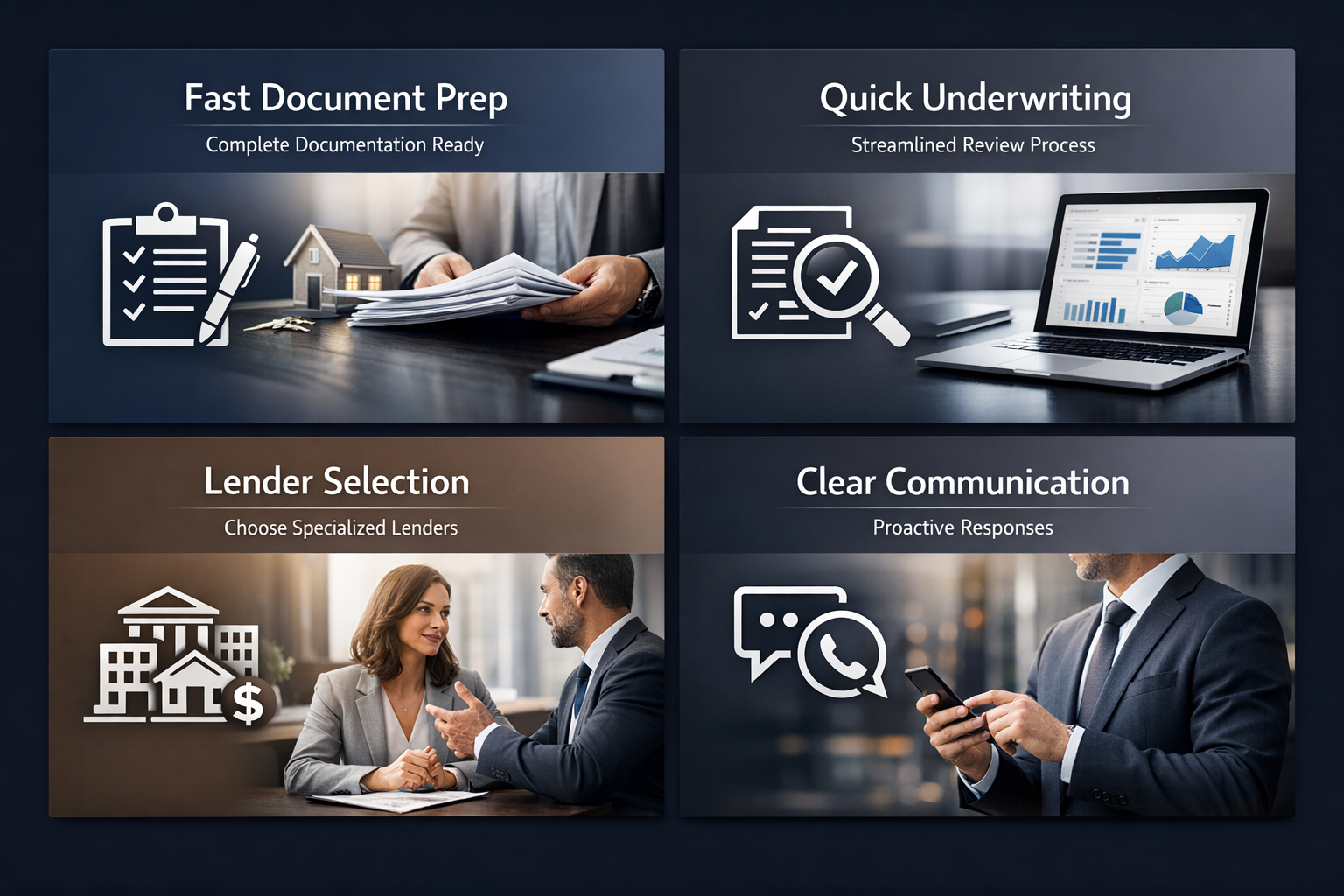
Choose lenders specializing in investor loans: Lenders who focus on rental property financing often have streamlined processes designed for real estate investors rather than traditional homebuyers. Their underwriting teams understand investment scenarios and can move more efficiently through common investor situations.
Prepare complete documentation upfront: Having all required documents ready before application submission can eliminate back-and-forth delays. This typically includes property information, rental income documentation, and entity paperwork if applicable.
Consider DSCR loan programs: DSCR loans focus on rental income rather than personal income for qualification, which may simplify the documentation process. These programs evaluate the property's cash flow instead of requiring extensive personal financial statements, potentially reducing underwriting time.
Maintain clear communication with your lender: Responding quickly to requests and staying proactive about providing additional information can prevent unnecessary waiting periods. Quick turnaround on your end often translates to quicker processing on the lender's side.
What Not to Do During the Approval Process
What not to do during the approval process is equally important to understand. Certain actions can introduce delays or complications that extend your timeline unnecessarily.
Don't submit incomplete applications: Missing information forces lenders to pause review while they wait for documents, adding days or weeks to the process. Incomplete submissions also create unfavorable first impressions with underwriting teams.
Don't apply with lenders unfamiliar with investment properties: Traditional mortgage lenders who primarily serve homebuyers may lack efficient processes for rental property loans. Their underwriters might require additional review time for investment scenarios they encounter less frequently.
Don't make major financial changes during underwriting: Opening new credit accounts, making large purchases, or changing your financial situation can trigger additional review requirements. These changes may require updated documentation and extended approval timelines.
Don't wait until the last minute to address property issues: If the property requires repairs or has title complications, addressing these proactively prevents delays later in the process. Waiting for problems to surface during closing can derail even well-prepared applications.
Step-by-Step Document Preparation Process
Step-by-step document preparation process plays a critical role in how quickly lenders can move your application through underwriting. Organized, complete documentation enables faster review and reduces the likelihood of additional requests that extend timelines.
Gather property-specific information first: Start with the subject property details, including purchase contract, property address, rental history if applicable, and current lease agreements. For DSCR loans, rental income documentation becomes the central focus of qualification, so having complete rent rolls and lease agreements ready is essential.
Compile entity documentation if applicable: If you're purchasing through an LLC or other entity, collect formation documents, operating agreements, and tax identification numbers. Lenders need to verify entity structure and authority to borrow, and having these ready prevents common delays.
Prepare financial documentation based on loan type: Different loan programs require different documentation levels. While DSCR loans typically prioritize property cash flow over personal income, understanding your specific program's requirements helps you gather the right materials upfront.
Organize everything in a clear, accessible format: Create a systematic file organization that makes it easy to locate and submit documents quickly. Digital files with clear naming conventions allow you to respond rapidly to any additional requests during underwriting.
Review everything for accuracy before submission: Double-checking all documents for errors, inconsistencies, or outdated information can prevent issues that cause underwriting delays. Even small discrepancies might trigger additional verification requirements that extend the approval timeline.
Key Factors in Quick Underwriting
Key factors in quick underwriting determine how efficiently lenders can evaluate and approve your rental property loan. Understanding these elements helps you present applications that move smoothly through the review process.
Property cash flow strength: For rental property loans, especially DSCR programs, the property's ability to generate sufficient income relative to the debt payment is central to approval. Properties with strong rental income relative to the loan payment typically move through underwriting more quickly because they present clearer qualification cases.
Clear title and property condition: Properties without title issues, liens, or significant condition problems proceed through underwriting with fewer delays. Ordering title work early and addressing any property concerns proactively can prevent last-minute complications.
Straightforward ownership structure: Simple ownership arrangements, whether individual or single-member LLC, typically process faster than complex multi-member partnerships or trusts. If you're using an entity, having all documentation organized and current helps underwriters verify structure quickly.
Lender familiarity with the property type: Lenders experienced with your specific property type, whether single-family rentals, small multifamily, or short-term rentals, can evaluate applications more efficiently. Their underwriters understand the nuances and can make informed decisions without extended research or additional approvals.
Strategic Lender Selection for Faster Approval
Strategic lender selection for faster approval might be the single most impactful decision in your timeline. Not all lenders operate with the same efficiency or focus, and choosing one aligned with your investment strategy can significantly affect approval speed.
Evaluate lenders based on investor specialization: Lenders who focus primarily on investment properties often maintain underwriting teams trained specifically for rental property scenarios. This specialization can translate to faster decision-making and fewer questions about standard investor situations.
Consider loan program flexibility: Some lenders offer flexible underwriting options that may accommodate various property types or investment strategies more readily. Programs designed with real estate investors in mind, such as DSCR loans that qualify based on rental income, can streamline the approval process by reducing personal financial documentation requirements.
Research typical processing times: While specific guarantees are rare, many investor-focused lenders can provide general timeline expectations based on loan type and property characteristics. Understanding realistic timelines helps you plan effectively and choose lenders with track records of efficient processing.
Assess communication and technology systems: Lenders with modern application platforms and responsive communication channels may process loans more efficiently than those relying on outdated systems. The ability to submit documents digitally and receive real-time status updates often correlates with faster overall timelines.
Learning how to get fast approval for rental property loans comes down to preparation, strategic lender selection, and understanding what drives the underwriting process. While no approach can guarantee specific timelines, investors who organize documentation thoroughly, choose lenders specializing in investment properties, and present clear qualification cases typically experience smoother, faster approvals.
The rental property financing landscape continues evolving, with investor-focused loan programs like DSCR loans offering streamlined alternatives to traditional mortgage products. These options may reduce documentation requirements and accelerate underwriting by focusing on property cash flow rather than extensive personal financial reviews.
For real estate investors, speed matters when competitive markets demand quick action. By implementing the strategies outlined here, from careful document preparation through strategic lender selection, you can position yourself to move quickly when the right investment opportunity appears. The key is understanding that faster approval often results from better preparation rather than shortcuts in the process itself.