Real estate investors often face a common challenge: how to get approved for a rental loan with low credit when traditional mortgage standards seem out of reach. While many conventional lenders maintain strict credit score requirements, the rental property financing landscape offers more flexibility than most investors realize. Understanding the pathways to approval, even with a less-than-perfect credit profile, can mean the difference between watching opportunities pass by and building a profitable rental portfolio.
Low credit doesn't automatically disqualify you from rental property financing. Many investors successfully secure loans by leveraging compensating factors, demonstrating strong property cash flow, and working with lenders who specialize in investor-focused products like DSCR loans. The key lies in knowing which factors lenders weigh most heavily and how to position your application for success.
This guide walks through practical strategies for getting approved when your credit score isn't where you'd like it to be. From understanding what lenders really look for to improving your FICO score strategically, you'll learn how to navigate the approval process with confidence.
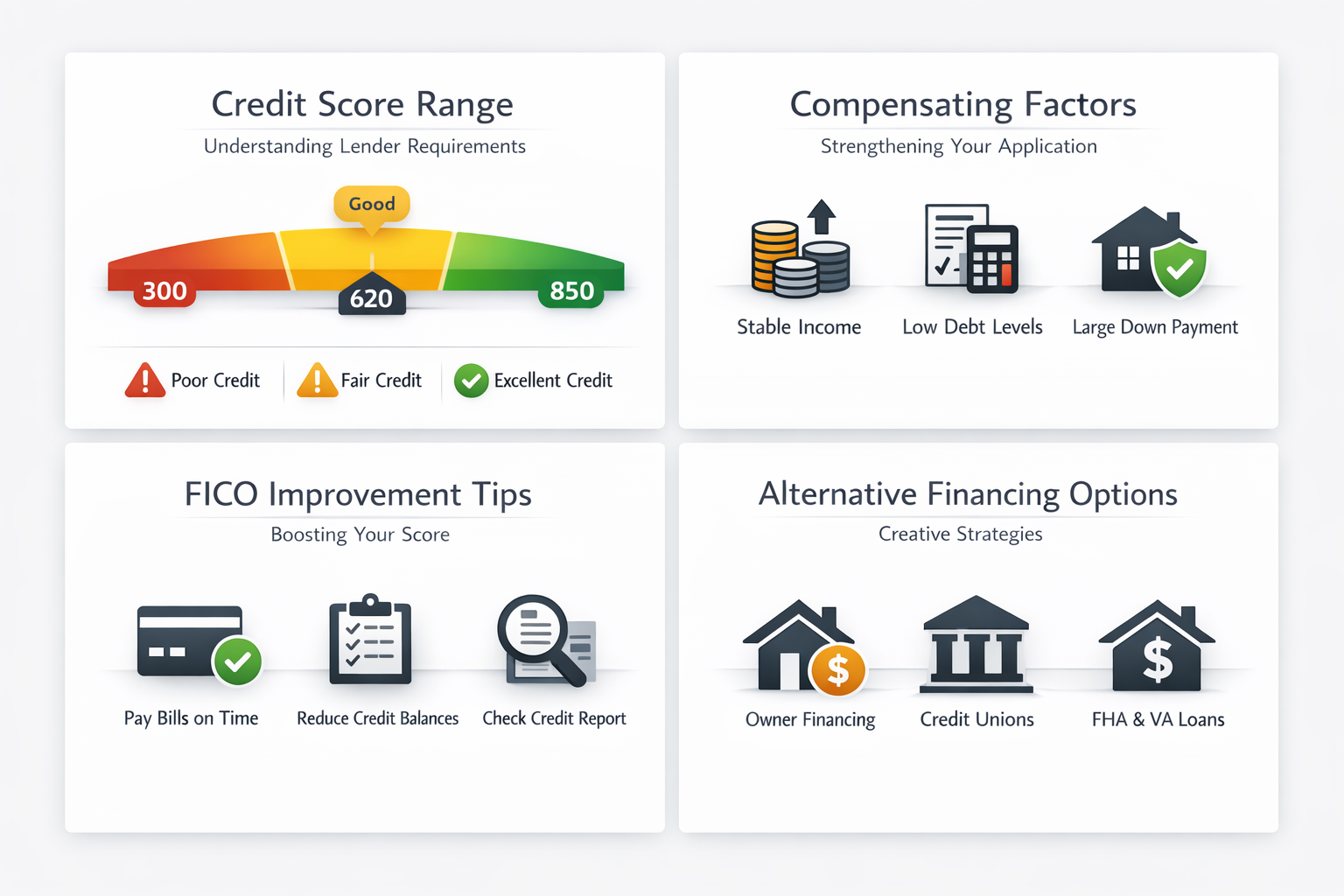
Understanding Credit Score Requirements for Rental Property Loans
Understanding credit score requirements for rental property loans helps investors set realistic expectations and identify the right financing options. Different loan products typically have varying credit thresholds, and knowing where you stand can guide your strategy.
DSCR loan flexibility: Many DSCR lenders may work with investors who have credit scores in the 620 to 640 range, though higher scores often unlock better rates. These loans focus primarily on the property's debt service coverage ratio rather than personal income, which can offset lower credit concerns.
Conventional rental loans: Traditional rental property mortgages through large financial institutions typically require credit scores of 680 or higher. Investment properties often carry stricter requirements than primary residences, making conventional financing more challenging for those with credit challenges.
Portfolio and private lenders: Some lenders who hold loans in their own portfolios rather than selling them may offer more flexibility on credit scores. These institutions might consider scores in the 600 to 620 range when compensating factors are strong.
Fix and flip vs. long-term rental: Short-term fix and flip financing might have different credit requirements than long-term rental loans. Bridge lenders often weigh the property's after-repair value and exit strategy alongside credit history, potentially offering more flexibility.
Credit score requirements aren't set in stone across the industry. What one lender considers unacceptable, another might approve with adjusted terms or higher down payments. This variation creates opportunities for investors who know where to look.
Compensating Factors That Strengthen Your Application
Compensating factors that strengthen your application can help offset lower credit scores by demonstrating financial stability and reduced risk to lenders. Real estate investors with credit challenges can often gain approval by emphasizing these alternative qualifications.
Larger down payment: Putting down 25% to 30% or more shows commitment and reduces lender risk. A substantial down payment provides more equity cushion and may persuade lenders to approve applications despite lower credit scores, as it demonstrates both financial capacity and serious intent.
Strong property cash flow: For DSCR loans, a debt service coverage ratio of 1.25 or higher indicates the rental income comfortably covers the mortgage payment. Properties with strong rental demand and solid cash flow projections can compensate for credit concerns by proving the investment itself is sound.
Liquid reserves: Having six to twelve months of mortgage payments in savings demonstrates you can weather vacancies or repairs. Lenders view substantial reserves as a safety net that reduces default risk, making them more comfortable approving borrowers with lower credit scores.
Real estate experience: A track record of successful rental property ownership or flips shows you understand the business. Experienced investors with documented performance may receive more consideration than first-time buyers with similar credit profiles.
These compensating factors work best when presented together as part of a comprehensive application package. Rather than relying on a single strength, combining multiple positive elements creates a more compelling case for approval.
Strategic FICO Improvement Before Applying
Strategic FICO improvement before applying can boost your credit score in meaningful ways within a relatively short timeframe. While you might not reach perfect credit overnight, targeted actions often yield results in 30 to 90 days.
Pay down credit card balances: Credit utilization accounts for a significant portion of your score. Reducing balances to below 30% of available limits, and ideally under 10%, can produce noticeable improvements. Even paying down one high-balance card might move your score upward.
Dispute errors and inaccuracies: Credit report errors happen more often than many realize. Reviewing all three credit bureaus for incorrect late payments, accounts that aren't yours, or outdated information and filing disputes might remove items that unfairly drag down your score.
Avoid new credit inquiries: Each hard inquiry can temporarily lower your score. In the months before applying for rental property financing, resist opening new credit cards or taking out other loans. Multiple inquiries signal higher risk to lenders and can complicate your application.
Become an authorized user: If you have a trusted family member or business partner with excellent credit, being added as an authorized user on their seasoned account might positively impact your score. This strategy works best when the primary account has low utilization and perfect payment history.
FICO improvement strategies require patience and discipline, but the payoff in better loan terms and higher approval odds makes the effort worthwhile. Even a 20 to 40 point increase could shift you into a more favorable lending tier.
Finding Lenders with Flexible Underwriting
Finding lenders with flexible underwriting is essential when your credit profile doesn't fit traditional lending boxes. Not all lenders evaluate applications the same way, and some specialize in working with real estate investors who have unique circumstances.
Research investor-focused mortgage companies: Lenders who specialize in DSCR loans, fix and flip financing, and rental property mortgages often have more flexible credit policies than traditional banks. These companies understand real estate investment business models and may weigh property performance more heavily than personal credit history.
Consider portfolio lenders: Financial institutions that keep loans on their own books rather than selling them have more freedom to set their own underwriting standards. Portfolio lenders might approve loans that don't meet conventional guidelines, especially when compensating factors are present.
Work with experienced mortgage brokers: Brokers who focus on investment properties typically have relationships with multiple lenders and understand which ones offer the most flexibility for various credit situations. A knowledgeable broker can match your profile with lenders most likely to approve your application.
Ask about manual underwriting: Some lenders offer manual underwriting rather than relying solely on automated systems. Manual review allows underwriters to consider the full context of your financial situation, credit challenges, and compensating factors rather than making decisions based purely on credit score thresholds.
Lender flexibility often varies based on loan type, property characteristics, and current market conditions. What might not be possible with one product could work with another, so exploring multiple options increases your chances of approval.
Documentation That Supports Low Credit Applications
Documentation that supports low credit applications helps tell your complete financial story beyond what a credit score reveals. Thorough preparation demonstrates professionalism and gives underwriters the information they need to approve your loan.
Prepare credit explanation letters: If your low credit resulted from specific circumstances like medical emergencies, divorce, or business setbacks rather than ongoing financial mismanagement, a well-written letter explaining the situation and demonstrating recovery can provide important context that influences lending decisions.
Gather proof of income and assets: Bank statements showing consistent deposits, tax returns, and documentation of other income sources prove you have the financial capacity to handle the investment. For DSCR loans, rental agreements or market rent analyses demonstrate the property's income potential.
Document your real estate experience: If you own other rental properties, provide performance records showing positive cash flow and on-time mortgage payments. Property management statements, lease agreements, and tax schedules can verify your track record as a successful real estate investor.
Compile property information: Detailed information about the subject property including purchase price, appraisal, comparable rental rates, and renovation plans (for fix and flip projects) helps lenders assess the investment's viability. Strong property fundamentals can outweigh credit concerns in investor-focused lending.
Complete documentation packages move through underwriting more smoothly and reduce the back-and-forth that can delay approvals. Being proactive about providing information shows lenders you're organized and serious about the investment.
Alternative Financing Strategies for Challenged Credit
Alternative financing strategies for challenged credit provide additional pathways to rental property ownership when traditional lending isn't immediately available. Creative approaches can help you acquire properties while continuing to improve your credit profile.
Partner with a creditworthy co-borrower: Bringing in a business partner or family member with stronger credit as a co-borrower might secure approval and better terms. The co-borrower's credit profile and income can offset your credit challenges, though this approach requires clear partnership agreements and shared ownership.
Consider seller financing: Some property sellers, particularly those who own properties free and clear, may be willing to provide financing directly. Seller financing bypasses traditional lender requirements entirely, though terms vary widely and might include higher interest rates or shorter loan periods.
Use a two-step approach: Some investors successfully purchase properties with cash or hard money loans, operate them successfully for 6 to 12 months while improving their credit, then refinance into better long-term financing. This strategy requires more upfront capital but can work when immediate traditional financing isn't available.
Explore subject-to and creative acquisitions: Taking over existing financing or using lease-option strategies might allow you to control properties without immediately qualifying for new loans. These approaches carry specific legal and financial considerations but provide alternatives worth understanding.
Alternative strategies often involve higher costs, more complexity, or additional risk compared to traditional financing. However, they can serve as bridges that allow you to continue investing while addressing credit challenges over time.
Timeline and Expectations for Approval
Timeline and expectations for approval help you plan realistically when pursuing rental property financing with lower credit. Understanding the process prevents frustration and allows you to set appropriate timelines for property acquisitions.
The approval process for rental loans with credit challenges typically takes longer than straightforward applications. Where a strong-credit borrower might receive approval in two to three weeks, applications with lower credit scores often require additional documentation review and may take four to six weeks. Manual underwriting processes, when required, add time as human underwriters review files more carefully than automated systems.
You should expect more questions and documentation requests throughout the process. Lenders working with lower credit applications typically conduct more thorough reviews, asking for explanations of credit issues, additional proof of reserves, or supplementary documentation of property income potential. Responding quickly to these requests keeps your application moving forward.
Rate and term expectations also differ from what higher-credit borrowers receive. Interest rates might be 0.5% to 2% higher depending on your score and the lender's pricing structure. Some lenders might also require larger down payments or higher reserve requirements as conditions of approval, which affects your cash needs for closing.
Pre-approval before house hunting provides the most realistic timeline expectations. Working with a lender to get pre-approved, even conditional approval subject to finding an acceptable property, tells you exactly what you qualify for and prevents wasting time on properties outside your financing reach. This upfront investment of time pays dividends when you're ready to make offers on rental properties.
Learning how to get approved for a rental loan with low credit opens doors that many investors assume are closed to them. While credit scores matter, they're just one piece of a larger puzzle that includes compensating factors, property fundamentals, and lender selection. Real estate investors who understand this broader picture can successfully secure financing even when their credit isn't perfect.
The strategies outlined in this guide, from strategic FICO improvement to finding flexible lenders and leveraging compensating factors, provide a roadmap for moving forward with your investment goals. Whether you're pursuing DSCR loans that focus on property cash flow or working with portfolio lenders who consider your full financial picture, options exist beyond traditional lending channels.
Taking action now, even with imperfect credit, beats waiting indefinitely for perfect scores. As you work on credit improvement, you can simultaneously position your applications for success by building reserves, gaining experience, and connecting with the right lending partners. The rental property market rewards those who persist and approach challenges strategically rather than those who wait for perfect circumstances that may never arrive.