Real estate investors frequently ask how many properties can you finance with DSCR loans when planning their portfolio expansion strategies. Unlike conventional mortgages that face regulatory caps, DSCR loans offer unique flexibility for scaling investment property portfolios. These loans evaluate properties based on their debt service coverage ratio rather than personal income, opening doors to potentially unlimited financing opportunities.
Understanding the nuances of DSCR loan limits becomes crucial when you're ready to move beyond traditional financing constraints. While regulatory restrictions may not cap the number of DSCR loans you can obtain, lender-specific criteria and exposure rules often determine your actual financing capacity.
DSCR Loan Quantity Fundamentals
DSCR loan quantity fundamentals reveal that investors typically face no regulatory limits on the number of properties they can finance through this loan type. The absence of government-imposed caps distinguishes DSCR loans from conventional financing options that restrict portfolio growth.
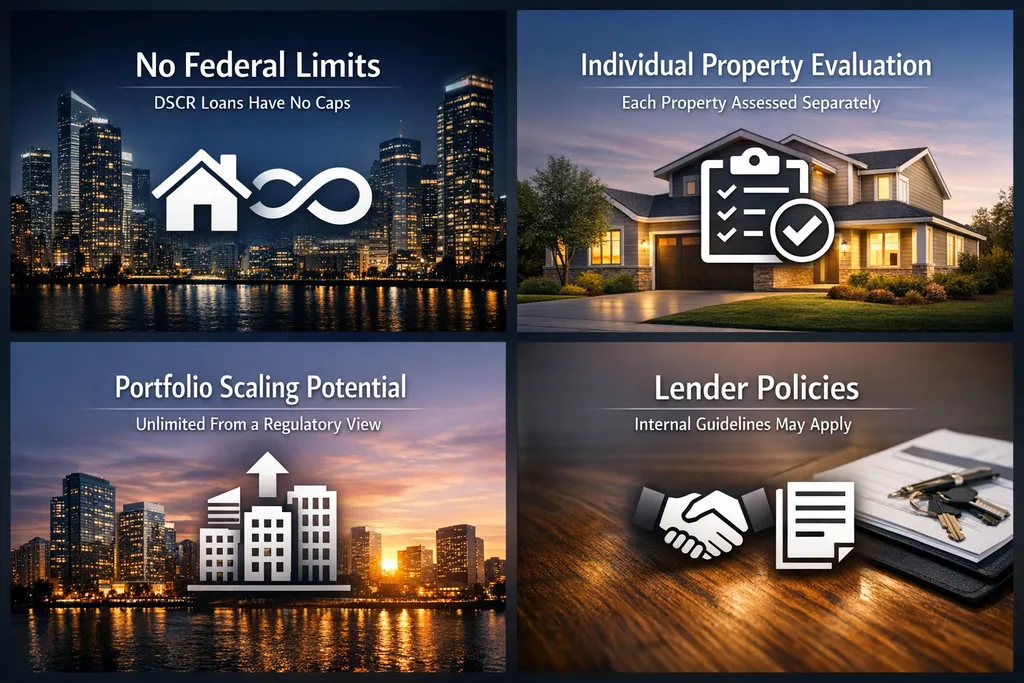
No federal regulatory limits exist on DSCR loan quantities, unlike the Fannie Mae 10-loan cap on conventional mortgages
Each property must meet individual debt service coverage requirements, typically ranging from 1.0 to 1.25 depending on the lender
Lenders evaluate each application based on property cash flow performance rather than cumulative portfolio size
Portfolio scaling potential remains unlimited from a regulatory perspective, though practical considerations may apply
Lender Exposure Rules and Portfolio Limits
Lender exposure rules and portfolio limits often create practical boundaries even when regulatory caps don't exist. Financial institutions typically implement internal guidelines to manage their risk exposure to individual borrowers and market segments.
Individual lender policies may cap total loan amounts or property counts per borrower to manage concentration risk
Geographic exposure limits might restrict multiple properties in the same market area or property type
Credit profile requirements could become more stringent as your portfolio grows with a single lender
Diversification across multiple lenders might become necessary to continue scaling beyond individual institution limits
Breaking Through Conventional Loan Barriers
Breaking through conventional loan barriers becomes essential when investors hit traditional financing walls. The Fannie Mae 10-loan limit often forces serious portfolio builders to seek alternative financing strategies to continue their growth trajectory.
Conventional loans cap at 10 financed properties per borrower, creating significant scaling limitations for active investors
DSCR loans bypass personal income verification requirements that often complicate conventional loan approvals
Portfolio transition strategies allow investors to refinance existing conventional loans into DSCR products for continued growth
Cash flow focus enables financing decisions based on property performance rather than personal financial statements
Property Performance Requirements
Property performance requirements determine qualification for each DSCR loan regardless of your portfolio size. Lenders evaluate individual properties based on their ability to generate sufficient cash flow to cover debt service obligations.
Minimum DSCR ratios typically range from 1.0 to 1.25, meaning rental income must cover or exceed mortgage payments
Market rent analysis and property condition assessments influence loan approval decisions for each property
Property type restrictions may apply, with some lenders preferring single-family rentals over multi-unit properties
Geographic preferences vary among lenders, potentially affecting financing availability in certain markets
Strategic Portfolio Scaling Approach
A strategic portfolio scaling approach maximizes your ability to finance multiple properties through DSCR loans while managing risk and maintaining growth momentum. This systematic method helps investors navigate lender requirements and market conditions effectively.
Establish relationships with multiple DSCR lenders to diversify financing sources and avoid concentration limits
Focus on properties with strong DSCR ratios above 1.25 to improve approval odds and demonstrate cash flow strength
Maintain detailed property performance records to streamline future loan applications and demonstrate portfolio management skills
Consider geographic diversification to reduce market-specific risk and appeal to lender preferences
Optimizing Your Financing Capacity
Optimizing your financing capacity requires understanding how lenders evaluate risk and structure their lending programs. Smart investors position themselves to maximize approval rates and financing amounts across multiple properties.
Build strong relationships with portfolio lenders who specialize in investor financing and understand portfolio scaling strategies
Demonstrate consistent property management capabilities through documented rental income and expense tracking
Leverage equity from existing properties through cash-out refinancing to fund down payments on additional acquisitions
Monitor and improve credit profiles to maintain access to competitive rates and terms as portfolios grow
Consider entity structuring options that may provide additional financing flexibility and risk management benefits
The question of how many properties can you finance with DSCR loans doesn't have a simple numerical answer, but the opportunities for portfolio scaling appear significantly more flexible than conventional financing options. While regulatory limits don't cap DSCR loan quantities, your success depends on property performance, lender relationships, and strategic planning.
Smart investors who understand these dynamics can potentially build substantial rental property portfolios without hitting the traditional walls that stop conventional mortgage users. The key lies in maintaining strong property performance metrics, diversifying lender relationships, and approaching portfolio growth with a systematic strategy that aligns with both market conditions and lender preferences.