For real estate investors seeking financing for their next property acquisition or refinance, understanding how lenders verify rental income becomes crucial for loan approval success. The verification process involves multiple documentation requirements and evaluation methods that can significantly impact your loan terms and approval timeline. When lenders assess rental income, they're evaluating the reliability and consistency of cash flow from your investment properties to ensure you can meet debt service obligations. This comprehensive verification process protects both the lender and helps investors demonstrate their property's income-generating potential.
Essential Documentation Requirements for Income Verification
Essential documentation requirements for income verification form the foundation of how lenders verify rental income for investment property loans. Lenders typically require multiple forms of documentation to establish a complete picture of your rental income history and current cash flow.
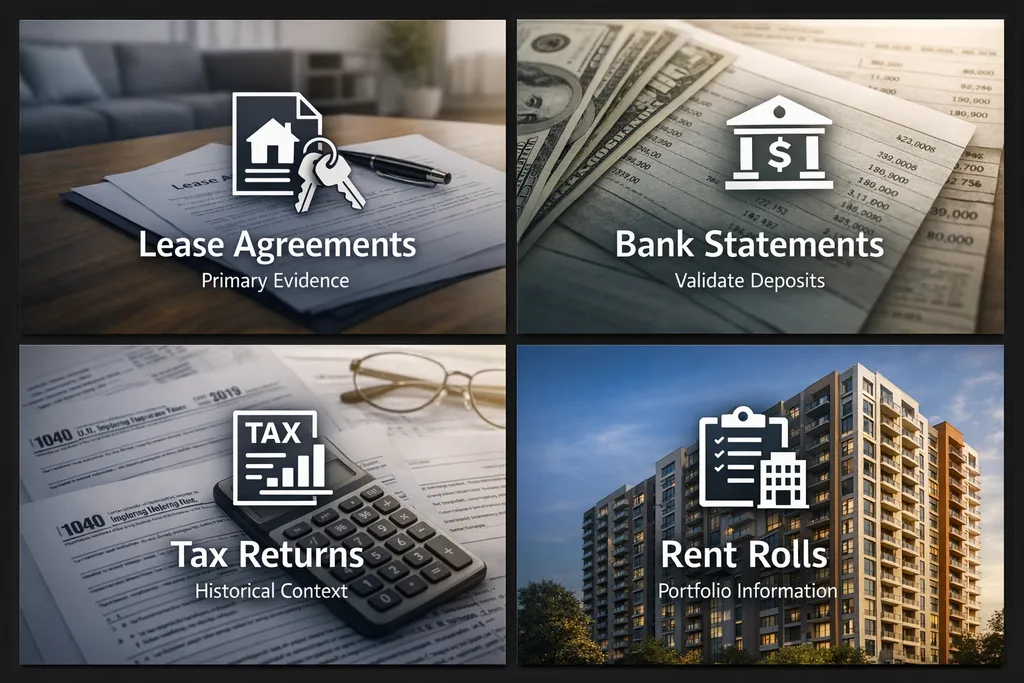
Lease agreements serve as primary evidence: Current signed lease agreements provide lenders with rental amounts, lease terms, and tenant information. These documents establish the legal framework for rental income expectations and help lenders assess income stability.
Bank statements validate actual deposits: Monthly bank statements showing consistent rental deposits over the past 12 to 24 months demonstrate actual income receipt rather than just contractual agreements. Lenders often look for patterns in deposit timing and amounts to verify reliability.
Tax returns provide historical context: Schedule E from your tax returns shows rental income and expenses over multiple years, giving lenders insight into property profitability and your experience as a rental property owner.
Rent rolls compile portfolio information: For investors with multiple properties, detailed rent rolls summarizing all rental units, current rents, lease expiration dates, and vacancy rates help lenders evaluate your entire rental portfolio's performance.
Professional Property Management and Third-Party Verification
Professional property management and third-party verification methods may streamline how lenders verify rental income by providing additional credibility to income documentation. Many lenders view professionally managed properties as lower risk due to systematic rent collection and detailed record keeping.
Management company statements carry additional weight: When properties are professionally managed, lenders often accept detailed statements from management companies showing rent collections, vacancy periods, and net income distributions. These statements typically provide more comprehensive data than individual landlord records.
CPA-prepared financial statements enhance credibility: Financial statements prepared by certified public accountants for your rental property business can strengthen your loan application by providing professional validation of income and expenses. This third-party verification adds credibility to your rental income claims.
Tenant verification may be required: Some lenders might contact tenants directly or require tenant verification forms to confirm lease terms and payment history. This direct verification helps lenders validate the information provided in lease agreements and rent rolls.
Market Rent Analysis and Property Valuation Impact
Market rent analysis and property valuation impact demonstrates how lenders verify rental income by comparing your reported rents to local market conditions and property characteristics. This analysis helps lenders determine if reported rental income aligns with realistic market expectations.
Appraisal includes rental market analysis: Property appraisals for investment properties typically include market rent analysis comparing your rental rates to similar properties in the area. This analysis helps validate that your rental income is reasonable and sustainable within the local market context.
Rental comparables influence income acceptance: Lenders may research rental comparables independently to verify that your reported rental income falls within acceptable ranges for similar properties. Significantly above-market rents might trigger additional scrutiny or income adjustments in loan calculations.
Property condition affects income potential: The physical condition and amenities of your rental property influence its income potential, and lenders may adjust accepted rental income based on property condition assessments. Well-maintained properties with desirable features typically support higher rental income verification.
DSCR Loan Income Verification Process
The DSCR loan income verification process represents a specific approach to how lenders verify rental income for debt service coverage ratio loans, focusing primarily on property cash flow rather than borrower income. This verification method has become increasingly popular among real estate investors seeking portfolio expansion financing.
Property income analysis takes precedence: DSCR lenders focus primarily on the rental property's ability to generate sufficient income to cover debt service payments. They analyze rent rolls, lease agreements, and market rents to establish property-specific cash flow rather than relying heavily on borrower personal income documentation.
Debt service coverage calculations drive approval: Lenders calculate the debt service coverage ratio by dividing net rental income by the proposed mortgage payment, typically requiring ratios of 1.0 or higher. This calculation determines loan approval and may influence interest rates and loan terms based on coverage strength.
Vacancy and expense adjustments apply: DSCR lenders often apply vacancy rates and standard expense percentages to gross rental income to arrive at net operating income for ratio calculations. These adjustments help ensure realistic cash flow projections and account for normal property management costs and vacancy periods.
Portfolio considerations may enhance approval: For investors with multiple rental properties, DSCR lenders might consider the overall portfolio performance and cross-collateralization options. Strong performance across multiple properties can strengthen the application even if individual properties show marginal coverage ratios.
Common Documentation Challenges and Solutions
Common documentation challenges and solutions address typical obstacles investors face when lenders verify rental income, along with practical approaches to overcome these hurdles. Understanding potential challenges helps investors prepare more effectively for the verification process.
Recent property acquisitions require creative documentation: Newly acquired rental properties without established rental history present documentation challenges, but investors can provide market rent studies, comparable property analysis, and executed lease agreements to demonstrate income potential. Some lenders may accept projected rents based on market analysis for recently purchased properties.
Seasonal or variable rental income needs explanation: Properties with seasonal rental patterns or recent rent changes require additional documentation to establish consistent income patterns. Investors should provide detailed explanations of rental variations along with historical data showing seasonal trends and market justifications for rent adjustments.
Cash rent payments create verification difficulties: Tenants paying rent in cash make income verification more challenging since bank deposits might not clearly show rental income sources. Investors should maintain detailed rent receipt records, consider requiring money orders or checks, and document cash deposits with clear notation systems.
Expense documentation affects net income calculations: Lenders need comprehensive expense documentation to calculate net rental income accurately, requiring investors to maintain organized records of property taxes, insurance, maintenance costs, and management fees. Well-organized expense tracking throughout the year facilitates smoother loan applications.
Multiple property management systems require coordination: Investors with properties managed through different systems or self-managed alongside professionally managed units need to coordinate documentation formats and ensure consistent reporting across their portfolio for comprehensive lender review.
Technology and Automated Verification Systems
Technology and automated verification systems increasingly influence how lenders verify rental income by streamlining documentation review and enhancing accuracy in income assessment. These technological advances may reduce processing times and improve the overall loan application experience for real estate investors.
Digital bank statement analysis accelerates review: Automated systems can analyze digital bank statements to identify rental income patterns, deposit consistency, and cash flow trends more quickly than manual review processes. This technology helps lenders process applications faster while maintaining thorough income verification standards.
Property management software integration simplifies documentation: Integration between property management software and lender systems may allow direct data sharing for rent rolls, lease information, and payment histories. This direct integration could reduce documentation requirements and improve data accuracy in the verification process.
Automated valuation models support income validation: Technology-driven property valuation and rental market analysis tools help lenders quickly validate reported rental income against market expectations. These models provide rapid market rent estimates that support or question reported income levels during the verification process.
Document verification technology improves accuracy: Advanced document verification systems can authenticate lease agreements, bank statements, and tax returns more effectively, reducing fraud risk while speeding up the review process. This technology helps ensure document integrity throughout the rental income verification process.
Verifying Income for Short-Term Rental Properties
Short-term rentals, such as Airbnb and vacation rental properties, require different income verification than traditional long-term leases because monthly income can vary significantly. Lenders typically look for additional documentation to establish a reliable income pattern.
Platform revenue reports: Complete income statements from Airbnb or other short-term rental platforms covering at least 12-24 months of operation, including monthly payout statements showing gross earnings, platform fees, and net deposits.
Occupancy and booking data: Booking calendars, occupancy rates, and average daily rate history that demonstrate seasonal patterns and income predictability.
Income averaging methods: Lenders may use a 12-month trailing average, a weighted average over 24 months, or a conservative projection based on the lower of historical performance or current market trends to calculate qualifying income for DSCR purposes.
Because short-term rental income fluctuates seasonally, presenting well-organized platform statements, tax documentation (Schedule E), and bank deposit records alongside occupancy history gives lenders the fullest picture and supports a stronger DSCR loan application.
Successfully navigating how lenders verify rental income requires thorough preparation, organized documentation, and understanding of specific loan program requirements. Real estate investors who master this verification process position themselves for smoother loan approvals and more favorable financing terms across their property portfolios. The key lies in maintaining comprehensive records throughout property ownership, understanding lender expectations, and preparing documentation that clearly demonstrates rental income reliability and sustainability. As lending technology continues advancing and loan programs evolve, investors who stay informed about verification processes will maintain competitive advantages in securing optimal financing for their real estate investment strategies.