Growing a rental portfolio from a single property to a robust collection of income-generating assets requires more than just capital. It demands a strategic approach to financing that maximizes buying power while keeping debt manageable. For real estate investors focused on portfolio expansion, understanding how investors use leverage to scale rentals can be the difference between slow, incremental growth and rapid portfolio acceleration.
Leverage is essentially using borrowed funds to amplify your investment capacity. When applied correctly, it allows you to acquire multiple properties with less upfront capital, generate ongoing cash flow, and build long-term wealth through appreciation. However, leverage isn't a one-size-fits-all solution. It requires careful planning, attention to market conditions, and alignment with your investment goals.
This guide explores practical strategies that experienced investors use to scale rental portfolios through smart financing. From utilizing DSCR loans to implementing refinancing cycles and capital recycling techniques, you'll discover actionable methods for sustainable growth.
Smart Leverage Practices for Portfolio Growth
Smart leverage practices for portfolio growth start with understanding what to prioritize when scaling your rental property investments. Strategic use of borrowed capital can enhance your cash flow while building long-term wealth through property appreciation, but only when applied with discipline and clear objectives.
Successful investors typically balance their financing costs against projected returns, ensuring that each leveraged acquisition contributes positively to overall portfolio performance. This means analyzing not just purchase price, but also debt service coverage ratios, interest rates, and how each new property fits into your broader expansion strategy.
When considering how investors use leverage to scale rentals effectively, certain practices consistently separate high-performing portfolios from those that stall or face financial strain. Here are the core practices to adopt:
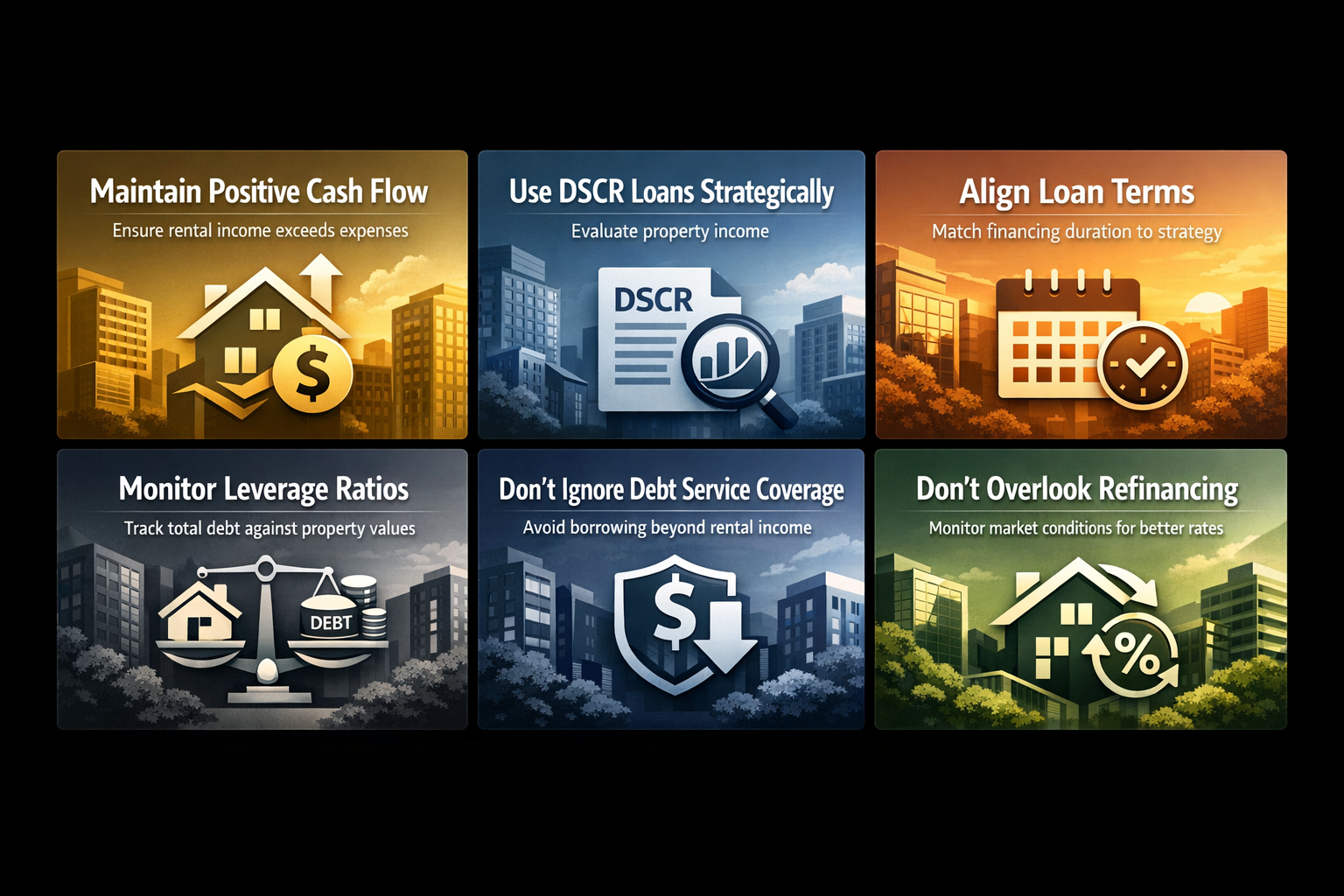
Maintain positive cash flow on every property: Ensure rental income exceeds all expenses including debt service, so each asset strengthens rather than weakens your financial position.
Use DSCR loans strategically: These investor-focused loans evaluate the property's income rather than personal income, making them ideal for scaling without employment documentation barriers.
Align loan terms with investment timeline: Match your financing duration to your hold period and exit strategy, whether that's long-term rental or eventual refinancing.
Monitor leverage ratios across your portfolio: Keep track of total debt relative to total property values to avoid overextension during market fluctuations.
Common Leverage Mistakes to Avoid
Common leverage mistakes to avoid are just as important as knowing the right strategies. Many investors encounter setbacks not from lack of opportunity, but from missteps in how they structure and manage their borrowed capital.
Overleveraging is perhaps the most dangerous pitfall. When debt service consumes too much of your rental income, even minor vacancies or maintenance issues can create cash flow crises. Similarly, ignoring market timing when securing financing can lock you into unfavorable terms that persist for years.
Understanding what not to do helps you sidestep costly errors and build a more resilient rental portfolio. Here are the key mistakes that can derail your scaling efforts:
Don't ignore debt service coverage requirements: Borrowing beyond what your rental income can support creates vulnerability and limits your ability to weather downturns.
Don't overlook refinancing opportunities: Failing to monitor market conditions and refinance when rates improve can mean paying unnecessarily high interest for extended periods.
Don't use leverage without analyzing cash flow: Acquiring properties based solely on appreciation potential without positive monthly cash flow is speculation, not investing.
Don't mix personal and investment financing goals: Using consumer mortgage products for investment properties often results in unfavorable terms and limits scalability.
5 Steps to Implement DSCR Financing for Expansion
DSCR financing for expansion has become a cornerstone strategy for investors who want to scale beyond the limitations of conventional mortgage products. Debt Service Coverage Ratio loans qualify borrowers based on the rental property's income rather than personal tax returns, making them particularly valuable for portfolio expansion.
Combining DSCR loans with methodical acquisition strategies can help you effectively recycle capital while maintaining sustainable debt levels. This approach is especially relevant when traditional employment verification presents obstacles or when your personal income doesn't reflect your investment capacity.
Evaluate property cash flow first: Before pursuing DSCR financing, confirm the property generates sufficient rental income to cover the loan payment with adequate margin. Most lenders look for a DSCR of at least 1.0 to 1.25, meaning rental income exceeds debt service by that ratio.
Identify lenders specializing in investor loans: Not all financial institutions offer true DSCR products. Focus on lenders experienced with rental property financing who understand investor needs and can structure terms accordingly.
Prepare property-level documentation: Gather lease agreements, rent rolls, and property expense records. DSCR underwriting centers on the asset's performance rather than personal financial statements.
Structure acquisitions for favorable terms: Larger down payments may secure better rates and terms. Calculate whether preserving capital for multiple deals or optimizing terms on individual properties serves your expansion goals better.
Plan your next acquisition during underwriting: As you close one DSCR loan, begin identifying the next property. Sequential financing allows you to maintain momentum and compound your portfolio growth over time.
4 Refinancing Cycle Strategies That Unlock Capital
Refinancing cycle strategies that unlock capital represent a powerful method for portfolio expansion without liquidating existing assets. Cash-out refinancing can provide investors with liquidity to reinvest in additional properties or improvements, effectively recycling equity you've built through appreciation and principal paydown.
Timing these refinancing cycles to take advantage of favorable market conditions can be pivotal, especially when interest rates fluctuate. Strategic leverage helps balance debt loads while enabling growth during opportune moments without incurring the transaction costs and tax implications of selling properties.
Monitor rate environments continuously: Stay informed about interest rate trends and refinancing opportunities. Even a modest rate reduction across multiple properties can free up significant monthly cash flow for new acquisitions.
Use cash-out refinancing for down payments: Extract equity from appreciated properties to fund down payments on additional rentals. This approach allows you to leverage existing assets without selling and maintains your income stream from all properties.
Refinance in sequence to maintain liquidity: Rather than refinancing all properties simultaneously, stagger the process. This creates a continuous pipeline of available capital for opportunistic purchases throughout market cycles.
Align refinancing with portfolio rebalancing: Use refinancing cycles to reassess your overall leverage ratios and adjust terms to match your current investment phase, whether that's aggressive expansion or income optimization.
3 Capital Recycling Methods for Continuous Growth
Capital recycling methods for continuous growth enable investors to maximize the productivity of every dollar in their portfolio. This concept involves strategically moving capital from one investment to another, extracting value from existing properties to fund new acquisitions without requiring constant infusions of outside money.
The BRRRR method, which stands for Buy, Rehab, Rent, Refinance, Repeat, is one popular framework for capital recycling. By refinancing into DSCR rental loans after improving a property, investors can free up capital for further investments while keeping the renovated asset in their portfolio.
Implement the BRRRR strategy systematically: Acquire undervalued properties, add value through strategic improvements, stabilize with quality tenants, then refinance to pull out your initial investment. This method allows you to acquire multiple properties using the same capital base repeatedly.
Extract equity from stabilized performers: Once a property has appreciated or you've paid down significant principal, refinance to access that equity. Deploy the funds as down payments on additional rentals, effectively turning paper gains into new cash-flowing assets.
Reinvest cash flow rather than distribute: Direct monthly rental profits toward down payments and closing costs for new acquisitions. This disciplined approach compounds your portfolio growth without relying solely on refinancing or outside capital.
These capital recycling approaches work best when you maintain a clear view of your overall financial position and avoid overextending. Each recycling cycle should strengthen your portfolio's fundamentals rather than simply increasing property count.
Understanding how investors use leverage to scale rentals is fundamental to building a substantial real estate portfolio. Strategic leverage isn't about maximizing debt, it's about optimizing your capital efficiency while maintaining healthy cash flow and manageable risk levels across all your properties.
The most successful portfolio expansion strategies combine multiple approaches. DSCR financing removes personal income barriers and focuses on property performance. Refinancing cycles unlock trapped equity and improve terms as markets shift. Capital recycling multiplies the impact of your initial investment by continuously redeploying funds into new opportunities.
Each method requires careful analysis of your financial standing, market conditions, and long-term objectives. When implemented thoughtfully, these leverage strategies can enable significant portfolio growth while preserving the stability that makes rental real estate such a compelling investment class.
As you scale your rental portfolio, remember that sustainable growth typically outperforms rapid expansion that stretches your resources too thin. Focus on properties that contribute positive cash flow from day one, maintain adequate reserves for unexpected expenses, and structure your financing to align with realistic hold periods and exit strategies.