How DSCR Underwriting Works for Real Estate Investors
Understanding how DSCR underwriting works is crucial for real estate investors seeking financing for rental properties. Unlike traditional mortgages that focus on personal income, DSCR underwriting evaluates your property's ability to generate sufficient rental income to cover debt obligations. This income-based approach allows investors to qualify for loans based on the property's cash flow potential rather than their employment history or personal financial statements.
The underwriting process involves a comprehensive rental income review, detailed expense analysis, and specific approval criteria that determine whether your investment property can support the loan payments. Most lenders typically require a minimum DSCR of 1.00, meaning the rental income should at least equal the mortgage payment to qualify for financing.
Essential Documentation Tips for DSCR Underwriting
Essential documentation tips for DSCR underwriting can significantly impact your loan approval chances. Proper preparation of rental income documentation helps lenders conduct an accurate rental income review during the underwriting process.
Gather comprehensive lease agreements and rent rolls: Provide current lease agreements showing rental rates and terms. Include rent rolls that demonstrate consistent income history from the property over the past 12-24 months when available.
Organize property expense records systematically: Collect documentation for property taxes, insurance premiums, HOA fees, and maintenance costs. These records help lenders perform a thorough expense analysis as part of their approval criteria evaluation.
Prepare market rent analysis for vacant properties: For properties without existing tenants, obtain professional rent surveys or comparable market analysis. This documentation supports your projected rental income during the underwriting process and helps meet lender requirements.
Property Evaluation Tips During Underwriting
Property evaluation tips during underwriting focus on how lenders assess your investment's income-generating potential. Understanding this evaluation process helps you present your property in the best light for approval criteria consideration.
Highlight property condition and marketability factors: Document recent improvements, renovations, or upgrades that enhance rental appeal. Properties in good condition typically support higher rental rates during the rental income review process.
Provide location and market strength evidence: Include information about neighborhood rental demand, vacancy rates, and comparable properties. Strong market conditions often support more favorable underwriting decisions and may influence expense analysis calculations.
Document any unique income-generating features: Note special amenities like parking spaces, storage units, or laundry facilities that command additional rent. These features can strengthen your DSCR calculation during the underwriting evaluation.
Financial Preparation Tips for Loan Success
Financial preparation tips for loan success center on organizing your financial profile to meet DSCR approval criteria. While DSCR loans focus primarily on property income, lenders still evaluate borrower qualifications as part of their underwriting process.
Maintain adequate cash reserves for the property: Most lenders require 2-6 months of mortgage payments in reserves. These funds demonstrate your ability to handle temporary vacancies or unexpected expenses that could affect the rental income review.
Optimize your debt-to-income ratios where possible: Although less critical than traditional loans, your overall debt profile still matters. Lower debt levels may help you qualify for better loan terms during the underwriting process.
Prepare explanations for any credit or income irregularities: Be ready to address any issues that might arise during underwriting. Clear explanations help lenders understand your situation and may influence their final approval criteria assessment.
Key Steps in the DSCR Underwriting Process
Key steps in the DSCR underwriting process follow a systematic approach that evaluates both property income potential and borrower qualifications. Understanding these steps helps investors prepare appropriately and anticipate lender requirements.
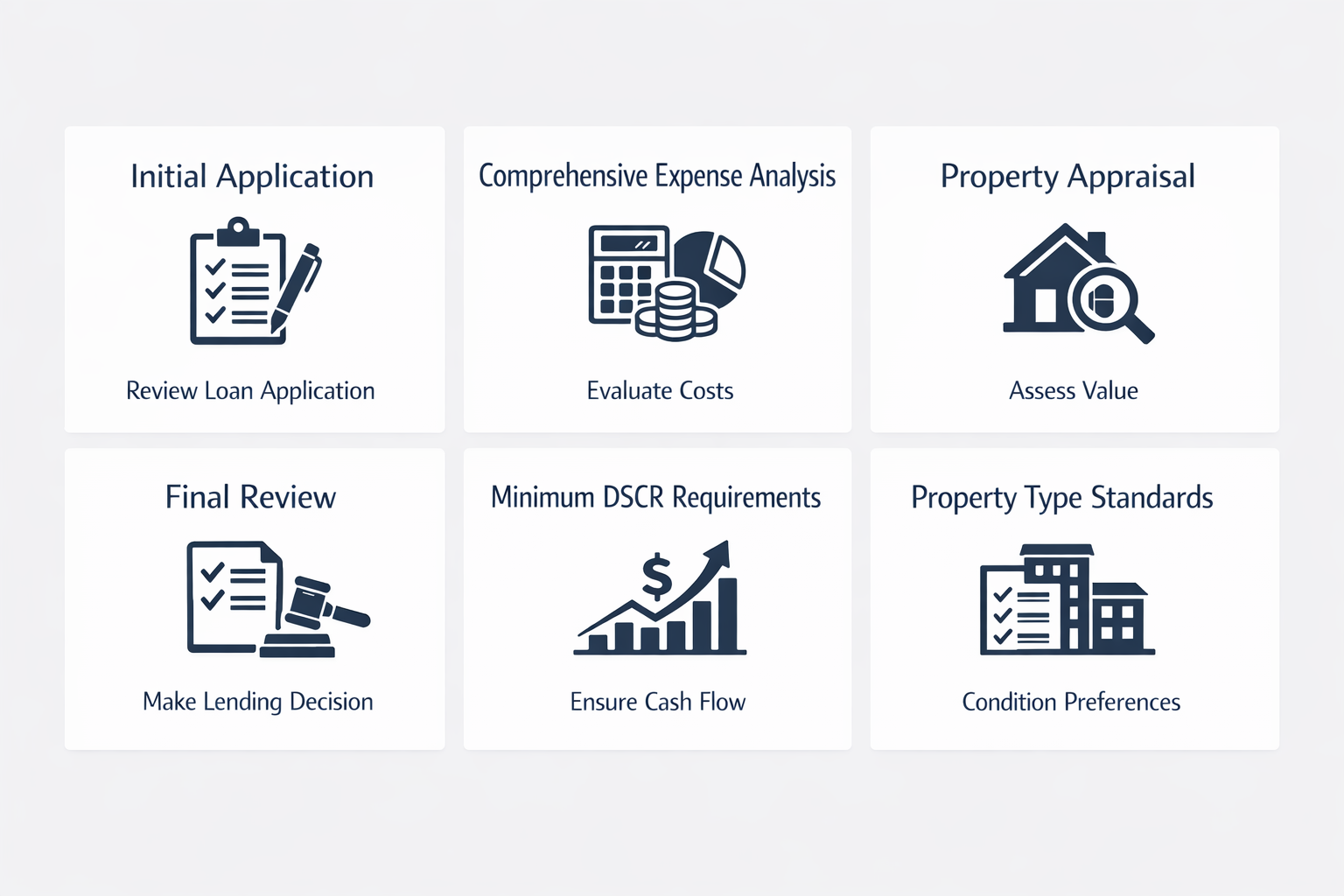
Initial application and property income assessment: Lenders begin by reviewing your loan application and conducting a preliminary rental income review. They evaluate current leases, market rents, or rent surveys to establish baseline income projections for the property.
Comprehensive expense analysis and DSCR calculation: Underwriters perform detailed expense analysis including property taxes, insurance, HOA fees, and estimated maintenance costs. They then calculate the DSCR by dividing net rental income by the proposed mortgage payment to determine if it meets approval criteria.
Property appraisal and condition verification: A licensed appraiser evaluates the property's value and rental income potential. This appraisal confirms the property's marketability and supports the rental income projections used in the underwriting decision.
Final underwriting review and approval determination: Underwriters compile all documentation, verify calculations, and make the final lending decision. They ensure all approval criteria are met before issuing loan commitment letters to qualified investors.
Critical Approval Criteria Lenders Evaluate
Critical approval criteria lenders evaluate during DSCR underwriting determine whether your investment property loan gets approved. These criteria focus heavily on property performance rather than personal income verification.
Minimum DSCR ratio requirements: Most lenders require a DSCR of 1.00 or higher, meaning rental income must at least equal the mortgage payment. Some lenders may require ratios of 1.10 or 1.25 depending on property type and risk factors assessed during the rental income review.
Property type and condition standards: Lenders typically prefer single-family homes, small multifamily properties, and condominiums in good condition. Properties requiring significant repairs may face additional scrutiny during the expense analysis or require completion before loan approval.
Borrower credit and experience requirements: While less emphasized than traditional loans, lenders still evaluate credit scores, typically requiring minimums of 620-640. Some lenders prefer borrowers with real estate investment experience, though this varies by institution and loan program.
Down payment and reserve fund expectations: DSCR loans often require 20-25% down payments for investment properties. Additionally, lenders may require 2-6 months of mortgage payments in reserves, demonstrating your ability to handle potential rental income disruptions.
Common Underwriting Challenges and Solutions
Common underwriting challenges and solutions help investors navigate potential obstacles during the DSCR loan approval process. Being aware of these issues allows you to address them proactively.
Insufficient rental income documentation: Incomplete lease agreements or lack of rental history can delay approval. Solution: Provide comprehensive documentation including current leases, rent rolls, and professional market rent analysis to support your rental income projections during the underwriting review.
Property condition or marketability concerns: Properties requiring repairs or in declining markets may face additional scrutiny. Solution: Address obvious maintenance issues before applying and provide market data showing rental demand and comparable properties to strengthen your application during the expense analysis phase.
DSCR ratio falling short of requirements: Properties with marginal cash flow may not meet minimum DSCR requirements. Solution: Consider larger down payments to reduce mortgage payments, or explore properties with stronger rental income potential that better satisfy lender approval criteria.
Inadequate cash reserves or credit issues: Insufficient reserves or credit problems can impact approval chances. Solution: Build adequate reserves before applying and address credit issues in advance, as these factors still influence underwriting decisions even with income-based lending programs.
Understanding how DSCR underwriting works empowers real estate investors to navigate the loan approval process more effectively. The focus on rental income review and thorough expense analysis allows qualified investors to access financing based on property performance rather than personal income limitations. By meeting the specific approval criteria and preparing comprehensive documentation, investors can leverage DSCR loans to expand their real estate portfolios.
Success with DSCR underwriting requires careful attention to property selection, financial preparation, and documentation quality. When you understand what lenders evaluate and how they assess investment properties, you can position your applications for approval and secure the financing needed to grow your rental property investments.