Understanding Flood Zone Impact on Pricing for Real Estate Investors
The flood zone impact on pricing represents one of the most significant yet often overlooked factors in real estate investment analysis. Properties located in or near flood zones can experience value reductions ranging from 4% to 12%, even if they've never experienced actual flooding. For investors utilizing DSCR loans, fix and flip financing, or building rental property portfolios, understanding these pricing dynamics becomes crucial for accurate deal evaluation and long-term profitability projections.
Essential Flood Zone Evaluation Checklist
When assessing potential investment properties, the essential flood zone evaluation checklist helps investors identify critical risk factors that might impact pricing and returns. These key considerations can significantly influence your investment decision and financing options.
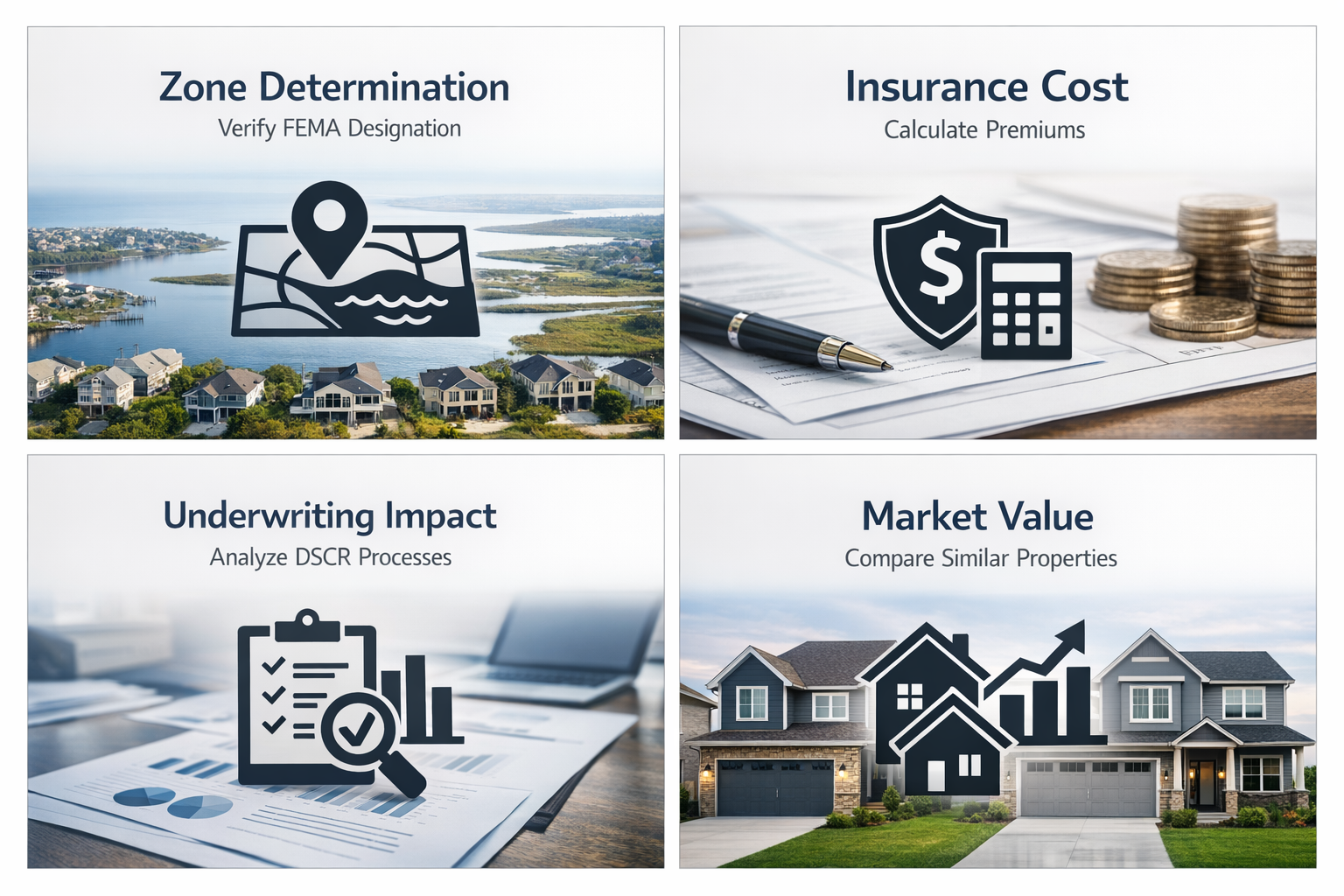
Zone Determination Research: Verify the property's official FEMA flood zone designation through flood maps and conduct historical flooding analysis for the surrounding area
Insurance Cost Assessment: Calculate mandatory flood insurance premiums and evaluate how these costs will impact your net operating income and cash flow projections
Underwriting Impact Analysis: Determine how flood zone designation might affect DSCR loan approval processes and required debt service coverage ratios
Market Value Comparison: Compare similar properties inside and outside flood zones to quantify the actual pricing differential in your target market
Insurance Requirements for Investment Properties
Insurance requirements for investment properties in flood zones can substantially impact your operational expenses and financing approval. Understanding these mandates helps prevent unexpected costs that could derail your investment strategy.
DSCR Loan Mandates: Many DSCR lenders require flood insurance regardless of zone designation, particularly in states like Florida where weather risks are elevated
Coverage Amount Calculations: Insurance amounts typically must equal the outstanding loan balance or the property's replacement cost, whichever is less
Premium Cost Variables: Flood insurance costs vary significantly based on zone designation, elevation certificates, and building characteristics
NFIP Program Benefits: The National Flood Insurance Program extension through 2026 provides stable coverage options for investors in designated flood zones
Underwriting Adjustments for Flood Properties
Lenders typically make specific underwriting adjustments for flood properties that can affect loan approval and terms. These modifications reflect the additional risk associated with properties in flood-prone areas.
Cash Flow Calculations: Underwriters may require higher insurance cost projections in DSCR calculations to account for potential premium increases
Reserve Requirements: Some lenders mandate larger cash reserves for properties in flood zones to cover potential insurance gaps or claims
Appraisal Considerations: Property appraisals might reflect flood zone discounts, potentially affecting loan-to-value ratios and required down payments
Documentation Standards: Enhanced documentation requirements often include elevation certificates and detailed flood history reports
Step-by-Step Property Value Assessment Process
A systematic property value assessment process helps investors accurately quantify how flood zones affect pricing and potential returns on their investment properties.
Obtain Official Zone Determination: Request a formal flood zone determination letter and review current FEMA flood maps to confirm the property's exact classification and risk level
Calculate Insurance Impact: Get specific flood insurance quotes and factor these costs into your cash flow analysis to determine the true net operating income
Analyze Comparable Sales: Compare recent sales of similar properties both inside and outside flood zones to quantify the actual market discount for flood-prone properties
Project Long-term Costs: Estimate future insurance cost increases and potential zone reclassification impacts on property values over your intended holding period
Financial Impact Analysis Methods
Effective financial impact analysis methods allow investors to quantify exactly how flood zones will affect their investment returns and cash flow projections over time.
Cash Flow Adjustment Calculations: Subtract estimated annual flood insurance costs from gross rental income to determine the true net cash flow available for debt service and returns
Value Discount Quantification: Apply the 4-12% value reduction range to your target property to establish maximum purchase price parameters for acceptable returns
DSCR Ratio Recalculation: Recalculate debt service coverage ratios using flood-adjusted net operating income to ensure compliance with lender requirements
Exit Strategy Evaluation: Factor flood zone pricing impacts into your exit strategy, whether that's long-term rental income or eventual resale value projections
Risk Mitigation Strategies for Investors
Smart risk mitigation strategies for investors can help minimize the negative impacts of flood zones while still capitalizing on potentially undervalued properties in these areas.
Enhanced Due Diligence Protocols: Implement comprehensive flood risk assessments including historical data analysis, elevation surveys, and drainage system evaluations before closing
Strategic Property Improvements: Consider flood-resistant improvements like elevated utilities, flood vents, and waterproof materials that might reduce insurance costs and increase property values
Insurance Optimization Techniques: Work with specialists to minimize flood insurance costs through elevation certificates, preferred risk policies, and coverage optimization strategies
Portfolio Diversification Approaches: Balance flood zone properties with assets in lower-risk areas to spread weather-related risks across your investment portfolio
Key Takeaway for Investment Success
The key takeaway for investment success in flood-prone areas centers on thorough preparation and realistic financial modeling. While flood zones can create opportunities through discounted property prices, successful investors must accurately account for insurance costs, potential value impacts, and lender requirements in their analysis. Properties in flood zones aren't automatically bad investments, but they require more sophisticated underwriting and risk management approaches. By factoring flood insurance costs into your DSCR calculations, obtaining proper zone determinations, and building appropriate reserves, you can potentially capitalize on undervalued properties while protecting your investment capital and maintaining positive cash flows over time.
Navigating the flood zone impact on pricing requires a balanced approach that considers both risks and opportunities. While properties in flood zones may face value reductions and additional insurance costs, they can also present attractive investment opportunities for prepared investors. The key lies in conducting thorough due diligence, accurately calculating all costs including flood insurance, and ensuring your DSCR loan structure accommodates these additional expenses. With the National Flood Insurance Program extended through 2026 and increasing awareness of climate risks, investors who master flood zone analysis will be better positioned to identify undervalued properties and build resilient portfolios. Remember that successful real estate investing isn't about avoiding all risks, but rather understanding and pricing them appropriately into your investment strategy.