Financing Rentals with Low DSCR: Strategic Solutions for Real Estate Investors
Real estate investors often encounter situations where promising rental properties don't quite meet traditional debt service coverage ratio requirements. Financing rentals with low DSCR presents unique challenges, but it doesn't have to derail your investment strategy. With DSCR loan requirements typically ranging from 1.0 to 1.25, properties that fall below these thresholds require creative approaches and strategic thinking.
The evolving landscape of rental property financing offers various pathways for investors dealing with sub-threshold scenarios. Understanding these options can mean the difference between missing out on a valuable acquisition and successfully expanding your portfolio. Let's explore the practical strategies that can help you navigate low DSCR situations while maintaining your investment momentum.
Essential Pre-Qualification Strategies
Essential pre-qualification strategies can significantly improve your chances when financing rentals with low DSCR. These foundational steps help position your application more favorably before you approach lenders.
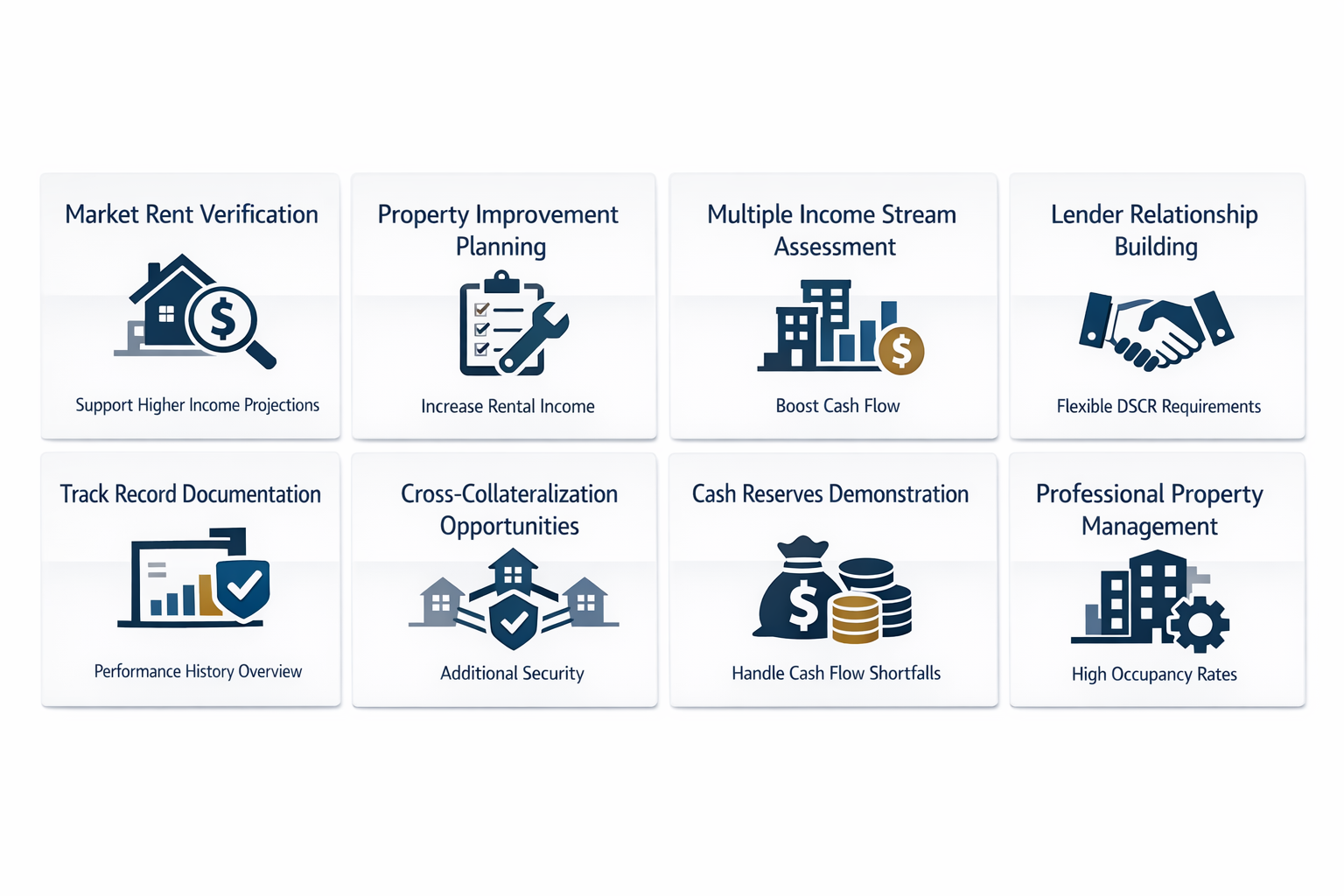
Market rent verification: Obtain professional rent comparables and market analysis reports that may support higher rental income projections than current lease agreements reflect
Property improvement planning: Document potential value-add opportunities that could increase rental income within 12-24 months of acquisition
Multiple income stream assessment: Evaluate additional revenue possibilities such as parking fees, storage rentals, or utility reimbursements that might boost overall property cash flow
Lender relationship building: Establish connections with portfolio lenders and non-bank institutions that may offer more flexible DSCR requirements than traditional mortgage companies
Portfolio Presentation Essentials
Portfolio presentation essentials become crucial when you're working with properties that have challenging debt service coverage ratios. A comprehensive presentation can help lenders see the bigger picture of your investment strategy.
Track record documentation: Compile detailed performance history of your existing rental properties, including occupancy rates, rent growth, and maintenance cost management
Cross-collateralization opportunities: Present stronger performing properties in your portfolio that might serve as additional security for the low DSCR acquisition
Cash reserves demonstration: Show substantial liquid reserves that indicate your ability to handle potential cash flow shortfalls during lease transitions or market fluctuations
Professional property management: Highlight your use of professional management services or your own proven systems for maintaining high occupancy and rent collection rates
Risk Mitigation Documentation
Risk mitigation documentation helps address lender concerns about financing rentals with low DSCR by demonstrating your proactive approach to potential challenges.
Market stability analysis: Provide data showing consistent rental demand, low vacancy rates, and stable or growing rental prices in the target area
Tenant quality indicators: Document current tenant creditworthiness, employment stability, and lease renewal probability if applicable
Property condition assessments: Include recent inspections and maintenance records that show the property won't require significant unexpected capital expenditures
Insurance and legal protections: Detail comprehensive coverage including landlord insurance, liability protection, and legal expense coverage that protects against income disruption
Alternative Financing Structure Options
Alternative financing structure options provide multiple pathways when traditional DSCR loans don't align with your property's current cash flow metrics. These approaches often involve creative deal structuring.
Hybrid financing arrangements: Combine DSCR loans with personal income verification for a portion of the loan amount, which may allow for lower overall DSCR requirements while maintaining investor-friendly terms
Bridge-to-permanent structures: Utilize short-term rental property financing to complete the acquisition and implement improvements, then refinance into permanent DSCR financing once cash flow improves
Staged improvement financing: Structure loans that account for planned renovations or lease-up periods, with DSCR calculations based on projected stabilized income rather than current performance
Portfolio blanket loan strategies: Leverage multiple properties under a single loan facility where stronger performers can offset weaker DSCR properties in the overall package
Lender Selection and Negotiation Tactics
Lender selection and negotiation tactics become particularly important when dealing with below-threshold debt service coverage scenarios. Different lenders may have varying appetites for these deals.
Community bank targeting: Focus on regional and community banks that keep loans in portfolio and may have more flexible underwriting criteria compared to institutions that sell loans to secondary markets
Non-QM lender outreach: Connect with non-qualified mortgage lenders who specialize in investor loans and typically offer more creative solutions for challenging DSCR situations
Private lending networks: Explore private money sources that may accept lower DSCR ratios in exchange for higher interest rates or additional security measures
Correspondent lender partnerships: Work with mortgage brokers who have relationships with multiple DSCR lenders and can shop your deal to find the most accommodating terms
Creative Down Payment and Security Strategies
Creative down payment and security strategies can help offset lender concerns about low DSCR properties by reducing their risk exposure through various means.
Increased equity investment: Offer larger down payments, typically 30-40% instead of the standard 20-25%, to reduce loan-to-value ratios and demonstrate stronger commitment to the investment
Cross-collateral arrangements: Pledge additional real estate assets as secondary collateral, giving lenders multiple sources of recovery if the primary property underperforms
Personal guarantees with limits: Provide limited personal guarantees for specific scenarios such as fraud or environmental issues, while maintaining the non-recourse nature for standard operating performance
Escrow and reserve requirements: Agree to maintain higher reserve accounts or establish rent loss escrows that provide additional security for debt service payments during vacancy periods
Long-Term Portfolio Strategy Integration
Long-term portfolio strategy integration ensures that financing rentals with low DSCR aligns with your broader investment objectives while positioning you for future opportunities. This strategic approach looks beyond individual deals to create sustainable growth patterns.
Successful investors often view low DSCR properties as portfolio building blocks rather than isolated transactions. By demonstrating how these acquisitions fit into a comprehensive investment strategy, you can often secure more favorable financing terms. This might involve showing lenders your pipeline of future acquisitions, your systematic approach to property improvements, or your track record of turning underperforming assets into strong cash flow generators.
The key lies in presenting these challenging deals as part of a disciplined investment approach rather than opportunistic purchases. When lenders see a clear strategy for portfolio growth and risk management, they're more likely to work with you on creative financing solutions that accommodate lower debt service coverage ratios.
Successfully financing rentals with low DSCR requires a combination of strategic preparation, creative structuring, and relationship building with the right lenders. While these deals present additional challenges, they often represent opportunities to acquire properties at better prices or in emerging markets before they reach peak performance.
The evolving DSCR lending landscape continues to offer new solutions for investors willing to think beyond traditional financing approaches. By implementing these strategies and maintaining flexibility in your deal structure, you can continue building your rental property portfolio even when debt service coverage ratios don't meet conventional thresholds.
Remember that each low DSCR situation is unique, and the most effective approach often combines multiple strategies tailored to your specific property, market conditions, and long-term investment goals. Working with experienced DSCR lenders who understand investor challenges can make the difference between a declined application and a successful closing.