DSCR Rates for Short Term Rentals: What Investors Need to Know
Short-term rental investments have transformed the real estate landscape, but securing the right financing remains a critical challenge for investors. DSCR rates for short term rentals typically differ significantly from traditional investment property loans, often carrying premium rates that reflect the unique risks and income volatility associated with vacation rental properties.
Understanding these rate structures isn't just about finding the cheapest loan. It's about recognizing how airbnb rate premiums and volatility pricing impact your overall investment strategy. With current market conditions showing both opportunities and challenges, investors need to navigate a complex landscape of lending criteria, rate adjustments, and evolving appraisal standards.
The vacation rental cost structure extends beyond just the mortgage rate. Lenders now evaluate short-term rental properties differently, often requiring higher debt service coverage ratios and implementing stricter qualification standards. This shift reflects the industry's growing recognition that short-term rentals operate more like businesses than traditional rental properties.
Current Market Rate Structure for Short-Term Rental DSCR Loans
The current market rate structure for short-term rental DSCR loans reflects the specialized nature of vacation rental financing. Understanding these rates helps investors make informed decisions about their property acquisition strategies.
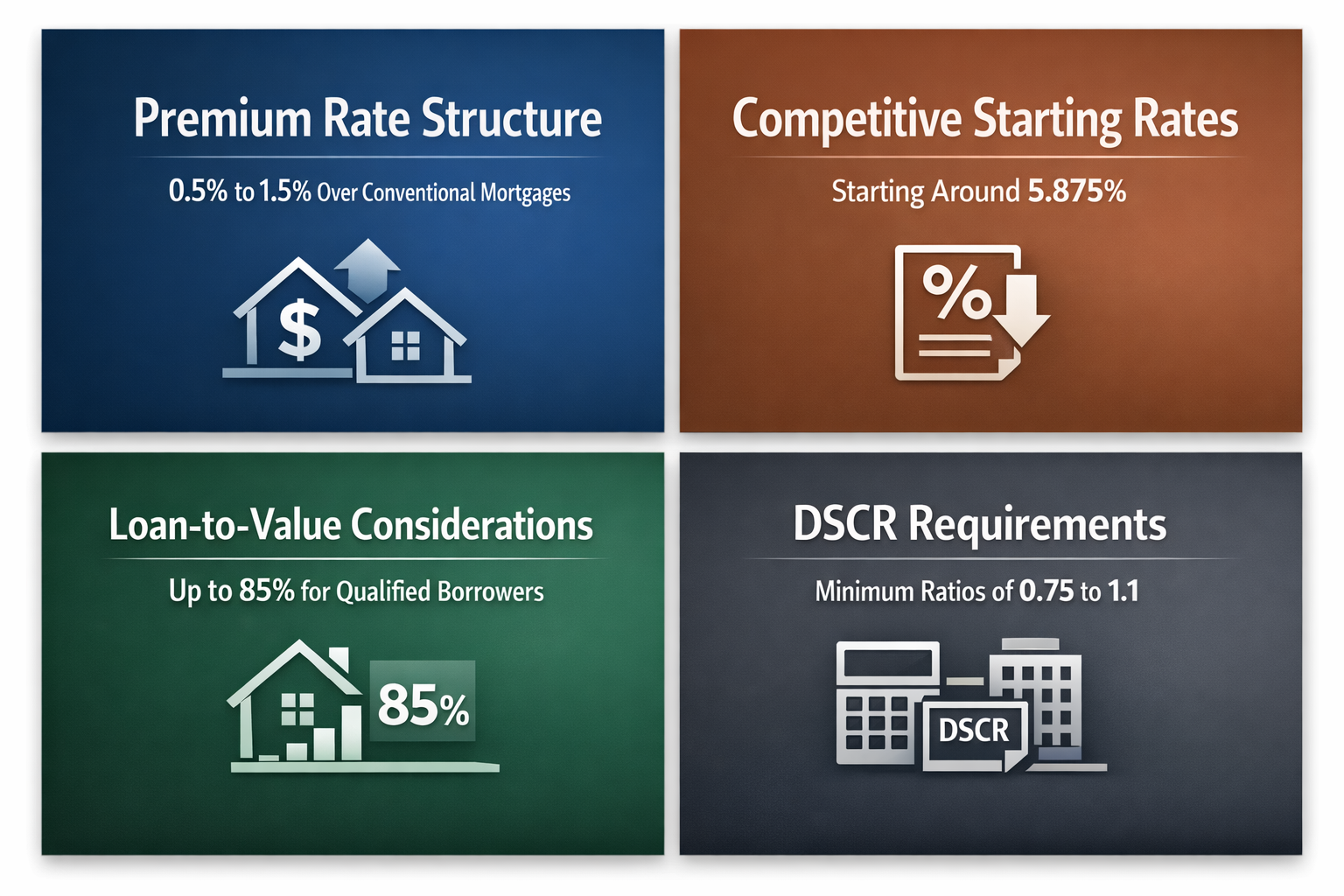
Premium Rate Structure: DSCR rates for short term rentals typically carry a 0.5% to 1.5% premium over conventional investment property mortgages, reflecting the higher risk profile and income volatility associated with vacation rentals
Competitive Starting Rates: Current market rates for short-term rental loans may start around 5.875%, though actual rates depend on individual borrower qualifications and market conditions
Loan-to-Value Considerations: Lenders often offer loan-to-value ratios up to 85% for qualified borrowers, providing substantial leverage opportunities for investors with strong financial profiles
DSCR Requirements: Many lenders accept DSCR ratios as low as 0.75, though some institutions now require minimum ratios of 1.1 due to evolving risk assessment standards
Factors Driving Rate Premiums in Vacation Rental Financing
Airbnb rate premiums and additional costs stem from several key factors that differentiate short-term rental properties from traditional investment real estate. These elements create a unique risk profile that lenders must account for in their pricing.
Income Volatility Risk: Short-term rentals experience significant seasonal fluctuations and market-dependent occupancy rates, creating unpredictable cash flow patterns that concern lenders
Operational Complexity: Vacation rentals require active management, marketing, and maintenance coordination, adding operational risks that traditional rental properties don't face
Market Sensitivity: Economic downturns, travel restrictions, or local regulatory changes can dramatically impact short-term rental income, making these investments more vulnerable to external factors
Appraisal Challenges: Traditional appraisal methods struggle with short-term rental valuations, forcing lenders to develop new assessment criteria and potentially conservative valuation approaches
Debt Service Coverage Requirements and Calculation Methods
Understanding debt service coverage requirements becomes crucial when evaluating DSCR loans for vacation rental properties. The calculation methods for short-term rentals often differ from traditional rental property assessments.
Evolving DSCR Standards: Many lenders now require minimum DSCR ratios of 1.1 for short-term rentals, reflecting increased awareness of income volatility and operational risks in the vacation rental market
Income Calculation Complexity: Lenders may use various methods to calculate projected rental income, including historical performance data, market comparables, and seasonal adjustment factors
Expense Recognition: DSCR calculations for vacation rentals typically include higher operational expenses such as frequent cleaning, utilities, marketing costs, and property management fees
Documentation Requirements: Investors might need to provide detailed income projections, market analysis data, and operational expense estimates to support their DSCR loan applications
Market Outlook and Rate Trends for 2026
The short-term rental market appears positioned for a new growth cycle, with several factors potentially influencing DSCR rates for short term rentals throughout 2026 and beyond.
Growth Cycle Drivers: Tax incentives and potentially lower interest rates may benefit short-term rental investors, creating more favorable market conditions for property acquisition and financing
Market Stabilization Effects: As demand and pricing patterns stabilize in many markets, lenders might offer more competitive financing terms for qualified short-term rental investors
Regulatory Environment: Evolving local regulations and zoning laws continue to shape the short-term rental landscape, potentially affecting both property values and lending standards
Technology Integration: Improved data analytics and income prediction models may help lenders better assess short-term rental risks, potentially leading to more nuanced pricing strategies
Strategies for Securing Optimal DSCR Loan Terms
Smart investors can employ several strategies to improve their chances of securing favorable DSCR loan terms for short-term rental properties, despite the inherent challenges in this specialized financing sector.
Financial Profile Optimization: Maintain strong personal credit scores, substantial cash reserves, and diverse income sources to present a compelling borrower profile that may qualify for better rates
Market Research Documentation: Provide comprehensive market analysis, including occupancy projections, seasonal demand patterns, and competitive rental rate data to support income assumptions
Property Selection Criteria: Focus on properties in established vacation rental markets with strong demand fundamentals and minimal regulatory restrictions to reduce perceived lender risk
Operational Planning: Develop detailed business plans that demonstrate understanding of vacation rental operations, including marketing strategies, expense management, and revenue optimization techniques
Lender Relationship Building: Work with specialized lenders who understand the short-term rental market and can offer more competitive terms than traditional mortgage providers
DSCR rates for short term rentals reflect the complex reality of vacation rental investing, where higher returns often come with increased financing costs and operational complexity. While rate premiums of 0.5% to 1.5% above conventional investment loans might seem significant, they represent the market's assessment of the unique risks and opportunities in this sector.
Successful short-term rental investors understand that securing optimal financing goes beyond just finding the lowest rate. It involves presenting a comprehensive investment strategy that demonstrates market knowledge, operational competence, and financial stability. As the market enters what appears to be a new growth cycle in 2026, investors who adapt to evolving lending standards and maintain strong financial profiles will be best positioned to capitalize on emerging opportunities.
The key lies in working with specialized lenders who understand the vacation rental market dynamics and can structure loans that align with your investment objectives. By focusing on properties in strong markets, maintaining excellent financial credentials, and developing robust operational plans, investors can navigate the current rate environment while building profitable short-term rental portfolios.