Understanding DSCR Rates and Loan Terms in Today's Market
Real estate investors face a rapidly changing financing landscape in 2026, with DSCR rates and loan terms evolving beyond traditional expectations. Current market conditions show rates ranging from 5.99% to 6.35%, but understanding the deeper mechanics of pricing structures and term considerations can make the difference between profitable deals and missed opportunities.
The relationship between interest rates and loan terms has become more complex, requiring investors to evaluate multiple factors beyond simple rate comparisons. Market-driven variables now influence DSCR loan costs more than federal rate actions, creating new opportunities for strategic financing approaches.
Current DSCR Rate Landscape and Market Positioning
The current rates landscape reveals important distinctions that impact investment strategy. Understanding these rate structures helps investors position their financing approaches effectively.
Standard DSCR rates typically range from 5.99% to 6.35% for qualified investors, with variations based on property type and investor profiles
International investors may encounter rates starting at 6.50% or higher, reflecting additional risk assessments by lenders
Rate differentiation often depends on market-specific variables rather than broad economic indicators, creating opportunities for strategic timing
Institutional capital influence has introduced new pricing tiers that reward larger portfolio investors with more competitive terms
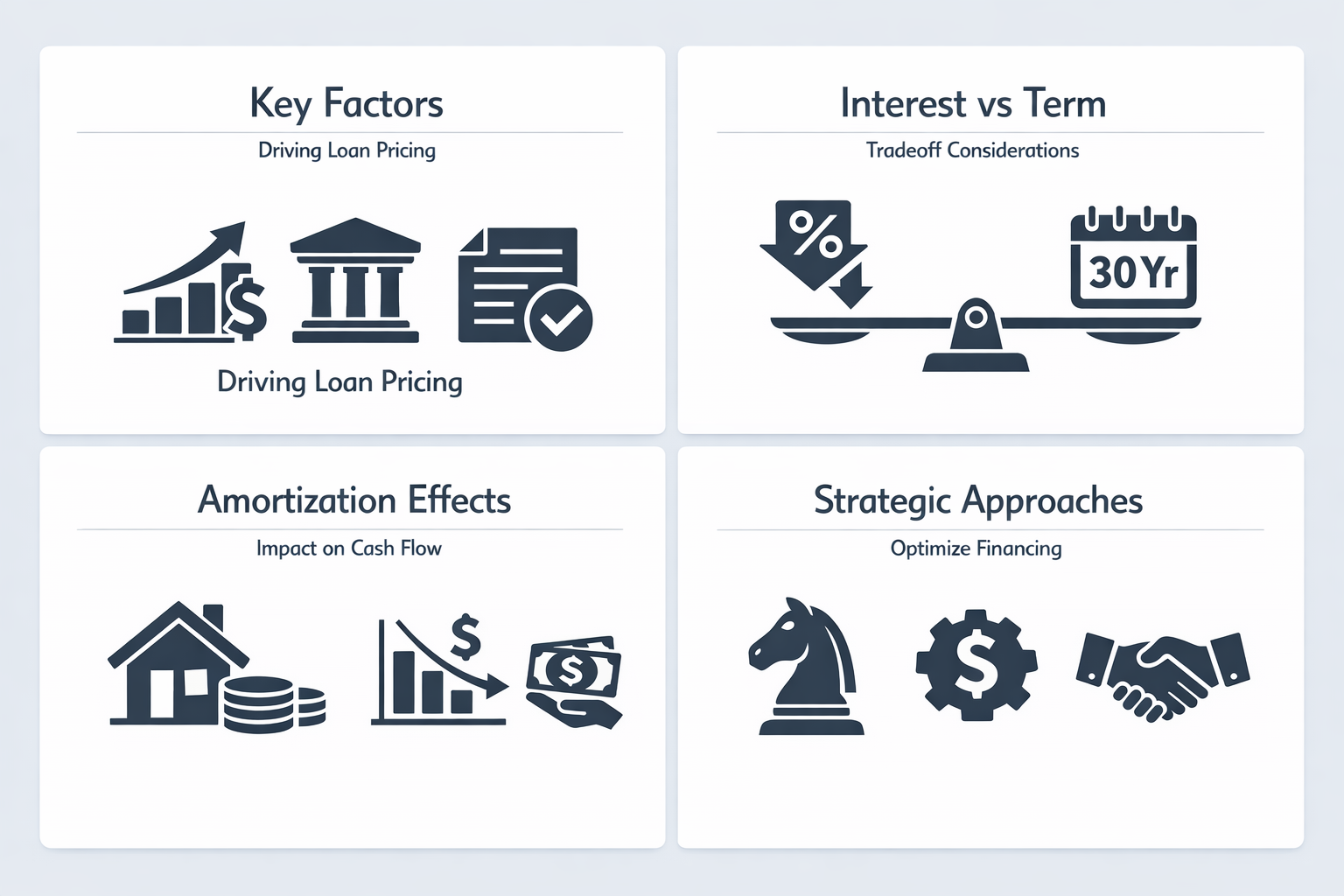
Key Factors Driving DSCR Loan Pricing Structure
The factors driving DSCR loan pricing structure extend beyond traditional mortgage considerations. Modern lenders evaluate multiple risk components when determining rates and terms.
Creditworthiness assessments now include portfolio performance metrics and cash flow stability across multiple properties
Property-specific debt service coverage ratios directly influence both rates and available loan amounts
Geographic market conditions and rental demand patterns affect pricing more significantly than general economic trends
Loan-to-value ratios combined with exit strategy clarity create tiered pricing structures for different investor profiles
Interest vs Term Tradeoff Considerations
The interest vs term tradeoff has evolved into a more nuanced decision matrix for DSCR financing. Investors must balance immediate cash flow needs against long-term portfolio growth strategies.
Shorter terms often provide lower rates but may require more frequent refinancing cycles that could impact overall returns
Extended amortization periods might reduce monthly payments while potentially increasing total interest costs over the loan life
Hybrid structures are emerging that combine fixed initial periods with adjustable components, offering flexibility for different market conditions
Prepayment options and penalty structures can significantly impact the true cost of financing when considering exit strategies
Strategic Approaches to Optimize DSCR Financing
Strategic approaches to optimize DSCR financing require understanding how different loan structures align with investment objectives. Successful investors adapt their financing strategies to current market dynamics.
Evaluate portfolio-level financing options that may offer better terms than individual property loans, especially for investors with multiple rental property financing
Consider timing strategies based on market-driven factors rather than waiting for federal rate changes, which may have limited impact on DSCR pricing
Assess hybrid loan products that combine traditional DSCR features with innovative structures designed for different property types and investment timelines
Plan for evolving credit criteria by maintaining strong debt service coverage ratios and diversified income streams across your rental portfolio
Navigating Amortization Effects on Cash Flow
Navigating amortization effects on cash flow requires careful analysis of how different payment structures impact monthly returns and long-term equity building. The choice between amortization schedules can significantly affect investment performance.
Standard 30-year amortization schedules provide predictable monthly payments but slower equity building in the early years of the loan
Interest-only periods might maximize cash flow initially but require planning for eventual principal payments or refinancing strategies
Accelerated amortization options can build equity faster while reducing total interest costs, though they require higher monthly cash flow capabilities
Balloon payment structures offer lower initial payments but necessitate clear exit strategies or refinancing plans at maturity
The landscape of DSCR rates and loan terms continues evolving as institutional capital and product innovation reshape rental property financing. Successful investors recognize that optimal financing strategies go beyond simple rate comparisons to encompass comprehensive term structures, amortization effects, and alignment with portfolio objectives.
Current market conditions offer opportunities for investors who understand the factors driving pricing decisions and can position their financing requests accordingly. The key lies in matching loan products with specific investment strategies while maintaining flexibility for changing market conditions.
As lending criteria become more sophisticated and new hybrid products emerge, staying informed about rate influences and term options becomes increasingly important for maintaining competitive advantages in rental property investments.