Strategic DSCR Rate Comparison Scenarios for Investment Success
Real estate investors face a dynamic lending landscape where DSCR rate comparison scenarios can make or break deal profitability. With current DSCR loan rates ranging from approximately 6.00% to 10.75% depending on property type and borrower profile, understanding how different rate scenarios impact your investment returns has become crucial for successful deal modeling.
The difference between securing a 6.00% rate versus a 7.50% rate on a million-dollar investment property could mean thousands in annual cash flow variations. Smart investors use systematic rate comparison approaches to evaluate multiple financing scenarios before committing to deals, ensuring they maximize their pricing outcomes and investor decision making processes.
Essential Tips for Residential DSCR Rate Modeling
Understanding residential DSCR rate scenarios helps investors make informed decisions when evaluating rental property acquisitions. These practical tips can help you model different rate scenarios effectively for better investment outcomes.
Baseline Rate Analysis: Start your modeling with the current baseline par rate of 6.00% for domestic investors, as this provides a foundation for comparison. Consider that foreign nationals might face rates around 6.62%, which could affect international investment strategies.
Rate Range Planning: Model scenarios across the typical 6.00% to 7.50% range for qualified borrowers to understand cash flow variations. This range represents the current market conditions and helps you prepare for different approval outcomes.
Cash Flow Sensitivity Testing: Calculate monthly payment differences between rate scenarios to determine how rate variations impact your property's debt service coverage ratio. Small rate changes can significantly affect your investment's profitability over time.
Commercial Property Rate Comparison Methods
Commercial DSCR rate scenarios require different modeling approaches due to their wider rate ranges and deal complexity. These comparison methods help investors navigate the 7.25% to 10.75% commercial rate spectrum effectively.
Deal Strength Assessment: Evaluate how your property's fundamentals might influence rate positioning within the commercial range. Stronger deals typically secure rates closer to 7.25%, while riskier investments might approach 10.75%.
Property Type Considerations: Model different scenarios for multi-family versus other commercial properties, as rate variations often depend on asset class. Understanding these distinctions helps you set realistic expectations for financing costs.
Market Timing Factors: Consider how current market conditions affect rate availability and adjust your scenarios accordingly. Commercial rates tend to be more sensitive to market fluctuations than residential options.
Advanced Scenario Planning Techniques
Sophisticated investors use comprehensive scenario planning to test various rate combinations and market conditions. These advanced techniques help you prepare for multiple financing outcomes and market changes.
Multi-Variable Testing: Create scenarios that combine different DSCR rates with varying rent growth projections and expense increases. This comprehensive approach reveals how rate changes interact with other investment variables.
Sensitivity Analysis Tools: Utilize specialized tools that test your investment's sensitivity to rate changes, helping you identify break-even points and risk thresholds. These tools can optimize your decision-making process in fluctuating markets.
Refinancing Scenarios: Model potential refinancing opportunities as rates decline from previous highs, considering how improved rates might enhance existing portfolio performance. Current rate improvements from the 8-9% range seen in 2024 create new refinancing possibilities.
Key Steps for Effective Deal Modeling
Successful deal modeling requires a systematic approach to rate comparison that covers all critical financial aspects. Follow these numbered steps to ensure comprehensive analysis of your investment scenarios.
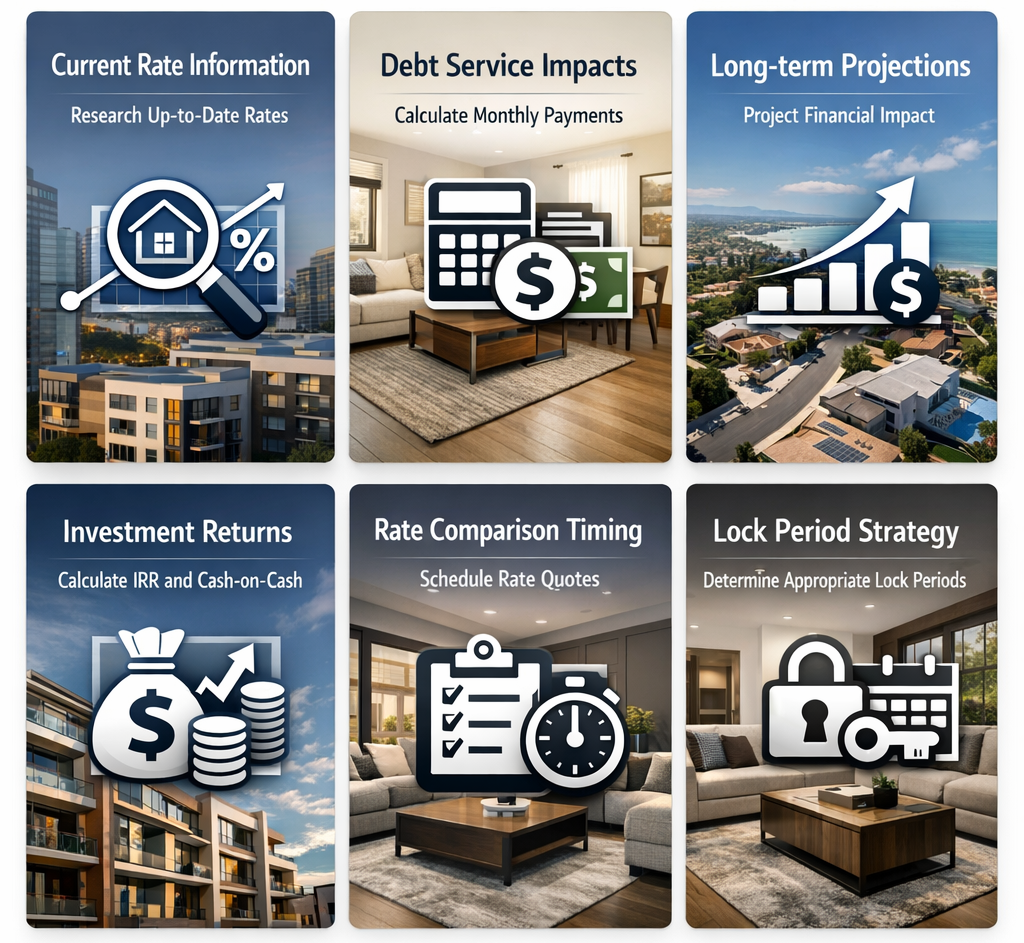
Gather Current Rate Information: Research up-to-date DSCR rates from multiple lenders and document the range of available options. Compare both residential and commercial rates if you're evaluating different property types within your investment strategy.
Calculate Debt Service Impacts: Determine monthly payment amounts for each rate scenario and calculate how these affect your debt service coverage ratios. This step reveals which rate levels support your target cash flow requirements.
Analyze Long-term Projections: Project the cumulative financial impact of different rates over your planned holding period, considering potential rate changes and refinancing opportunities. This analysis helps you understand the true cost of financing across various scenarios.
Compare Investment Returns: Calculate internal rates of return and cash-on-cash returns for each rate scenario to determine which financing options optimize your investment returns. These comparisons guide your final lending decisions.
Strategic Timing Considerations for Rate Decisions
Market timing plays a crucial role in securing favorable DSCR rates and maximizing investment returns. Understanding when to act on different rate scenarios can significantly impact your portfolio's profitability.
Market Cycle Assessment: Evaluate current market conditions and rate trends to determine optimal timing for loan applications or refinancing decisions. Consider how declining rates from previous highs create opportunities for improved cash flow.
Lender Comparison Timing: Schedule rate quotes from multiple lenders within a concentrated timeframe to ensure accurate comparisons, as rates can change frequently in volatile markets. This approach helps you secure the most competitive terms available.
Lock Period Strategy: Determine appropriate rate lock periods based on your closing timeline and market volatility expectations. Longer lock periods might provide security but could cost additional fees in rapidly changing markets.
Common Rate Comparison Mistakes to Avoid
Even experienced investors can make costly errors when comparing DSCR rate scenarios. Avoiding these common mistakes helps ensure your rate comparisons lead to optimal financing decisions and investment outcomes.
Focusing Only on Rate: Don't base decisions solely on interest rates without considering closing costs, fees, and loan terms that affect total borrowing costs. A slightly higher rate with lower fees might provide better overall value for your investment strategy.
Ignoring Rate Adjustment Factors: Avoid overlooking how your specific borrower profile, property type, and deal characteristics might affect quoted rates. These factors can cause significant variations from advertised baseline rates.
Inadequate Scenario Testing: Don't limit your analysis to best-case scenarios without modeling potential rate increases or market changes. Comprehensive testing helps you prepare for various market conditions and maintain investment flexibility.
Timing Coordination Issues: Avoid comparing rates obtained at different times or from different market periods, as this can lead to inaccurate decision-making. Ensure all rate quotes reflect current market conditions for valid comparisons.
Effective DSCR rate comparison scenarios provide the foundation for successful real estate investment decisions in today's dynamic lending environment. By systematically modeling different rate possibilities and understanding how they impact your deal economics, you can optimize your financing choices and maximize investment returns.
The current rate environment, with residential DSCR loans ranging from 6.00% to 7.50% and commercial options spanning 7.25% to 10.75%, offers opportunities for investors who approach rate comparisons strategically. Success depends on thorough scenario planning, comprehensive deal modeling, and understanding how rate variations affect your specific investment objectives.
Remember that rate comparison is just one component of successful investment analysis. Combine your rate scenario modeling with thorough market research, property analysis, and long-term strategic planning to build a profitable real estate investment portfolio that can adapt to changing market conditions.