DSCR Loan Lease Agreement Requirements: What Qualifies
September 2, 2026
•
7 min read
Understanding DSCR Loan with Lease Agreement Requirements
Real estate investors seeking financing for rental properties often face unique challenges when traditional lenders focus heavily on personal income. A DSCR loan with lease agreement offers a powerful alternative, allowing investors to qualify based on property income rather than personal earnings. This financing structure may be particularly beneficial for self-employed investors or those with significant rental income portfolios.
The debt service coverage ratio loan evaluates your property's rental income against its debt obligations, making lease agreements a critical component of the approval process. Understanding how these loans work with existing lease arrangements could help you secure financing for expanding your investment portfolio while leveraging property cash flow effectively.
Essential Documentation Checklist for DSCR Loans
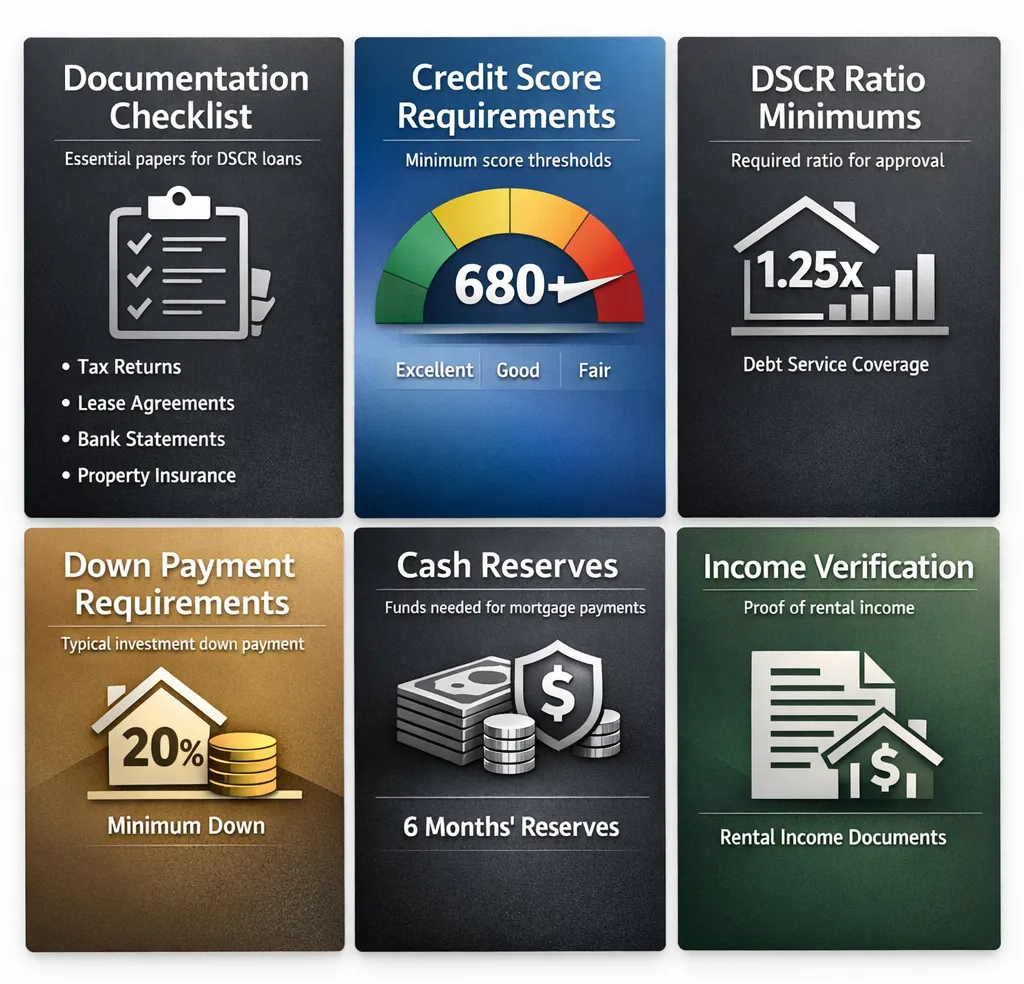
When applying for a DSCR loan with lease agreement, proper documentation checklist preparation typically determines the speed and success of your approval process. Lenders require specific paperwork to evaluate both your creditworthiness and the property's income potential.
Current lease agreements: All active rental contracts showing monthly income, lease terms, and tenant obligations
Property appraisal report: Complete assessment including detailed rental income analysis and market comparisons
Financial statements: Bank statements, tax returns, and profit/loss statements for the investment property
Insurance documentation: Proof of adequate property insurance coverage and liability protection
Property management records: Maintenance history, occupancy rates, and rental collection records if applicable
Credit Score and DSCR Requirements
Meeting credit score and DSCR requirements has become more standardized as lenders refine their approval criteria for 2026. Your personal credit history combined with the property's debt service coverage ratio creates the foundation for loan approval decisions.
Minimum credit score thresholds: Most lenders require a minimum in the 620 to 680 range, with stronger scores generally earning better pricing
DSCR ratio minimums: Most lenders require a DSCR of 1.0 or higher, with a ratio of 1.25 or above often unlocking the best terms. Some specialty programs accept ratios as low as 0.75 in exchange for a larger down payment or a rate premium
Down payment requirements: Expect to provide 20-25% down payment for investment properties
Cash reserves: Lenders may require 2-6 months of mortgage payments in reserve funds
Lease Terms Review Process
The lease terms review process plays a crucial role in DSCR loan approval, as lenders must verify the stability and reliability of rental income streams. Understanding what lenders examine in your lease agreements helps you prepare stronger applications.
Lease duration and renewal options: Longer-term leases with renewal clauses typically strengthen your application
Rent amount verification: Monthly rental rates must align with market comparisons and appraisal estimates
Tenant screening quality: Evidence of thorough tenant vetting processes and payment history
Security deposit amounts: Adequate deposits that demonstrate tenant commitment and risk mitigation
Maintenance responsibilities: Clear delineation of landlord vs. tenant obligations for property upkeep
Steps to Prepare Your DSCR Application
Following a structured approach to prepare your DSCR application with lease agreement documentation could significantly improve your chances of approval while potentially securing more favorable terms.
Organize financial documentation: Gather all required paperwork including lease agreements, bank statements, and property records before starting your application
Calculate your debt service coverage ratio: Use your property's net operating income divided by total debt service to ensure you meet minimum requirements
Research multiple lenders: Different lenders may offer varying terms, so compare options to find the best fit for your investment strategy
Schedule property appraisal: Coordinate with qualified appraisers who understand rental property valuation and income analysis
Review and optimize lease agreements: Ensure current leases demonstrate stable income and professional property management practices
Common Approval Timeline and Process
Understanding the typical approval timeline and process for a DSCR loan with lease agreement helps investors plan their acquisition strategies and manage expectations throughout the financing journey.
Initial application submission: Submit complete documentation package with all required forms, typically taking 1-2 days to prepare
Underwriter review period: Lenders typically spend 7-14 days reviewing your application, credit, and property documentation
Property appraisal scheduling: Appraisal appointment and report completion usually requires 5-10 business days depending on location
Final underwriting and conditions: Address any remaining lender requirements or documentation requests, often taking 3-7 days
Closing preparation and funding: Final loan documents, title work, and funding typically occur within 5-10 days after approval
Key Takeaway for Investors
Successfully securing a DSCR loan with lease agreement requires thorough preparation and understanding of how property income documentation affects your approval odds. The combination of meeting credit score minimums in the 620 to 680 range, maintaining a DSCR ratio of 1.0 or higher, and presenting well-structured lease agreements creates a strong foundation for loan approval. Investors who approach this process with complete documentation, realistic expectations about timeline, and clear understanding of occupancy verification requirements typically experience smoother transactions and may secure more favorable lending terms for their rental property investments.
Lease Agreement FAQs
What if my property is vacant and has no current lease?
Lenders typically use an appraiser's market rent estimate, often called a rent schedule, to establish projected income for a vacant property instead of requiring an existing lease.
Does a month-to-month lease work for DSCR qualification?
Many lenders accept month-to-month leases, though some prefer to see a longer-term lease in place for stronger income certainty. Requirements vary, so confirm with your specific lender.
Do I need to provide tenant background checks or applications?
Typically no. DSCR underwriting focuses on the lease terms and rental income rather than the tenant's personal credit or background, though your lender may still want a signed, valid lease agreement.
What if my lease rent is below market rent?
Some lenders will use the lower of actual lease rent or appraised market rent, while others may allow the market rent estimate if a rent increase is documented or planned. Confirm which approach your lender takes.
A DSCR loan with lease agreement represents a valuable financing tool for real estate investors looking to expand their rental property portfolios without relying solely on personal income qualification. The key to success lies in understanding lender requirements, maintaining strong credit profiles, and presenting comprehensive documentation that demonstrates property income stability.
As lending standards continue to evolve in 2026, investors who stay informed about credit score thresholds, DSCR ratio requirements, and proper lease documentation typically position themselves for financing success. Consider working with experienced mortgage professionals who understand the nuances of investment property financing to navigate this process effectively and secure terms that support your long-term investment goals.