Understanding Alternative Financing: DSCR vs Bank Statement Loans
Real estate investors often face unique challenges when securing traditional mortgage financing. When conventional loans don't align with your investment strategy or income structure, alternative loan options become essential tools for building your portfolio. The dscr loan vs bank statement loan comparison represents two of the most popular financing solutions for investors who need flexible income verification methods.
These alternative loan products might serve different investor profiles and property types, making it crucial to understand their distinct qualification requirements and use cases. Whether you're scaling a rental property portfolio or managing self-employed income, choosing the right loan type could significantly impact your investment returns and financing flexibility.
What to Do When Choosing Alternative Loan Options
Making smart decisions about alternative loan options requires understanding what actions typically lead to successful financing outcomes. These practices might help investors navigate the complex landscape of non-traditional mortgage products.
Evaluate your income documentation capabilities: Assess whether you can provide consistent bank statements or if property cash flow analysis makes more sense for your situation
Calculate debt-to-income ratios carefully: Understanding how each loan type evaluates your financial capacity helps you prepare stronger applications
Research current market rates and terms: Alternative loan comparison shopping could reveal significant differences in interest rates and qualification requirements
Consider your long-term investment strategy: Match the loan product to your portfolio goals, whether you're focused on buy-and-hold rentals or more active investment approaches
What Not to Do When Comparing Loan Products
Avoiding common mistakes in the loan selection process might save investors time, money, and potential financing complications. Understanding these pitfalls helps ensure you make informed decisions about your investment financing.
Don't assume all alternative loans work the same way: DSCR and bank statement loans have distinct qualification criteria and income verification differences that could affect your eligibility
Don't ignore property-specific requirements: Some loan products may have restrictions on property types, occupancy status, or geographic locations that could limit your investment options
Don't overlook prepayment penalties: Alternative loans might include different penalty structures that could impact your ability to refinance or sell properties
Don't rush the application without proper documentation: Each loan type requires specific financial records, and incomplete applications often lead to delays or rejections
Key Income Verification Differences Between Loan Types
Understanding the income verification differences between these loan products helps investors choose the most appropriate financing option for their specific situation. Each approach offers distinct advantages depending on your income verification needs and documentation capabilities.
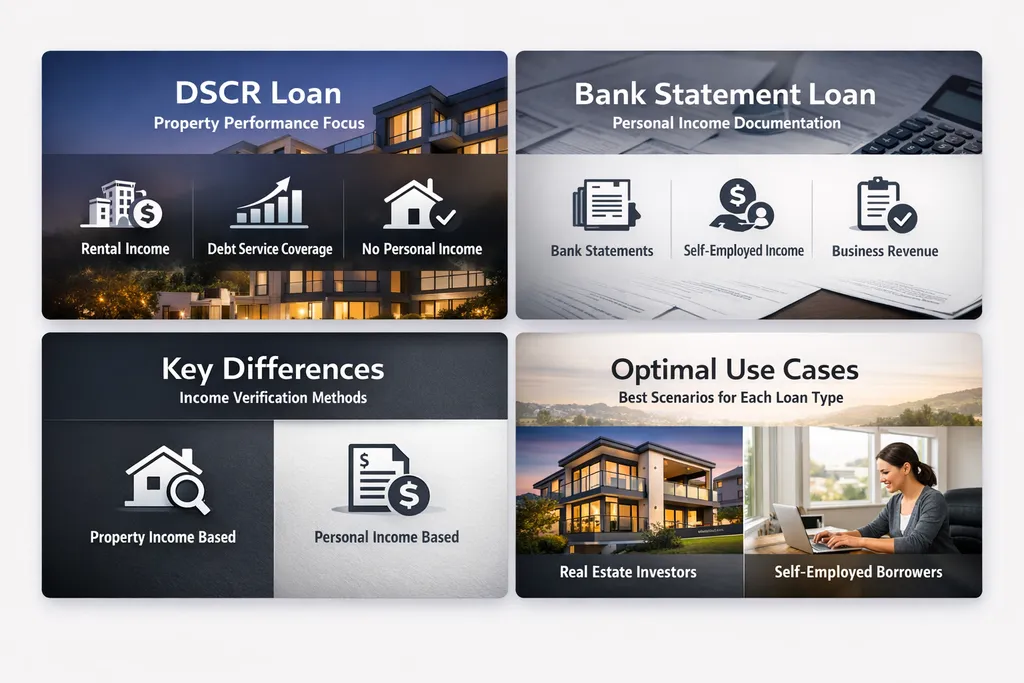
DSCR loan qualification focuses on property performance: These loans typically evaluate the debt service coverage ratio of the investment property itself, potentially eliminating the need for personal income documentation. The property's rental income might be the primary qualification factor.
Bank statement loans require personal income documentation: Lenders usually analyze 12 to 24 months of business or personal bank statements to determine your income capacity. This approach may work better for self-employed investors with irregular income patterns.
Asset verification requirements vary significantly: DSCR loans might focus more on property assets and rental agreements, while bank statement loans could require more comprehensive personal financial documentation including reserves and liquid assets.
Credit score impacts differ between products: Each loan type may have different credit score requirements and how credit history affects interest rates and terms could vary considerably. In practice, both products generally look for scores in the 620-680 range, with stronger scores unlocking better pricing.
Debt-to-income calculations use different methodologies: DSCR loans might exclude personal debt from calculations, while bank statement loans typically include all personal obligations in their qualification analysis.
Optimal Use Cases for Each Loan Product
Different investment scenarios and investor profiles might benefit more from one loan type over another. Understanding these optimal use cases helps investors align their financing choices with their investment strategies and financial circumstances.
DSCR loans often work best for experienced rental property investors: Investors who own multiple rental properties and want to qualify based on property cash flow rather than personal income might find DSCR loans more suitable for portfolio expansion.
Bank statement loans may favor self-employed investors with strong cash flow: Business owners, freelancers, and entrepreneurs who have difficulty documenting traditional W-2 income but maintain consistent bank deposits could benefit from this income verification method.
Portfolio lenders might offer more flexibility: Some lenders specialize in one product type over another, and finding the right lender relationship could provide better terms and faster processing times for your preferred loan product.
Property types might influence loan choice: Certain properties or investment strategies may align better with specific loan products due to occupancy requirements, property condition standards, or geographic restrictions.
Interest Rates and Terms Comparison
The financial terms and conditions of these alternative loan products might vary significantly, affecting your investment returns and cash flow projections. Understanding these differences helps investors make informed decisions about their financing costs.
Interest rate structures may differ between products: DSCR loans and bank statement loans could have different baseline rates, with pricing adjustments based on loan-to-value ratios, credit scores, and property types affecting the final cost of borrowing. Investors should generally expect rates in the 6.25%-8.00% range, with the strongest DSCR ratios and credit profiles landing at the lower end.
Down payment requirements typically vary: Each loan type might require different minimum down payments, with some products allowing lower down payments for qualified borrowers while others may require higher equity investments. Most programs for both loan types fall within a 20-25% down payment range for investment properties.
Loan terms and amortization schedules could impact cash flow: The available repayment terms, including interest-only options or different amortization periods, might affect your monthly payments and overall investment strategy.
Closing costs and fees structures may vary considerably: Understanding the total cost of obtaining each loan type, including origination fees, processing costs, and third-party expenses, helps investors calculate their true financing costs.
The dscr loan vs bank statement loan decision ultimately depends on your specific investment strategy, income documentation capabilities, and property portfolio goals. Both alternative loan products offer valuable solutions for investors who don't fit traditional lending criteria, but they serve different use cases and qualification scenarios.
DSCR loans might work better for investors who want qualification based on property performance rather than personal income, while bank statement loans could favor self-employed borrowers with strong cash flow documentation. Understanding the income verification differences and optimal use cases for each product helps investors choose financing that aligns with their long-term wealth-building objectives.
As lending standards continue to evolve and more investors seek alternative financing options, working with experienced lenders who specialize in investor-focused mortgage products becomes increasingly important. The right financing choice could enhance your investment returns and provide the flexibility needed to scale your real estate portfolio effectively.