Real estate investors seeking to expand their rental portfolios often find townhomes present unique opportunities for strong cash flow and appreciation. A DSCR loan for townhome rental properties offers investors the ability to finance these investments without traditional income verification requirements. Instead, these loans focus on the property's ability to generate sufficient rental income to cover debt payments, making them particularly attractive for investors building diverse rental portfolios.
Understanding how DSCR loans work for townhome financing can help investors capitalize on market opportunities while streamlining the qualification process. With updated requirements and flexible lending criteria emerging in 2026, investors have more options than ever to secure competitive financing for townhome rental properties.
Essential DSCR Loan Requirements for Townhome Investments
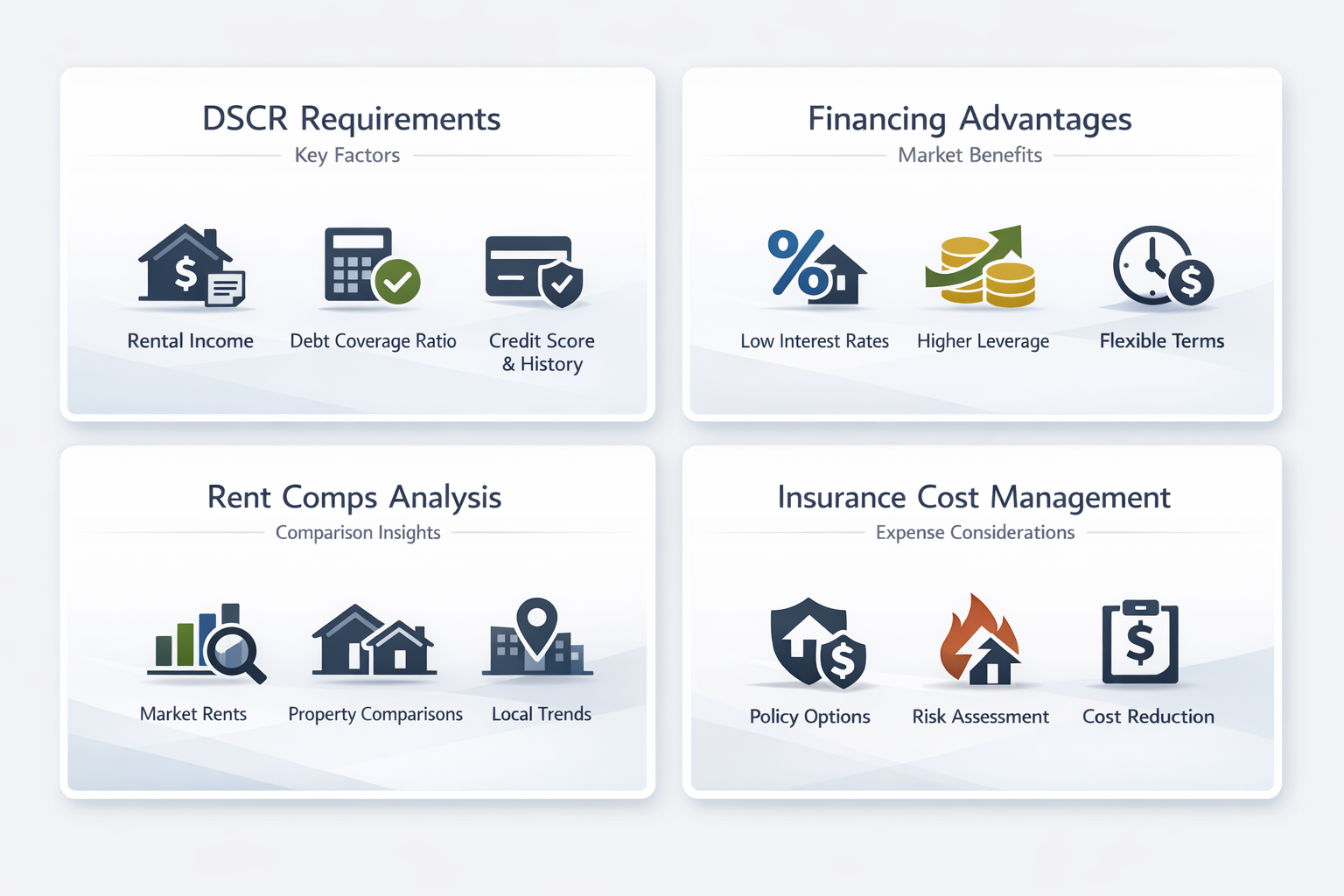
Essential DSCR loan requirements for townhome investments typically center around the debt service coverage ratio and basic borrower qualifications. The debt service coverage ratio measures whether the property's rental income can adequately cover the monthly loan payments, making it the primary qualification factor for these investment loans.
Minimum DSCR ratios may vary by lender, with some offering flexibility below traditional thresholds depending on market conditions and borrower strength
Credit score requirements often range from moderate to good credit levels, though specific minimums can differ across lenders
Down payment amounts typically require substantial equity investment, reflecting the investment nature of these properties
Property appraisals focus on rental income potential and comparable market rents to establish accurate valuations
Townhome Financing Advantages in Current Markets
Townhome financing advantages in current markets reflect the unique positioning of these properties within rental portfolios. Townhomes often provide a middle ground between single-family homes and condominiums, appealing to tenants seeking more space and privacy than apartments while remaining more affordable than detached homes.
Rent growth potential may be strong in markets where townhomes attract families and professionals seeking upgraded living situations
Price-to-rent ratios in townhome markets could offer favorable cash flow opportunities compared to single-family alternatives
Maintenance responsibilities might be shared through HOA arrangements, potentially reducing investor overhead costs
Market demand trends often favor townhomes in suburban and urban-adjacent locations with good school districts and commuter access
Analyzing Rent Comps for Townhome Properties
Analyzing rent comps for townhome properties requires understanding the specific characteristics that differentiate these units from other rental types. Accurate rent comparisons help investors project cash flow and determine whether properties will meet DSCR requirements for loan qualification.
Square footage comparisons should focus on similar townhome layouts rather than mixing apartment or single-family data
Amenity differences such as garage access, outdoor space, and HOA facilities can significantly impact rental rates
Location factors including school districts, transportation access, and neighborhood demographics influence rental demand and pricing
Seasonal variations in rental markets may affect long-term income projections and DSCR calculations
Strategic Market Selection for DSCR Townhome Investments
Strategic market selection for DSCR loans for townhome investments involves identifying locations where rental demand, price appreciation, and cash flow potential align favorably. Data-driven market analysis helps investors optimize their returns while minimizing vacancy risks and market volatility exposure.
Research markets with strong employment growth and population increases that drive rental demand for family-oriented housing like townhomes
Evaluate price-to-rent ratios in target areas to identify markets where townhome investments can generate positive cash flow from acquisition
Analyze historical rent growth patterns and vacancy rates to project long-term income stability for DSCR compliance
Consider regulatory environments and landlord-friendly policies that support rental property investment and management
Managing Property Insurance Cost Considerations
Managing property insurance cost considerations becomes crucial when calculating DSCR ratios and overall investment returns for townhome rentals. Insurance expenses directly impact net operating income and must be accurately estimated during the underwriting process to ensure realistic cash flow projections.
Obtain multiple insurance quotes during due diligence to establish accurate expense projections for DSCR calculations and investment analysis
Factor in HOA master insurance policies that may reduce individual unit insurance costs while providing comprehensive coverage
Consider location-specific risks such as flood zones, earthquake areas, or high-crime neighborhoods that could increase premium costs
Evaluate umbrella liability coverage options that protect against tenant-related claims while maintaining cost-effective insurance structures
Review annual insurance increases and market trends to project future expense growth in long-term investment models
A DSCR loan for townhome rental properties offers investors a powerful financing tool that focuses on property performance rather than personal income documentation. By understanding qualification requirements, analyzing rental markets effectively, and selecting properties in strong growth areas, investors can build successful townhome rental portfolios.
The flexibility in DSCR ratios and credit requirements that some lenders now offer creates additional opportunities for investors to expand their holdings. Success with townhome financing depends on thorough market analysis, accurate rent comparisons, and realistic projections of all operating expenses including insurance costs.
As rental markets continue evolving, investors who master DSCR loan strategies for townhomes position themselves to capitalize on cash flow opportunities while building long-term wealth through real estate investment.