Understanding the DSCR Loan Timeline From Application to Closing
Real estate investors often find themselves racing against time to secure financing for their next deal. The DSCR loan timeline from application to closing typically spans 21 to 45 days, with most transactions falling within the 28 to 35-day range. Understanding this timeline can make the difference between securing a profitable investment property and losing it to competitors who move faster.
Unlike traditional mortgage products designed for homebuyers, DSCR loans focus on the property's cash flow potential rather than personal income verification. This investor-focused approach streamlines certain aspects of the approval process while maintaining thorough due diligence on the asset itself.
For investors managing multiple deals or working in competitive markets, knowing exactly what to expect during each phase of the DSCR loan process helps optimize timing and improve deal flow efficiency.
DSCR Loan Process Do's for Faster Approval
Following proven best practices during the DSCR loan process can significantly reduce your timeline and improve approval odds. Well-prepared investors often close within 2 to 3 weeks when they implement these strategies effectively.
Prepare comprehensive property documentation including rent rolls, lease agreements, and maintenance records before starting your application
Work with experienced DSCR lenders who understand investor needs and can move quickly through underwriting processes
Order the appraisal immediately after application approval to avoid delays in the critical assessment phase
Maintain clear communication with your loan officer and respond promptly to any documentation requests during approval stages
Common DSCR Loan Mistakes That Delay Closing
Avoiding these common pitfalls can prevent unnecessary extensions to your DSCR loan timeline and keep your investment strategy on track. Many delays stem from preparation oversights rather than complex underwriting issues.
Don't submit incomplete applications as missing documentation will halt the approval process and reset timing expectations
Don't underestimate appraisal scheduling since this step often creates the biggest bottleneck in the funding process
Don't work with inexperienced lenders who may not understand DSCR loan requirements or investor timeline needs
Don't delay property inspections or other due diligence items that run parallel to loan approval stages
5 Critical Approval Stages in Every DSCR Loan
The approval stages for DSCR loans follow a predictable sequence that savvy investors can leverage for better planning. Each stage typically has specific timing expectations and requirements.
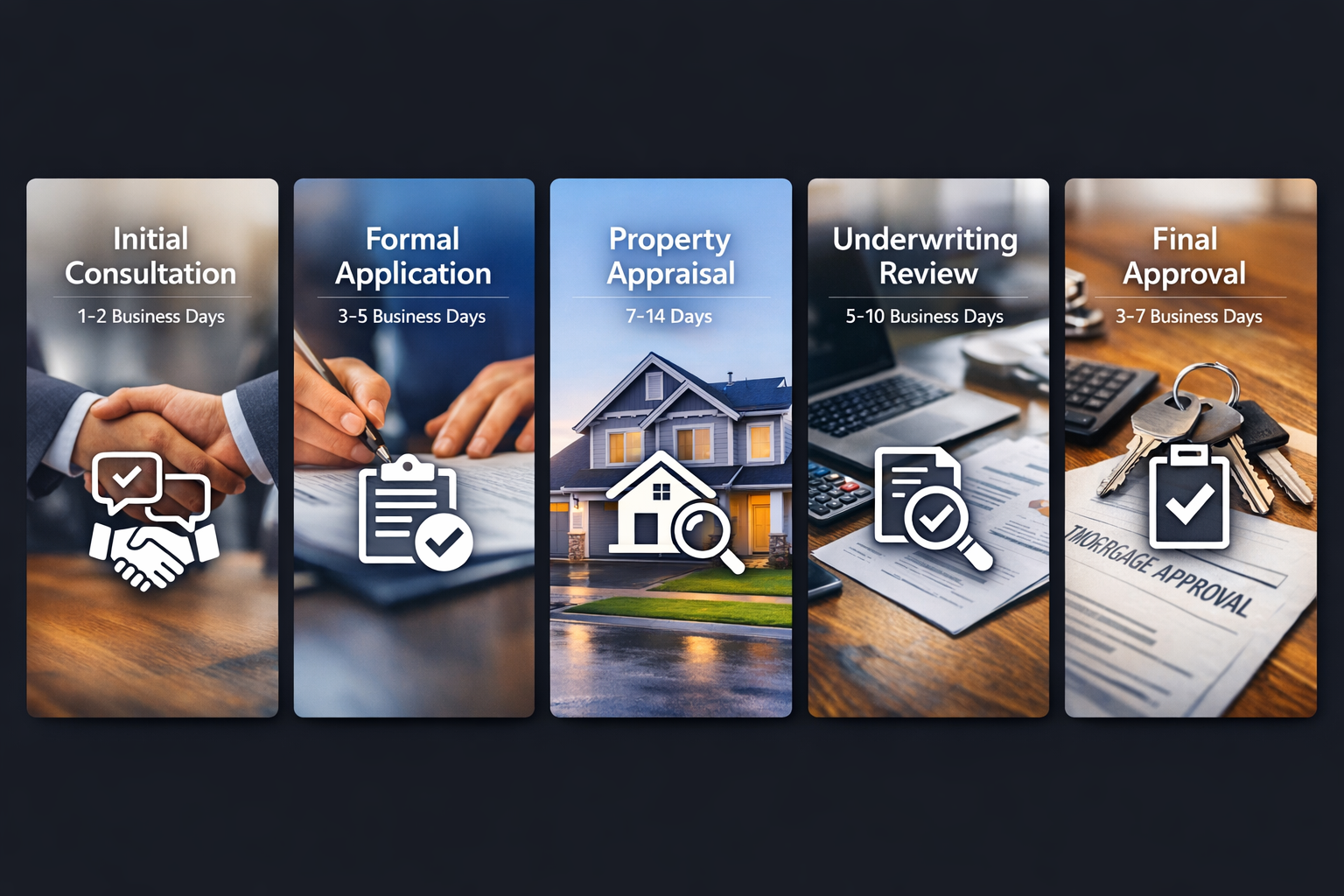
Initial consultation and pre-qualification where lenders review your investment experience and basic property details, usually completed within 1-2 business days
Formal application submission including property documentation, financial statements, and loan program selection, processed within 3-5 business days
Property appraisal ordering and completion which represents the longest single phase, often requiring 7-14 days depending on market conditions
Underwriting review and approval where lenders analyze debt service coverage ratios and property cash flow projections, typically taking 5-10 business days
Final loan approval and closing preparation including title work, insurance verification, and document preparation, usually completed within 3-7 business days
3 Factors That Impact Appraisal Timing
Appraisal timing often determines the overall pace of your DSCR loan timeline, making this phase crucial for investors working with tight deadlines. Understanding these variables helps set realistic expectations.
Local market conditions and appraiser availability can extend timelines significantly in high-demand areas where qualified commercial appraisers are scarce
Property type and complexity affects appraisal duration, with unique or specialized rental properties requiring more detailed analysis than standard residential investments
Comparable sales data availability in the local market impacts how quickly appraisers can complete their valuation analysis and final reports
4 Steps to Optimize Your Funding Process
The funding process represents the final phase of your DSCR loan timeline, where preparation and organization pay significant dividends. Efficient investors often shave days off their closing timeline through strategic planning.
Coordinate with title companies early to ensure all ownership documentation and lien searches are completed before loan approval
Arrange property insurance coverage with investor-friendly carriers who understand rental property requirements and can provide quick turnaround
Prepare closing funds and wire instructions with your banking institution to avoid last-minute delays during the funding process
Schedule final walkthrough and closing strategically to align with your investment timeline and property management transition needs
Mastering the DSCR loan timeline from application to closing gives real estate investors a significant competitive advantage in today's fast-moving market. With typical timeframes ranging from 21 to 45 days, proper preparation and strategic partnership with experienced lenders can often compress this timeline to the lower end of the range.
The key lies in understanding each phase of the approval stages, from initial consultation through final funding. Investors who prepare comprehensive documentation upfront, work with specialized DSCR lenders, and proactively manage appraisal timing often find themselves closing deals while competitors are still navigating the early stages of traditional financing.
Remember that the appraisal timing and funding process phases typically present the greatest variables in your timeline. By focusing on these critical areas and avoiding common mistakes, you'll be better positioned to execute your investment strategy with confidence and precision.