Single family rental properties represent one of the most accessible entry points for real estate investors, and a DSCR loan for single family rental properties can streamline your path to ownership. Unlike traditional mortgages that scrutinize your personal income, DSCR loans focus on the property's rental income potential, making them particularly attractive for portfolio expansion.
Understanding the nuances of DSCR financing can help investors capitalize on market opportunities more quickly. These loans typically offer faster approval processes and may provide more flexibility for investors whose personal income doesn't fully reflect their investment capabilities. Let's explore how you can leverage this financing tool for your single family rental investments.
Key Benefits of DSCR Financing
DSCR financing offers distinct advantages that make it particularly well-suited for single family rental investments. These benefits can help investors move quickly on opportunities and build their portfolios more efficiently.
Income-based qualification: Lenders evaluate the property's rental income potential rather than requiring extensive personal tax documentation, which can streamline the approval process significantly
Portfolio expansion opportunities: Investors can acquire multiple properties without each purchase heavily impacting their debt-to-income ratios based on personal finances
Faster closing times: The simplified documentation requirements often lead to quicker processing and closing compared to conventional investment loans
Flexible borrower profiles: Self-employed investors or those with complex income structures may find DSCR loans for single family rental properties more accessible than traditional financing options
Essential Qualification Requirements
Meeting the qualification requirements for a DSCR loan for single family rental properties involves specific financial thresholds and documentation. Understanding these criteria helps investors prepare their applications effectively.
Credit score standards: Most lenders typically require a minimum credit score in the mid-600s, though stronger scores may unlock better rates and terms
Down payment expectations: Investors should generally expect to put down 20-25% of the purchase price, with larger down payments potentially improving loan terms
DSCR ratio targets: Lenders often prefer DSCR ratios between 1.20 and 1.25, meaning the rental income should exceed the mortgage payment by this margin
Property type restrictions: Single family homes in desirable rental markets typically qualify, though some lenders may have specific geographic or property condition requirements
Rent Analysis and Income Documentation
Proper rent analysis forms the foundation of any successful DSCR loan application. Lenders need confidence in your rental income projections to approve financing for your single family investment.
Market rent assessment: Professional appraisers or rent analysis reports help establish realistic rental income expectations based on comparable properties in the area
Lease documentation: Existing leases provide concrete evidence of rental income, while market analysis supports projected rents for vacant properties
Property condition factors: Well-maintained properties in good condition typically command higher rents and strengthen your DSCR calculations
Local market research: Understanding rental demand, vacancy rates, and seasonal fluctuations in your target area helps create realistic income projections
Step-by-Step Application Process
The application process for DSCR loans follows a systematic approach that focuses on property analysis and rental income verification. Following these steps can help ensure a smoother approval processes.
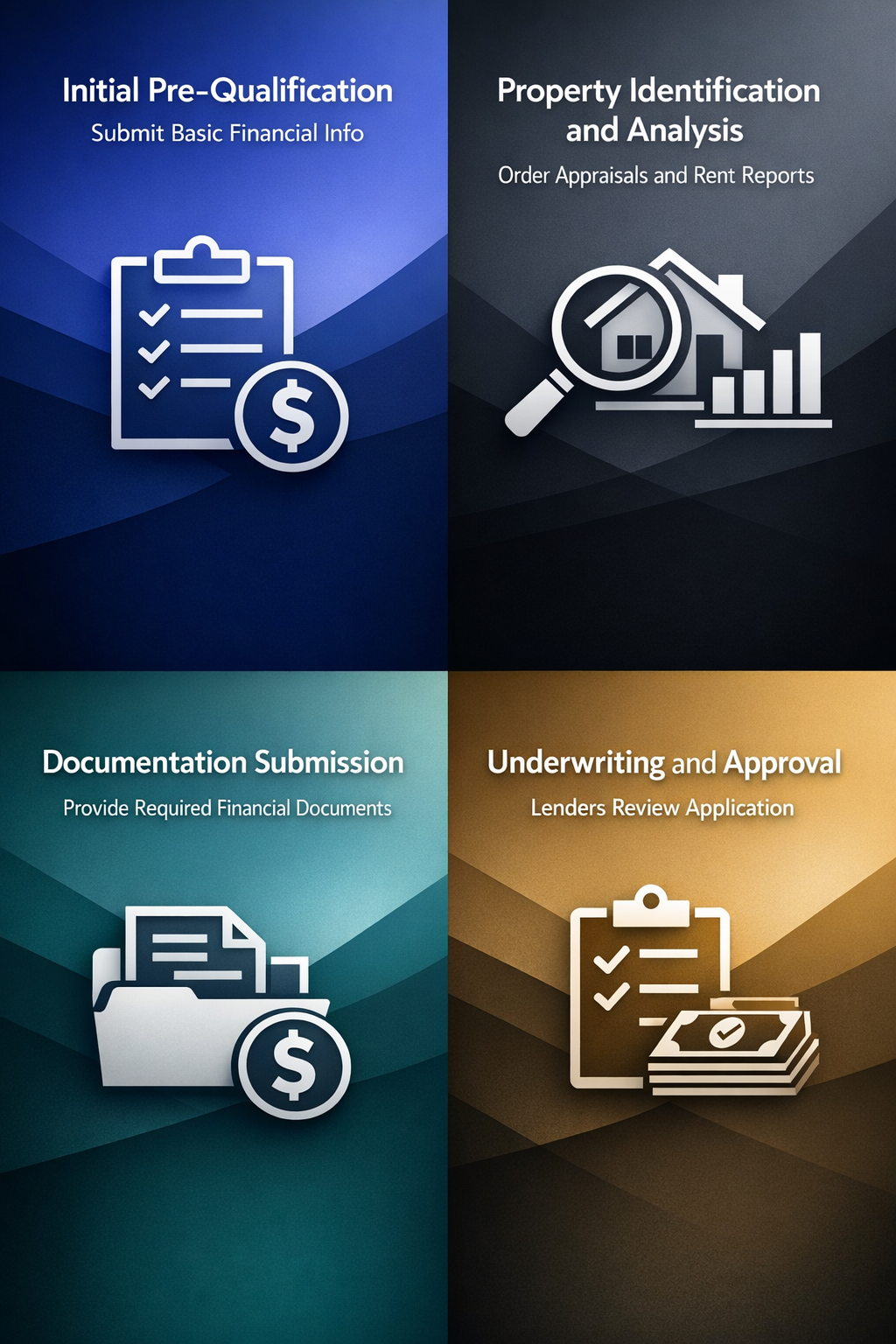
Initial pre-qualification: Submit basic financial information and property details to determine preliminary eligibility and loan terms
Property identification and analysis: Once you identify a target property, order appraisals and rent analysis reports to establish DSCR calculations
Documentation submission: Provide required financial documents, which typically include bank statements, credit reports, and property-related paperwork
Underwriting and approval: Lenders review your application focusing primarily on the property's income potential and your ability to manage the investment
Closing preparation: Complete final documentation, arrange insurance, and prepare for closing once approval is secured
Common Approval Challenges and Solutions
Even with streamlined requirements, DSCR loan applications can face obstacles. Understanding potential challenges helps investors prepare more effectively and improve their approval odds.
DSCR ratio shortfalls: If projected rental income doesn't meet required ratios, consider larger down payments or target properties with higher rent potential
Credit score gaps: Address credit issues proactively by paying down existing debts or resolving any reporting errors before applying
Property condition concerns: Ensure properties meet lender standards by addressing major maintenance issues or choosing well-maintained investments
Market volatility factors: Provide comprehensive market analysis and consider properties in stable rental markets to strengthen your application
A DSCR loan for single family rental properties can serve as a powerful tool for building your investment portfolio. By focusing on rental income potential rather than personal financial complexity, these loans offer a path forward for many investors who might struggle with traditional financing.
Success with DSCR financing depends on thorough preparation, realistic rent analysis, and choosing properties that meet lender criteria. The streamlined approval process can help you move quickly on opportunities, but proper due diligence remains essential for long-term investment success.
As you consider DSCR financing for your next single family rental investment, focus on properties with strong rental demand and realistic income projections. This approach can help ensure not only loan approval but also profitable long-term ownership.