Seasonal rental properties present unique opportunities for real estate investors, but securing financing through a DSCR loan for seasonal rentals brings distinct challenges. Unlike traditional long-term rentals with steady monthly income, vacation properties experience significant income fluctuation based on tourist seasons, weather patterns, and local events. Understanding how to navigate these financing hurdles while maximizing your investment potential is crucial for building a profitable seasonal rental portfolio.
The seasonal nature of vacation rentals means your property might generate substantial income during peak months while producing minimal returns during off-seasons. This income variability creates approval challenges that require strategic planning and careful documentation. Many investors find that preparation and understanding lender requirements can make the difference between securing favorable financing and facing rejection.
Understanding DSCR Loan Requirements for Vacation Properties
Understanding DSCR loan requirements for vacation properties is essential before diving into seasonal rental investments. These specialized loans focus on the property's ability to generate sufficient cash flow rather than your personal income, making them particularly attractive for investors building diverse portfolios.
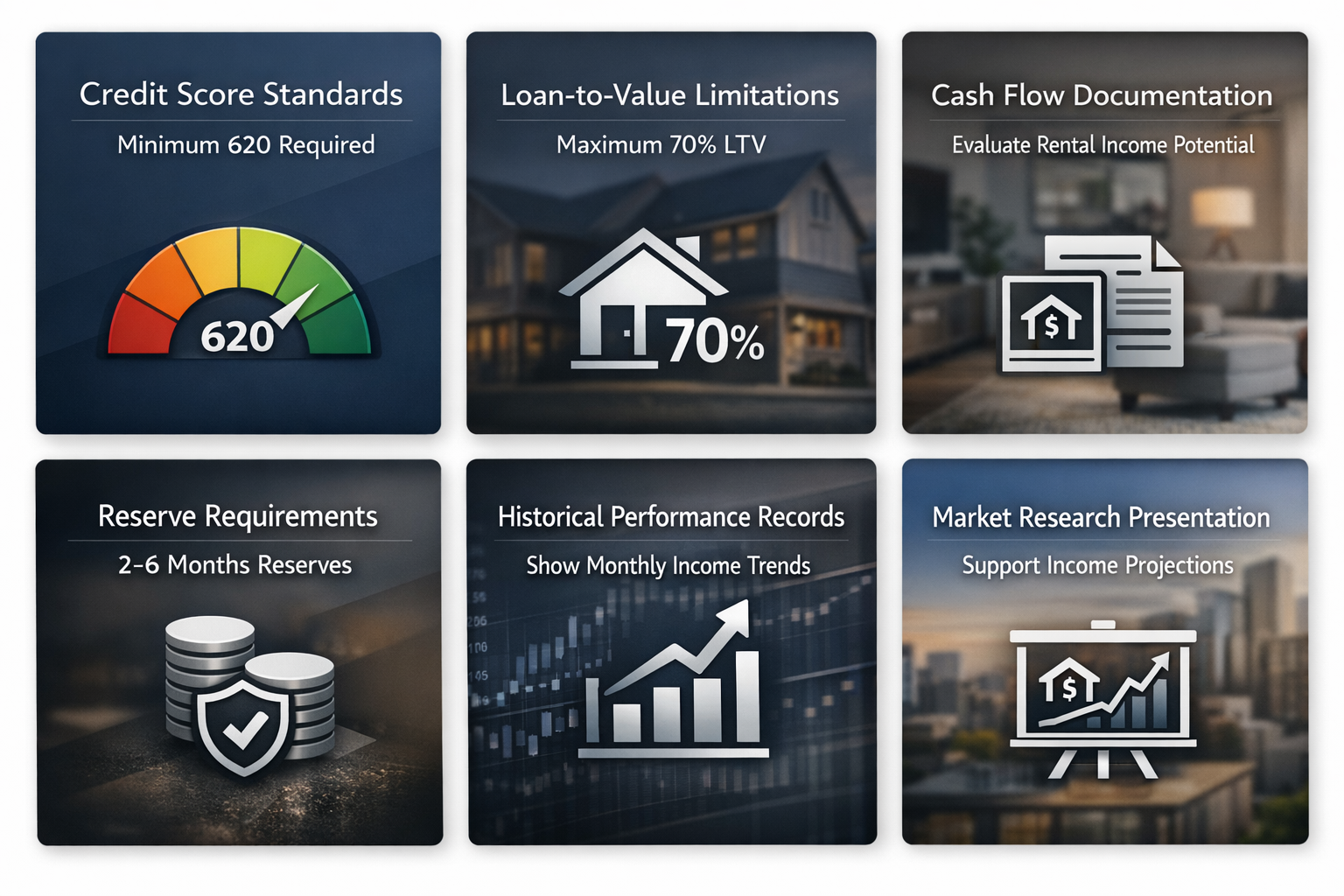
Credit Score Standards: Most lenders require a minimum credit score of 620 to 640 for DSCR loans on seasonal rentals. A higher credit score often provides access to better interest rates and more favorable terms, especially important given the perceived risk of vacation rental income.
Loan-to-Value Limitations: Short-term rental properties typically face a maximum 70% LTV ceiling, meaning you'll need at least 30% down payment. This conservative approach helps lenders mitigate risk associated with seasonal income patterns and occupancy fluctuations.
Cash Flow Documentation: Lenders evaluate your property's rental income potential using market rent analysis, comparable properties, or existing rental history. This assessment becomes more complex with seasonal rentals due to varying monthly performance throughout the year.
Reserve Requirements: Many lenders require 2-6 months of mortgage payments held in reserves to account for potential seasonal downturns. These reserves provide a safety net during slower rental periods and demonstrate your ability to maintain payments regardless of occupancy trends.
Calculating Income Fluctuation Impact on DSCR Ratios
Calculating income fluctuation impact on DSCR ratios requires careful analysis of seasonal patterns and conservative projections. The debt service coverage ratio measures your property's annual rental income against its total debt obligations, but seasonal properties need special consideration for accurate assessment.
Annual Income Averaging: Lenders typically average your seasonal rental income across 12 months to determine qualification ratios. A property earning $8,000 monthly during four peak months and $2,000 during eight slower months averages $4,000 monthly, significantly impacting your DSCR calculation.
Conservative Projections: Most lenders apply conservative estimates to vacation rental income, often reducing projected earnings by 15-25% to account for vacancy periods, maintenance issues, and market fluctuations. This adjustment helps ensure your loan remains sustainable even during challenging seasons.
Minimum Ratio Requirements: While traditional rentals might qualify with a 1.0 DSCR, seasonal rentals often need higher ratios of 1.15 to 1.25 due to income volatility. This higher threshold provides additional cushion for periods when rental income falls short of projections.
Market Analysis Integration: Lenders evaluate local tourism trends, seasonal demand patterns, and comparable property performance to assess your income projections. Properties in established vacation destinations with consistent tourism patterns may receive more favorable consideration than those in emerging or volatile markets.
Overcoming Common Approval Challenges with Documentation
Overcoming common approval challenges with documentation becomes critical when pursuing DSCR financing for seasonal rentals. Proper preparation and comprehensive documentation can address lender concerns about income fluctuation and approval challenges while demonstrating your property's true earning potential.
Historical Performance Records: If you're refinancing an existing seasonal rental, provide detailed records showing monthly income, occupancy rates, and expenses over multiple years. This historical data helps lenders understand seasonal patterns and validate your income projections with actual performance metrics.
Market Research Presentation: Compile comprehensive market analysis including comparable vacation rental rates, local tourism statistics, and seasonal demand trends. Strong market data can support your income projections and demonstrate the property's position within the local vacation rental landscape.
Professional Management Documentation: Using a professional vacation rental management company can strengthen your application by providing third-party income projections and operational expertise. These companies often have relationships with lenders and can provide credible market rent opinions for your specific property type.
Contingency Planning Evidence: Present clear strategies for managing seasonal downturns, such as off-season marketing approaches, alternative rental strategies, or diverse income sources. Lenders appreciate seeing that you've considered potential challenges and developed plans to maintain cash flow consistency.
Strategic Timing for Seasonal Rental Loan Applications
Strategic timing for seasonal rental loan applications can significantly impact your approval odds and loan terms. Understanding when to apply and how to present your property's performance creates advantages in the underwriting process.
Peak Season Application Benefits: Applying during or immediately after peak rental season allows you to showcase strong recent performance and occupancy rates. Lenders can see current market demand and your property's competitive position when tourism activity is at its highest.
Pre-Season Preparation Strategy: Submitting applications 60-90 days before peak season provides time for processing while demonstrating forward-thinking planning. This timing shows lenders you're preparing for success rather than reacting to financial pressures during slow periods.
Multi-Year Performance Cycles: Properties with 2-3 years of seasonal rental history provide the strongest foundation for loan applications. This track record allows lenders to identify consistent patterns and evaluate your property management capabilities across different market conditions.
Market Condition Alignment: Consider broader economic factors and local market trends when timing your application. Strong local tourism growth, new attractions, or infrastructure improvements can support your income projections and property value arguments.
Maximizing Cash Flow During Off-Peak Seasons
Maximizing cash flow during off-peak seasons is essential for maintaining healthy DSCR ratios and meeting loan obligations year-round. Successful seasonal rental investors develop multiple strategies to generate income even when traditional vacation demand decreases.
Extended Stay Marketing: Target remote workers, traveling professionals, and temporary residents who need month-long accommodations during off-peak periods. These guests often pay premium rates for furnished properties and reduce vacancy periods between traditional vacation bookings.
Local Event Coordination: Research and market around local conferences, sporting events, festivals, and business meetings that occur during typically slower months. Even small towns often have events that create short-term accommodation demand outside peak tourist seasons.
Seasonal Rate Optimization: Implement dynamic pricing strategies that offer competitive rates during slow periods while maintaining premium pricing during high-demand dates. This approach maximizes occupancy while preserving profit margins when market conditions allow.
Alternative Use Strategies: Consider temporary conversion to corporate housing, film location rentals, or other specialized uses during extended slow periods. These alternative income streams can provide steady cash flow while maintaining the property for seasonal rental use.
Selecting Properties with Stable Seasonal Performance
Selecting properties with stable seasonal performance helps minimize approval challenges and creates more predictable cash flow patterns. The right property selection can make the difference between struggling with income fluctuation and maintaining consistent profitability.
Diversified Attraction Base: Choose locations with multiple tourism draws rather than single-attraction dependencies, as these markets tend to have more stable demand patterns and longer peak seasons that support stronger annual income averages.
Year-Round Activity Potential: Properties near ski resorts with summer hiking, lake areas with winter activities, or cities with consistent business travel show less dramatic seasonal swings and provide more stable income for DSCR calculations.
Established Vacation Rental Markets: Invest in areas with proven track records for vacation rentals rather than emerging markets, as established destinations typically have more predictable seasonal patterns and better support infrastructure for property management.
Infrastructure and Accessibility: Properties with good transportation access, reliable utilities, and established vacation rental regulations tend to perform more consistently and face fewer operational disruptions that could impact seasonal income projections.
Successfully securing a DSCR loan for seasonal rentals requires understanding the unique challenges these properties present while developing strategies to address lender concerns. Income fluctuation doesn't have to be a barrier when you approach the financing process with proper preparation, realistic projections, and comprehensive documentation.
The key to success lies in demonstrating that your seasonal rental can generate sufficient cash flow to service debt obligations throughout the year, not just during peak months. By selecting properties with stable performance potential, timing your applications strategically, and developing plans for off-season income generation, you can position yourself for approval and long-term profitability.
Remember that each lender may have different requirements and risk tolerance for seasonal rental properties. Working with experienced professionals who understand the vacation rental market and DSCR loan requirements can help you navigate the approval process more effectively and secure financing that supports your investment goals.