Financing Your Rent Stabilized Property Transition
May 12, 2026
•
7 min read
How DSCR Loans Support the Transition from Rent Stabilized to Market Rate Properties
Real estate investors looking to maximize returns often face a unique challenge when dealing with rent-stabilized properties. The shift from controlled rents to market-rate income represents a significant opportunity to increase cash flow, but it also requires strategic financing that can accommodate the transition period. That's where understanding how a dscr loan for rent stabilized to market rate transition works becomes essential.
Unlike traditional mortgages that scrutinize your personal income statements and tax returns, DSCR loans focus exclusively on the property's ability to generate rental income. This approach can be particularly valuable when you're navigating the complexities of transitioning a property from regulated rents to full market rates. The qualification process centers on the debt service coverage ratio, which measures whether the property's rental income can adequately cover the mortgage payment.
For investors working through rent increase timelines and regulatory factors, this financing strategy offers flexibility that conventional loans simply can't match. Whether you're managing a single property or building a portfolio, understanding how to leverage income modeling during these transitions can mean the difference between a profitable investment and a missed opportunity.
Understanding DSCR Loan Mechanics for Transitioning Properties
When you're evaluating a dscr loan for rent stabilized to market rate transition, it helps to grasp exactly how lenders assess these opportunities. The fundamental principle remains straightforward: lenders want to see that the property generates enough income to cover its debt obligations with room to spare.
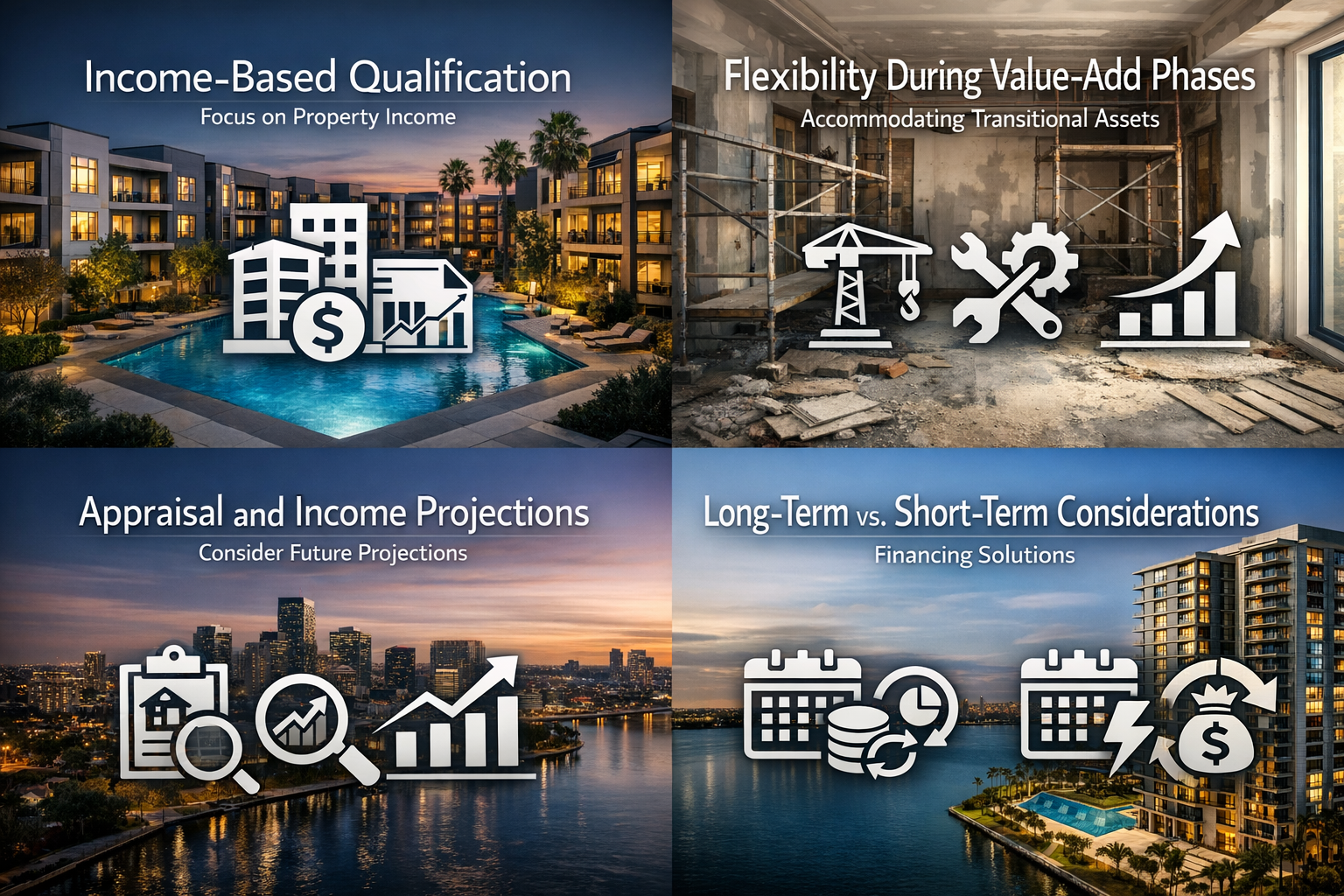
Income-based qualification:DSCR loans qualify you based on the property's rental income rather than your personal financial documents. This approach shifts the focus to the asset itself, which can be advantageous when transitioning properties are poised to generate higher rents. Lenders typically calculate the ratio by dividing the property's net operating income by its total debt service.
Flexibility during value-add phases: Some DSCR loan programs have adapted to accommodate transitional assets and partial stabilization scenarios. This flexibility may allow investors to secure financing even when a property hasn't yet reached its full market-rate potential, though terms and requirements can vary significantly between lenders.
Appraisal and income projections: For properties moving from stabilized to market rates, lenders often consider both current income and reasonable future projections. After renovations or regulatory changes allow for rent increases, the new appraised value and stabilized rental income can support more favorable loan terms and potentially better interest rates.
Long-term vs. short-term considerations: DSCR loans typically serve as long-term financing solutions that can replace higher-cost bridge loans or renovation financing. Once your property transitions to market-rate income and stabilizes, refinancing into a DSCR loan might reduce your overall financing costs while locking in predictable monthly payments.
The mechanics become particularly relevant when you're dealing with regulatory factors that control the rent increase timeline. Understanding how lenders model future income can help you time your financing application to capture the most favorable terms once restrictions ease or expire.
Navigating Regulatory Factors and Rent Increase Timelines
Rent increase timelines and regulatory constraints vary widely depending on your property's location and the specific stabilization program in place. These factors directly impact how you should approach financing a transition to market rates.
Local regulations and compliance: Different jurisdictions impose varying rules about when and how much you can increase rents on previously stabilized units. Some areas require tenant turnover before implementing market rates, while others permit gradual increases over time. Your lender will likely want documentation showing your understanding of these requirements and a realistic timeline for reaching market-rate income.
Vacancy considerations: The path to market-rate income often involves natural tenant turnover, which creates temporary vacancy periods. When modeling income for DSCR loan qualification, you'll need to account for these gaps realistically. Lenders typically prefer conservative projections that factor in reasonable vacancy rates during the transition period.
Phased income growth: Rather than expecting an immediate jump to full market rates, most transitions occur gradually as units turn over or regulations permit incremental increases. This phased approach affects your income modeling and may influence whether you qualify for financing at different stages of the transition process.
Documentation requirements: Lenders evaluating transitional properties may request additional documentation beyond standard rental agreements. This could include legal opinions on regulatory compliance, market studies justifying your projected rents, and detailed plans showing your transition strategy and timeline.
The interplay between regulatory factors and your financing strategy requires careful planning. Rushing the process or making overly optimistic projections can derail your loan application, while being too conservative might mean missing out on better terms you could actually qualify for.
Income Modeling Strategies for DSCR Loan Qualification
Accurate income modeling forms the foundation of successful DSCR loan applications, especially when dealing with properties in transition. The way you present current and projected income can significantly influence both your approval odds and the terms you receive.
Current vs. projected income analysis: Most DSCR lenders evaluate properties based on current rental income, but some may consider projected market-rate income if you can provide strong supporting evidence. This might include comparable rental data from similar properties in your area, documentation of planned improvements, and a clear timeline showing when units will reach market rates.
Conservative projections build credibility: While it's tempting to use the highest possible rent comparables, experienced investors know that conservative projections tend to perform better with underwriters. Using mid-range market data and accounting for realistic vacancy periods demonstrates financial prudence and may actually strengthen your application by showing you understand the risks involved.
Renovation impact on income: If your transition strategy includes property improvements to justify higher rents, you'll need to model both the cost of renovations and the resulting income increase. Some DSCR loan products can accommodate this scenario by considering the after-repair value and stabilized income, though you may need to complete renovations before refinancing or use specialized transitional financing first.
Market dynamics and timing: Your income modeling should reflect current market conditions and rental trends in your specific area. Strong rental markets with demonstrated growth patterns can support more aggressive projections, while softer markets may require more cautious estimates. Targeting high-growth rental markets can improve both your DSCR ratio and your long-term investment returns.
The goal isn't to manipulate numbers to barely qualify. Instead, thoughtful income modeling helps you understand the true financial picture of your investment and positions you to secure appropriate financing that aligns with the property's actual earning potential during and after the transition.
Strategic Timing for DSCR Loan Applications During Transitions
Timing plays a crucial role when financing the transition from rent-stabilized to market-rate income. Applying too early might result in qualification based on lower income figures, while waiting too long could mean missing favorable interest rate environments or paying unnecessary interim financing costs.
Pre-transition financing considerations: If you're acquiring a rent-stabilized property with plans to transition it to market rates, you might need to start with different financing and later refinance into a DSCR loan. Bridge loans or other short-term options can provide initial funding, with DSCR refinancing as the exit strategy once income stabilizes at higher rates.
Partial stabilization opportunities: You don't necessarily need to wait until every unit reaches market rate before applying for a DSCR loan. Some lenders will consider properties that are partially stabilized, evaluating the blended income from both market-rate and transitioning units. This approach can help you optimize financing costs earlier in the transition process.
Post-renovation refinancing windows: If your transition involves property improvements, the ideal time to apply for DSCR financing is typically after renovations are complete and you've established a track record of higher rental income. This timing allows you to capture both the improved property value and the demonstrated income increase, potentially qualifying for better loan-to-value ratios and interest rates.
Market condition awareness: Beyond your property's specific situation, broader market conditions affect DSCR loan availability and terms. During periods of compressed cap rates or rising financing costs, understanding underwriting trends becomes essential for timing your application to secure the most favorable terms available.
Strategic timing isn't about gaming the system. It's about aligning your financing application with the points in your property's transition where you can demonstrate the strongest income performance and most compelling investment case to lenders.
Maximizing Cash Flow and Long-Term Returns Through Strategic Financing
The ultimate goal of using a dscr loan for rent stabilized to market rate transition isn't just to secure financing. It's about optimizing cash flow and positioning your portfolio for long-term growth and stability.
Replacing expensive interim financing: Many investors initially use higher-cost bridge loans or hard money financing to acquire transitional properties. Once the property stabilizes at market rates, refinancing into a DSCR loan can significantly reduce your monthly debt service, immediately improving cash flow and investment returns without requiring you to provide extensive personal financial documentation.
Scalability for portfolio growth: DSCR loans offer a financing pathway that can scale with your investment activity. Because qualification focuses on property income rather than your personal debt-to-income ratio, you can potentially finance multiple properties simultaneously without the limitations that conventional mortgages impose on investors building larger portfolios.
Improved terms through demonstrated performance: Properties that have successfully transitioned to stable market-rate income may qualify for more competitive DSCR loan terms than those still in transition. This performance-based approach rewards investors who effectively execute their value-add strategy and achieve projected income targets.
Portfolio stability and risk management: Transitioning from short-term to long-term DSCR financing provides payment predictability and removes the pressure of looming refinance deadlines. This stability allows you to focus on property management and optimization rather than constantly seeking new financing, which can be particularly valuable when managing multiple properties through various transition stages.
Geographic diversification opportunities: Understanding which markets offer the best conditions for rent growth and cash flow potential helps you target acquisitions strategically. DSCR loan availability across different markets enables you to build a geographically diverse portfolio that balances risk while capitalizing on regional opportunities.
The financial benefits extend beyond simple cash flow improvements. Well-structured DSCR financing aligned with your property transitions creates a foundation for sustainable portfolio growth, allowing you to recycle capital efficiently and take advantage of new opportunities as they arise in your target markets.
Transitioning properties from rent-stabilized to market-rate income represents a significant value-add opportunity for real estate investors. However, realizing that potential requires more than just waiting for regulatory timelines to expire or tenants to turn over. It demands strategic financing that can accommodate the unique challenges of properties in transition while positioning you to capture the full income potential once stabilization occurs.
DSCR loans offer a financing solution particularly well-suited to these scenarios. By focusing qualification on property income rather than your personal financial profile, they provide flexibility that conventional mortgages can't match. Whether you're managing a single transitional property or building a portfolio of value-add investments, understanding how to leverage these loans effectively can meaningfully impact your returns.
The keys to success involve careful income modeling that balances optimism with realism, strategic timing that aligns your financing application with demonstrated income performance, and a clear understanding of the regulatory factors that govern your specific rent increase timeline. When executed thoughtfully, the transition from rent-stabilized to market-rate income becomes not just a property management challenge but a catalyst for portfolio growth and improved cash flow.
As you evaluate opportunities in your target markets, consider how DSCR financing might support your investment strategy. The flexibility these loans provide during transitional periods, combined with their long-term stability once properties stabilize, makes them a valuable tool for investors focused on maximizing returns while managing risk effectively.