Real estate investors using DSCR loans face a critical decision when interest rates fluctuate: how to secure favorable financing terms while protecting against market volatility. A DSCR loan rate lock can serve as your financial shield, but understanding the nuances of lock periods, extension fees, and timing strategies often makes the difference between profitable deals and missed opportunities.
With DSCR loan rates typically ranging between 6.00% and 7.50%, even small rate movements can significantly impact your investment returns. Smart investors know that mastering rate lock strategies isn't just about securing today's rate, it's about building flexibility into your financing approach while managing the associated costs effectively.
Common DSCR Rate Lock Questions
Understanding DSCR loan rate lock fundamentals starts with addressing the most pressing investor concerns. Here's what experienced real estate investors typically want to know:
Q: When can I lock my DSCR loan rate?
Most lenders allow rate locks once your loan application is submitted and initial underwriting begins. However, timing varies by lender, with some offering locks immediately upon application while others require property appraisal completion first. The key is coordinating with your lender early to understand their specific requirements and timeline.
Standard Lock Period Options
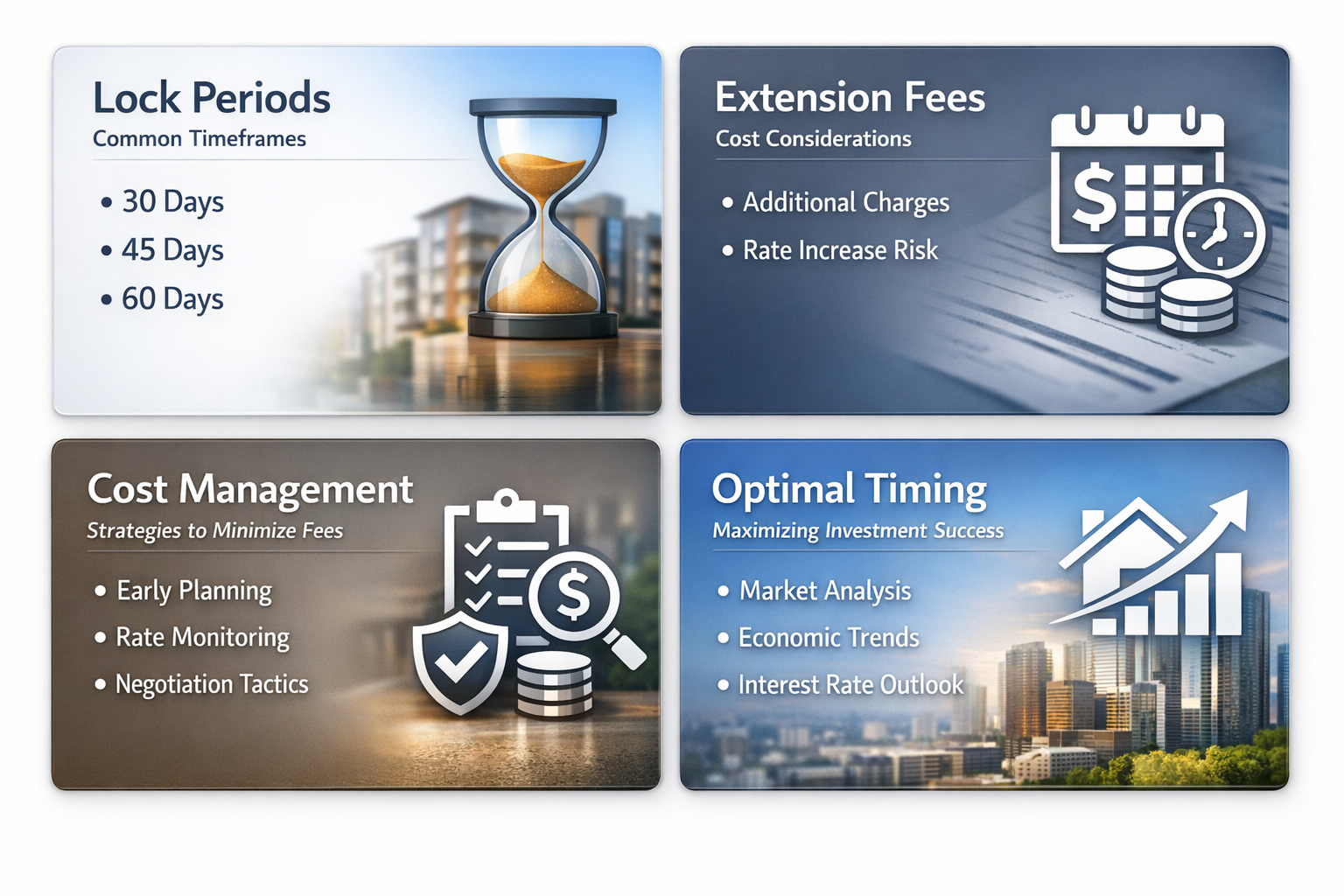
Standard lock period options for DSCR loans typically provide investors with several timeframes to accommodate different deal structures and closing schedules.
30-Day Locks: Most common for straightforward transactions with confirmed closing dates, offering basic protection against short-term rate volatility
45-Day Locks: Provides additional buffer time for deals requiring more complex underwriting or property inspections
60-Day Locks: Often preferred for investment properties where renovations or tenant situations might delay closing timelines
90-Day Extended Locks: Available from some lenders for complex investment scenarios, though typically carrying higher initial costs
Extension Fee Structure Breakdown
Extension fee structure breakdown reveals the true cost of extending your DSCR loan rate locks when deals take longer than anticipated to close.
Standard 30-Day Extensions: Typically cost between 0.125% to 0.25% of the loan amount, depending on current market conditions
60-Day Extension Packages: May range from 0.3% to 0.4% of the total loan amount, representing a significant cost consideration for large investment purchases
Multiple Extension Penalties: Some lenders impose escalating fees for subsequent extensions, making timing crucial for cost management
Market-Based Adjustments: Extension fees might increase during periods of high rate volatility, adding another layer of complexity to your planning
Cost Management Strategies
Cost management strategies for DSCR loan rate locks help investors minimize extension fees while maintaining deal flexibility in unpredictable market conditions.
Timeline Buffer Planning: Build realistic closing timelines that account for potential delays in property inspections, tenant negotiations, or title issues
Lender Shopping for Terms: Compare not just rates but also lock period options and extension fee structures across multiple DSCR lenders
Deal Structure Alignment: Match your rate lock period to your specific transaction complexity, avoiding both insufficient time and unnecessary extension costs
Optimal Timing Strategies
Optimal timing strategies can significantly impact your DSCR loan costs and overall investment success, requiring careful coordination of market conditions and deal progress.
Monitor Rate Trends: Track interest rate patterns and economic indicators to identify favorable locking windows, particularly when rates show upward momentum
Coordinate with Due Diligence: Time your rate lock to coincide with property inspection completion and initial underwriting approval to avoid premature commitments
Plan for Contingencies: Factor in potential delays from property conditions, tenant issues, or title problems when selecting your initial lock period
Leverage Market Volatility: During periods of rate uncertainty, longer initial lock periods might provide better value than risking multiple extensions
Protection Against Market Volatility
Protection against market volatility becomes increasingly important as interest rate environments shift, potentially affecting your DSCR loan's financial viability and investment returns.
Rate Ceiling Strategies: Consider longer lock periods during low-rate environments to protect against potential Federal Reserve policy changes
Extension Planning: Build extension costs into your deal analysis upfront, treating them as potential carrying costs rather than unexpected expenses
Float-Down Options: Some lenders offer float-down provisions that allow rate reductions if markets improve during your lock period, though these typically carry additional costs
Market Timing Coordination: Align your property acquisition timeline with broader economic cycles and rate forecasts when possible
Portfolio Approach: Stagger multiple property acquisitions to spread rate lock risk across different time periods and market conditions
Mastering DSCR loan rate lock strategies requires balancing cost management with deal protection in an evolving interest rate environment. Smart investors understand that extension fees ranging from 0.3% to 0.4% for 60-day periods can significantly impact deal profitability, making initial planning and realistic timeline assessment crucial.
The key to successful rate lock management lies in understanding your specific deal timeline, comparing lender terms beyond just interest rates, and building contingency costs into your investment analysis. With DSCR loan rates potentially fluctuating between 6.00% and 7.50%, protecting against unfavorable rate movements while minimizing extension costs becomes a critical skill for maintaining competitive investment returns.
As you evaluate DSCR loan options for your next investment property, consider how rate lock strategies align with your broader portfolio goals and risk tolerance. The right approach to rate locks can mean the difference between a profitable investment and a missed opportunity in today's dynamic real estate market.