DSCR Loan for Properties with Below Average Occupancy: A Strategic Guide
Dealing with a rental property that's not fully leased can feel like you're stuck between a rock and a hard place. You've got a property that could generate strong returns once stabilized, but the current occupancy isn't where it needs to be. For real estate investors in this position, understanding how to secure a DSCR loan for properties with below average occupancy becomes critical to keeping your investment strategy moving forward.
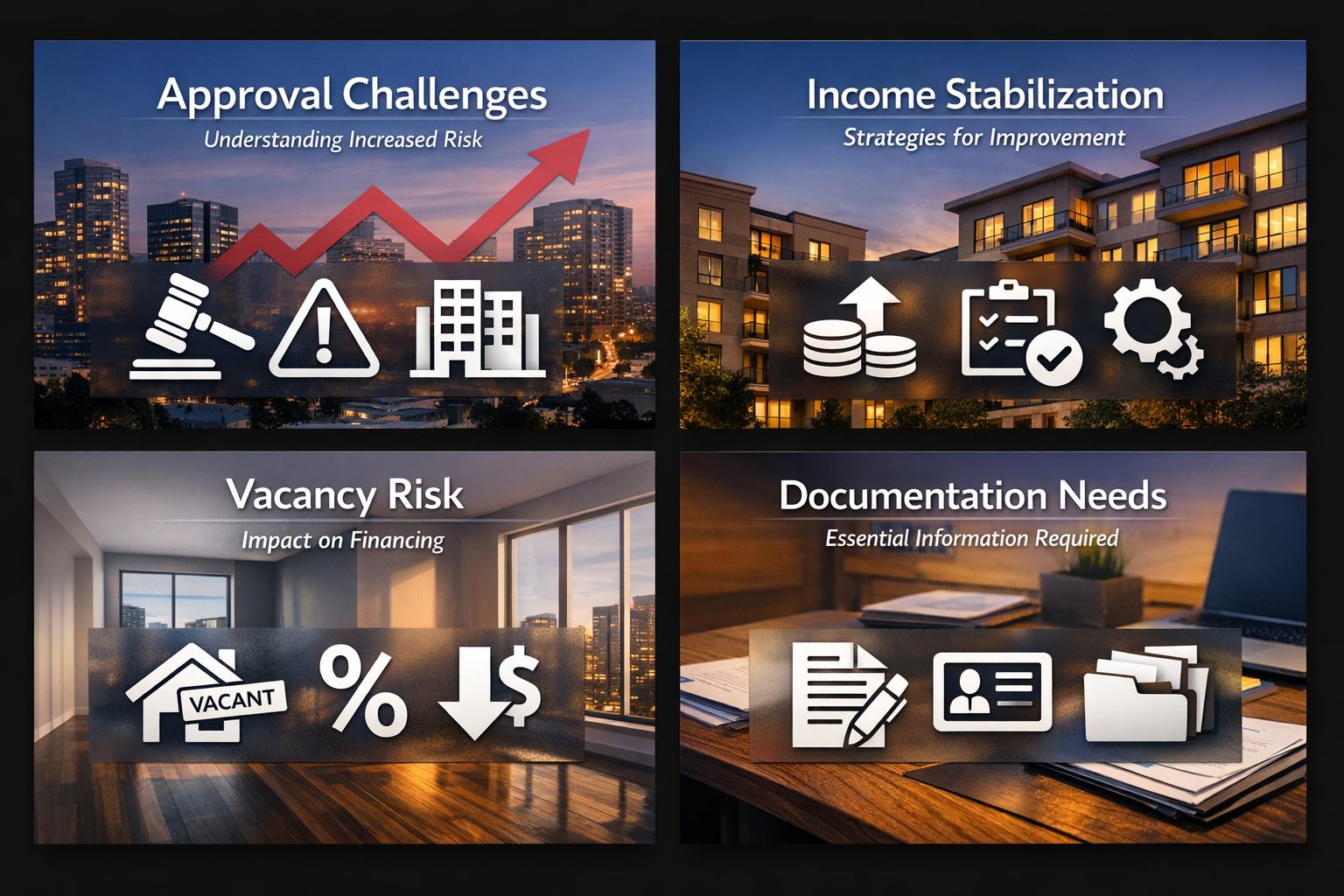
Unlike traditional mortgage products that focus heavily on personal income, DSCR loans evaluate the property's rental income against its debt obligations. That income-focused approach can be both a blessing and a challenge when your property isn't performing at full capacity. The good news? There are strategies and loan products designed specifically for investors navigating vacancy risk and working toward income stabilization.
This guide breaks down what you need to know about financing properties with occupancy challenges, including practical steps to improve your approval odds and alternative products that might work when traditional DSCR loans fall short.
Common Questions About DSCR Loans and Low Occupancy
Common questions about DSCR loans and low occupancy come up frequently when investors face underperforming properties. Understanding these fundamentals helps you prepare stronger applications and set realistic expectations.
Q: Can I qualify for a DSCR loan if my property has below-average occupancy?
It depends on how far below average your occupancy sits and what your debt service coverage ratio looks like. Some lenders may work with properties showing a DSCR below 1.0, though approval challenges typically increase. If your property generates enough rental income to cover a reasonable portion of the debt service, you might still find financing options, particularly if you can demonstrate a clear path to stabilization. Properties with temporarily low occupancy due to seasonal fluctuations or recent tenant turnover may be viewed more favorably than those with chronic vacancy issues.
Q: What's the difference between stabilized and in-place occupancy for underwriting?
Stabilized occupancy reflects what a property could achieve under normal market conditions with proper management, while in-place occupancy shows current performance. Lenders may use different models when evaluating your property, and understanding this distinction matters. If your property's current occupancy is below average but market conditions suggest strong stabilization potential, accurate performance modeling can help reduce credit risk concerns in the lender's eyes. Some underwriters will consider stabilized projections if you provide supporting market data, though most will anchor their decision primarily on in-place performance.
Q: Are there specialized DSCR products for properties with cash flow issues?
Yes, No Ratio DSCR loans exist specifically for situations where traditional income documentation doesn't work in your favor. These products don't require a specific DSCR threshold, which can be helpful when you're dealing with negative cash flow or occupancy below what traditional lenders prefer. LTV ratios up to 80% may be available, though terms and pricing typically reflect the additional risk the lender assumes. These loans can serve as bridge financing while you work on improving occupancy and stabilizing income.
Understanding DSCR Requirements and Occupancy Standards
Understanding DSCR requirements and occupancy standards gives you a clearer picture of what lenders evaluate when considering your application. These criteria shape whether your property with below-average occupancy will meet financing thresholds.
Business purpose designation matters: DSCR loans are structured for investment properties and second homes generating rental income, not primary residences. Your property must clearly fit within business purpose rules, meaning it should be income-generating or intended for that purpose. Properties blurred between personal use and rental activity might face additional scrutiny or disqualification.
Income documentation centers on the property: Rather than requiring personal tax returns and W-2s, lenders assess the rental income the property produces against the monthly debt obligations. When occupancy is below average, this income calculation becomes the critical factor. Lenders typically use lease agreements, rental histories, and market rent analysis to determine sustainable income levels.
Vacancy and credit loss projections affect approval: Underwriters incorporate vacancy assumptions into their financial models, often expecting some level of turnover and downtime. Properties already experiencing higher vacancy may trigger more conservative projections, which can impact your DSCR calculation negatively. Accurate performance modeling that differentiates between temporary setbacks and structural problems can influence how lenders view your application.
Minimum DSCR thresholds vary by lender: While many lenders prefer a DSCR of 1.0 or higher, meaning rental income covers debt service completely, some programs accommodate lower ratios. Properties with occupancy challenges might naturally fall below this threshold, but that doesn't automatically disqualify you. Understanding which lenders offer flexibility in this area becomes essential when your property isn't performing at peak levels.
Key Challenges When Seeking DSCR Loans with Low Occupancy
Key challenges when seeking DSCR loans with low occupancy include hurdles that can slow down or complicate your financing process. Being aware of these obstacles helps you prepare more effectively and seek out lenders with appropriate programs.
Reduced income calculations hurt your ratio: If your property isn't fully leased, the rental income used in DSCR calculations drops accordingly. A property at 60% occupancy generates significantly less monthly income than one at 90%, which directly impacts the debt service coverage ratio. This reduced income might push your DSCR below lender minimums, triggering approval challenges or higher interest rates.
Lenders perceive higher default risk: Vacancy risk signals potential instability to underwriters, who worry that inconsistent income could lead to missed payments. Properties with below-average occupancy may be viewed as riskier investments, prompting lenders to impose stricter terms, lower LTV ratios, or higher pricing. You'll need to provide compelling evidence that the vacancy situation is temporary or manageable.
Appraisals may reflect occupancy problems: When appraisers evaluate income-producing properties, they consider occupancy rates and rental income as part of the valuation. Chronic vacancies can lead to lower appraised values, which in turn affects how much you can borrow. If the appraisal comes in low, you might face a larger down payment requirement or need to bring additional cash to closing.
Documentation requirements increase: Lenders dealing with properties showing occupancy challenges often request additional documentation to assess risk. You might need to provide detailed rent rolls, explanations for vacancies, market studies showing stabilization potential, and property management plans. Preparing this documentation upfront can streamline the process and demonstrate your proactive approach to income stabilization.
Alternative Financing Options for Underperforming Properties
Alternative financing options for underperforming properties can provide pathways to funding when traditional DSCR loans prove difficult. These products are designed with flexibility in mind, accommodating situations where standard underwriting might not work.
No Ratio DSCR loans eliminate income thresholds: These specialized products don't require your property to meet a specific DSCR minimum, which removes one of the biggest barriers for properties with below-average occupancy. Instead of focusing on the income-to-debt ratio, lenders evaluate other factors like your experience as an investor, property type, location, and overall financial profile. LTV ratios may reach 80%, though you'll typically pay higher rates to compensate for the perceived risk.
Bridge loans provide short-term solutions: If you're in the process of stabilizing occupancy or planning improvements that will boost rental income, bridge financing might make sense. These loans offer shorter terms and faster closings, giving you capital to reposition the property. Once occupancy improves and income stabilizes, you can refinance into a more traditional DSCR loan with better terms.
Portfolio lenders offer customized underwriting: Smaller portfolio lenders who hold loans on their own books rather than selling them may have more flexibility in their approval criteria. These institutions can consider the full context of your investment, including your track record, property management capabilities, and market conditions. Building relationships with portfolio lenders can open doors when conventional financing routes close.
Steps to Improve Your Approval Chances
Steps to improve your approval chances focus on strengthening your application and demonstrating that your property's occupancy challenges are manageable. Taking these actions can shift lender perception and improve your financing terms.
Document your stabilization plan clearly: Provide lenders with a detailed strategy showing how you'll improve occupancy. This might include marketing initiatives, property improvements, rent adjustments to market levels, or management changes. The more concrete and realistic your plan, the more confidence underwriters will have in your ability to stabilize income. Include timelines, cost estimates, and projected occupancy targets to show you've thought through the process thoroughly.
Gather strong market data supporting your projections: Demonstrate that your property's below-average occupancy is fixable by presenting comparable properties in the area with higher occupancy rates. Market rent studies, occupancy trends in your submarket, and demographic data showing tenant demand all help build your case. This research shows lenders that the vacancy issue stems from property-specific factors you can address, not fundamental market weakness.
Increase your down payment if possible: Bringing more equity to the transaction reduces lender risk and can offset concerns about occupancy challenges. A lower LTV ratio gives you more cushion if property values or income fluctuate, making underwriters more comfortable approving your loan. Even an additional 5% down can sometimes make the difference between approval and denial when your DSCR sits near the threshold.
Highlight your investor experience and track record: Lenders feel more confident working with investors who've successfully managed similar challenges before. If you've stabilized underperforming properties in the past, document those successes with before-and-after occupancy figures and financial performance. Your experience becomes an asset that can compensate for the property's current shortcomings in the lender's risk assessment.
Consider bringing in a co-borrower with strong credentials: Adding a partner or co-borrower who brings additional assets, experience, or creditworthiness can strengthen your overall application. While DSCR loans don't focus on personal income, having another investor on the loan can provide additional reassurance to the lender. This strategy works particularly well if the co-borrower has successfully operated similar properties.
Strategies for Managing Vacancy Risk During the Loan Process
Strategies for managing vacancy risk during the loan process help you maintain lender confidence while working toward closing. Active management and communication can prevent small issues from becoming deal-breakers.
Secure new leases before closing when possible: If you're in the application or underwriting phase, successfully leasing vacant units can dramatically improve your DSCR and ease approval concerns. Even short-term leases demonstrate demand and provide documented income. Update your lender immediately when you sign new tenants, as this improved occupancy might change your loan terms favorably.
Provide regular updates on occupancy improvements: Don't wait for the lender to ask for updated rent rolls or occupancy reports. Proactively communicating progress shows you're actively managing the property and taking the occupancy issue seriously. If you're showing properties to prospective tenants, completing repairs that were deterring renters, or implementing new marketing strategies, share those activities with your loan officer.
Structure rent concessions strategically: If you need to offer incentives to fill vacancies quickly, structure them in ways that don't negatively impact your rental income calculation. For example, one month free spread over a 12-month lease looks better to underwriters than a large upfront discount. Be transparent about any concessions, as lenders will typically discover them during verification and undisclosed incentives can damage trust.
Prepare contingency plans for further vacancies: Lenders appreciate investors who think ahead about risks. Have a clear plan for how you'd handle additional turnover during the loan process or shortly after closing. This might include cash reserves you're setting aside, relationships with leasing agents, or flexible pricing strategies. Demonstrating this level of preparedness can ease underwriter concerns about your ability to manage vacancy risk.
Securing a DSCR loan for properties with below average occupancy requires a more strategic approach than financing a fully stabilized asset, but it's far from impossible. By understanding how lenders evaluate vacancy risk, preparing thorough documentation, and considering alternative financing products when needed, you can navigate approval challenges successfully.
The key lies in demonstrating that your property's current occupancy situation is temporary and manageable, not a chronic problem that threatens long-term viability. Whether you pursue a traditional DSCR loan with a flexible lender, opt for a No Ratio product that removes income thresholds, or use bridge financing while you stabilize the property, options exist for investors willing to do the work.
Income stabilization takes time, planning, and often some upfront investment, but the financing tools are available to help you get there. Focus on building a compelling case that shows lenders you understand the challenges, have a realistic plan to address them, and possess the experience to execute that plan successfully. With the right preparation and the right lending partner, your underperforming property can become the cash-flowing asset you envisioned.