DSCR Loans for New Construction: A Strategic Financing Approach
Real estate investors seeking to expand their portfolios with newly constructed rental properties face unique financing challenges. A DSCR loan for newly built rental property offers a compelling solution by focusing on the property's income potential rather than personal financial qualifications. This cash flow-based approach opens doors for investors who might otherwise struggle with traditional lending requirements, particularly when dealing with new construction financing that requires different underwriting considerations.
Understanding how DSCR loans work with newly built properties can transform your investment strategy. These loans evaluate the debt service coverage ratio, which compares the property's projected rental income to its debt obligations. For new construction, this means lenders assess the rental market potential and expected cash flow once the property reaches stabilization, creating opportunities for investors to secure favorable financing terms.
Key Advantages of DSCR Financing for New Builds
DSCR financing for new builds offers several distinct advantages that make it particularly attractive for real estate investors. These benefits can significantly impact your investment returns and portfolio growth potential.
Income-Based Qualification: DSCR loans focus on the property's rental income potential rather than your personal income, making it easier to qualify for multiple properties simultaneously
Flexible Documentation: New construction financing through DSCR loans typically requires less personal financial documentation compared to conventional mortgages, streamlining the approval process
Portfolio Scalability: Since these loans don't rely heavily on debt-to-income ratios, investors can potentially finance multiple new construction projects without personal income limitations
Conversion Flexibility: Many DSCR construction loans can convert to permanent financing once the property reaches stabilization, eliminating the need for separate loan applications
Essential Requirements for New Construction DSCR Loans
Understanding the specific requirements for obtaining a DSCR loan for newly built rental property helps investors prepare their applications effectively. These requirements may differ from traditional rental property loans due to the construction component.
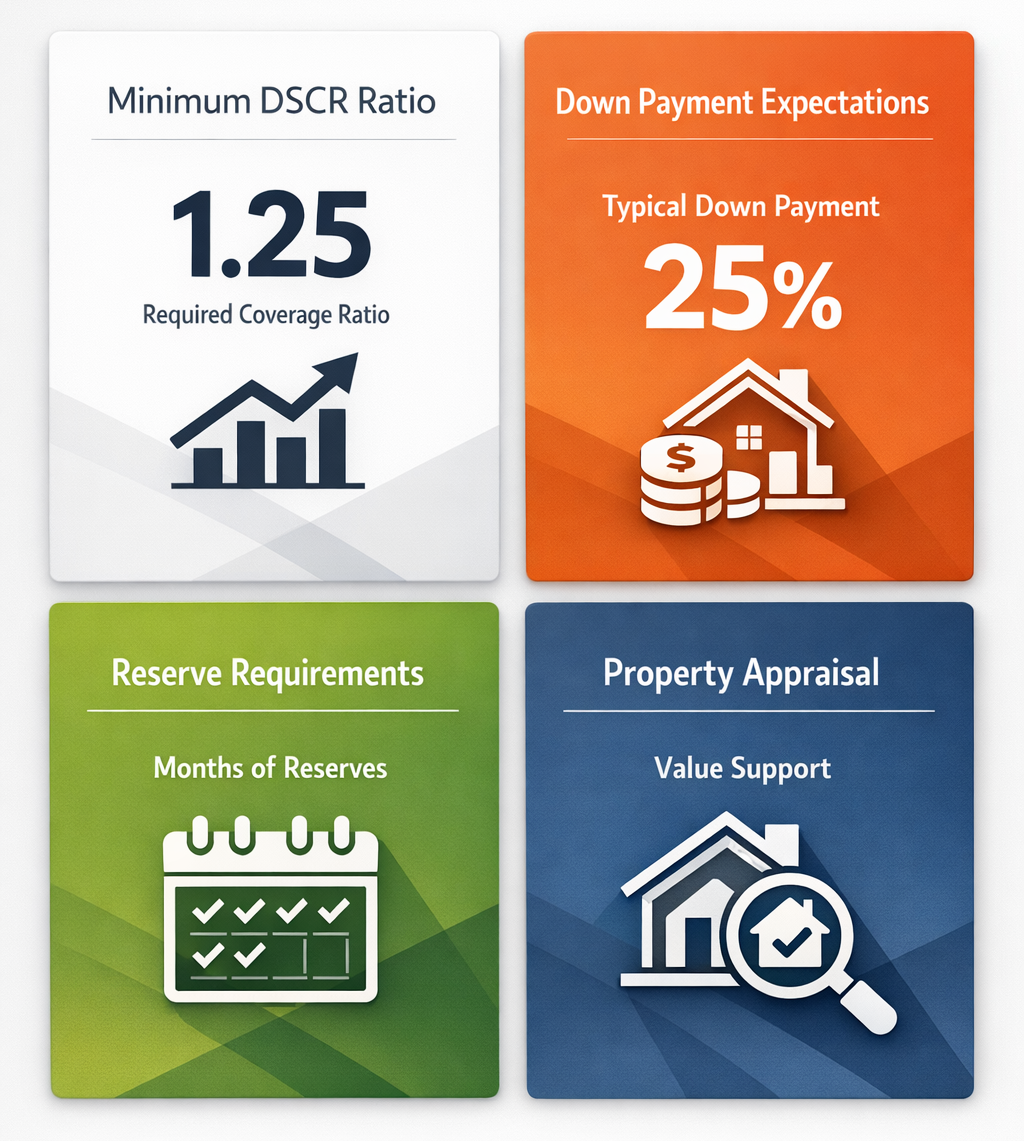
Minimum DSCR Ratio: Most lenders require a debt service coverage ratio of at least 1.0 to 1.25, calculated using projected rental income from comparable properties in the area
Down Payment Expectations: New construction DSCR loans typically require 20-25% down payment, though some build-to-rent programs may offer up to 90% loan-to-cost financing
Reserve Requirements: Lenders often require 2-6 months of mortgage payments in reserves, accounting for the time needed to achieve rent stabilization after construction completion
Property Appraisal: The property must appraise for sufficient value to support the loan amount, with special consideration given to as-completed value for new construction projects
Rent Stabilization Strategies During Construction
Achieving rent stabilization quickly after construction completion is crucial for DSCR loan success. Effective planning during the construction phase can significantly reduce the time between completion and full occupancy.
Pre-Marketing Campaigns: Begin marketing the property 60-90 days before completion to build a pipeline of qualified tenants and reduce vacancy periods
Competitive Rent Analysis: Conduct thorough market research to set competitive rental rates that attract tenants while supporting the required DSCR ratio for your loan
Property Management Setup: Establish relationships with property management companies early in the construction process to ensure smooth tenant placement and ongoing operations
Tenant Incentives: Consider offering move-in specials or other incentives to accelerate lease-up, which can help achieve stabilization faster and improve cash flow potential timing
Timeline Considerations for DSCR Construction Projects
Managing approval timing and project milestones effectively is essential for successful DSCR construction financing. Understanding these timeframes helps investors plan their projects and cash flow more accurately.
Loan Approval Process: DSCR construction loan approvals typically take 30-45 days, though complex projects or multiple properties might require additional time for underwriting
Construction Phase Management: Most construction loans provide 12-18 months for completion, with interest-only payments during the build phase to preserve cash flow
Stabilization Period: Plan for 6-12 months to achieve full rent stabilization after construction completion, depending on local market conditions and property type
Conversion Timing: If using a construction-to-permanent loan structure, the conversion typically occurs within 30-60 days after reaching stabilization milestones
Critical Steps in the DSCR Application Process
Successfully navigating the DSCR loan application process for new construction requires careful preparation and understanding of lender expectations. Following these steps systematically can improve approval odds and loan terms.
Market Analysis Preparation: Gather comprehensive rental comps and market data to support projected rental income assumptions, as lenders will scrutinize these projections carefully for new construction
Construction Documentation: Compile detailed construction plans, contractor agreements, and project timelines to demonstrate feasibility and professional project management capabilities
Financial Projections: Develop realistic cash flow projections that account for construction completion, lease-up periods, and ongoing operating expenses to show sustainable debt service coverage
Reserve Fund Planning: Establish adequate reserve funds for construction overruns, extended lease-up periods, and initial operating expenses to satisfy lender requirements and protect your investment
Maximizing Returns Through Strategic Loan Structuring
Optimizing your DSCR loan structure can significantly impact long-term investment returns and cash flow performance. Different structuring approaches offer various advantages depending on your investment goals and market conditions.
Interest Rate Strategy: Compare fixed-rate versus adjustable-rate options, considering that new construction projects may benefit from initial rate stability during the lease-up phase
Amortization Selection: Evaluate 30-year versus 25-year amortization schedules, balancing monthly cash flow needs with long-term equity building objectives for your rental property portfolio
Prepayment Considerations: Review prepayment penalty structures carefully, as successful new construction projects may create refinancing opportunities as properties mature and stabilize
Portfolio Integration: Consider how the new construction loan fits within your overall investment strategy and whether consolidation opportunities might improve terms across multiple properties
Building Long-Term Investment Success
Building long-term investment success with DSCR loans for newly built rental properties requires strategic thinking beyond the initial financing. Successful investors focus on creating sustainable cash flow while positioning their properties for future growth and refinancing opportunities. The key lies in understanding that new construction financing is just the beginning of a longer investment journey that can generate substantial returns when managed properly.
DSCR loans for newly built rental properties offer real estate investors a powerful tool for portfolio expansion and wealth building. By focusing on property cash flow potential rather than personal income limitations, these loans create opportunities for strategic growth that might otherwise remain inaccessible. Success requires careful planning around rent stabilization, realistic timeline expectations, and thorough market analysis to support projected returns.
The key to maximizing DSCR loan benefits lies in understanding the unique requirements of new construction financing and preparing accordingly. From initial application through rent stabilization and beyond, investors who master these financing strategies position themselves for sustained success in the competitive real estate investment market. As you consider your next new construction project, remember that proper DSCR loan structuring can be the foundation for long-term investment prosperity.