DSCR Loan Mixed Income Properties: Simplifying Complex Investments
Real estate investors often encounter properties with multiple income streams that create underwriting complexity during traditional financing. A DSCR loan for mixed income properties offers a solution by focusing on the property's cash flow performance rather than the borrower's personal income verification. This financing approach may help investors access capital for properties with diverse revenue sources, from short-term rentals to commercial spaces within residential buildings. Understanding the approval rules and qualification requirements can help investors leverage these opportunities effectively while managing the inherent challenges of mixed-income property financing.
Essential Qualification Requirements
Essential qualification requirements for DSCR loan for mixed income properties typically involve specific financial thresholds that lenders evaluate. These requirements help streamline the approval process despite the underwriting complexity that multiple income streams often create.
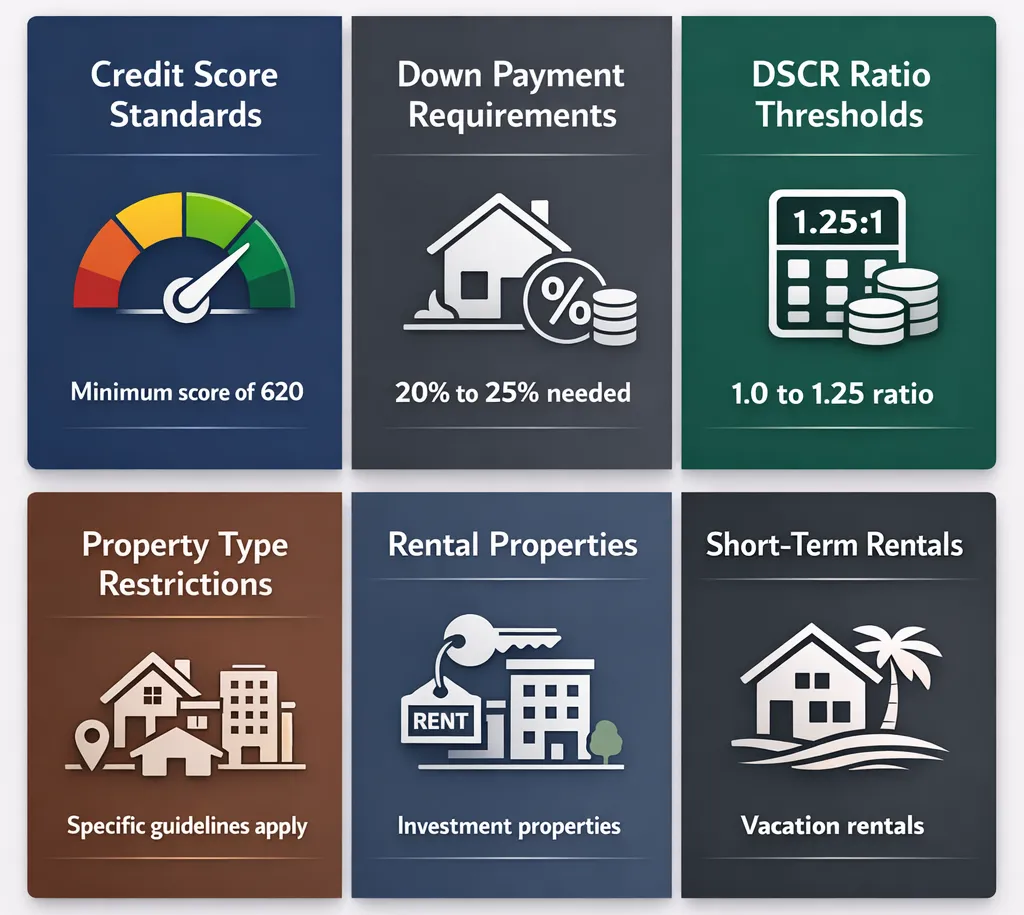
Credit Score Standards: Most lenders require a minimum credit score of 620, though some may accept lower scores with compensating factors or higher down payments for mixed-income properties.
Down Payment Requirements: Investors should prepare for down payments between 20% and 25%, which may vary based on the property's income diversity and cash flow stability.
DSCR Ratio Thresholds: Lenders typically set DSCR requirements between 1.0 and 1.25, meaning the property's combined income streams must cover debt obligations at minimum levels.
Property Type Restrictions: Some lenders may have specific guidelines for mixed-use properties or those with unconventional income sources that affect approval rules. Properties that combine long-term leases with a short-term rental component often carry higher reserve requirements, typically 6 to 12 months of PITIA for the short-term unit versus 2 to 6 months of PITIA for standard long-term rental units, since seasonal occupancy swings add income volatility lenders must offset.
Income Stream Documentation Checklist
Income stream documentation checklist helps investors prepare the necessary paperwork when multiple income streams create underwriting complexity. Proper documentation may improve approval chances and reduce processing delays.
Rental Income Verification: Provide lease agreements, rent rolls, and bank deposit records for traditional rental income from residential units within the mixed-income property.
Commercial Income Records: Document any commercial lease agreements, business income statements, and occupancy histories for retail or office spaces.
Short-Term Rental Data: Compile platform earnings reports, occupancy rates, and seasonal revenue patterns if the property includes vacation rental components.
Additional Revenue Sources: Document parking fees, laundry income, storage rentals, or other ancillary income streams that contribute to the property's total cash flow.
Property Cash Flow Analysis Methods
Property cash flow analysis methods become crucial when evaluating a DSCR loan for mixed income properties, as lenders focus on the property's financial performance rather than personal income verification.
Net Operating Income Calculation: Calculate total rental and ancillary income minus operating expenses, excluding mortgage payments, to determine the property's earning potential.
Vacancy Factor Adjustments: Apply realistic vacancy rates for each income stream type, as commercial and residential spaces may have different occupancy patterns.
Seasonal Revenue Smoothing: Account for seasonal fluctuations in short-term rental income or seasonal businesses that may affect consistent cash flow projections.
Market Rent Comparisons: Research comparable properties with similar mixed-income profiles to validate rental rates and income assumptions used in DSCR calculations.
Steps to Optimize DSCR Performance
Steps to optimize DSCR performance can help investors meet approval rules and secure better financing terms despite the underwriting complexity that multiple income streams typically present.
Maximize Rental Income: Review current lease agreements and market rates to identify opportunities for rent increases or lease renewals that could improve the property's debt service coverage ratio before applying.
Reduce Operating Expenses: Audit property expenses including utilities, maintenance contracts, and management fees to identify cost savings that directly improve net operating income and DSCR calculations.
Diversify Income Sources: Add complementary revenue streams such as coin-operated laundry, parking fees, or storage rentals that provide steady income without significant additional investment or management complexity.
Improve Property Condition: Complete strategic improvements that justify higher rents or attract better tenants, focusing on upgrades that provide measurable returns on investment and enhanced cash flow stability.
Common Approval Pitfalls to Avoid
Common approval pitfalls to avoid can help investors navigate the underwriting complexity when seeking a DSCR loan for mixed income properties with multiple income streams and varying approval rules.
Inadequate Income Documentation: Failing to provide comprehensive documentation for all income streams may result in lenders only counting partial income, reducing the calculated DSCR below minimum requirements and affecting loan approval.
Overestimating Rental Projections: Using unrealistic rent estimates or occupancy rates without market support can lead to loan denials when lenders verify income assumptions against comparable property data.
Ignoring Lender-Specific Guidelines: Different lenders may have varying policies regarding mixed-use properties, short-term rentals, or commercial components that could affect eligibility and terms significantly.
Insufficient Cash Reserves: Underestimating the cash reserves required for mixed-income properties, which may need larger reserves due to income volatility and higher management complexity compared to traditional rental properties. As a baseline, lenders generally expect 2 to 6 months of PITIA in reserves for standard long-term rental units, rising to 6 to 12 months of PITIA when the property includes a short-term rental component.
Strategic Investment Advantages
Strategic investment advantages emerge when investors successfully utilize a DSCR loan for mixed income properties, as this financing approach can unlock opportunities that traditional lending might not accommodate due to underwriting complexity.
The primary advantage lies in the income-focused qualification process, which allows investors to leverage the property's earning potential rather than personal income limitations. This approach may enable portfolio expansion for investors whose personal debt-to-income ratios might otherwise restrict traditional financing options. Additionally, properties with multiple income streams often provide better cash flow stability and higher returns, as diversified revenue sources can offset seasonal fluctuations or vacancy periods in individual units.
Furthermore, mixed-income properties typically appreciate faster than single-use properties due to their versatility and higher income potential. The ability to finance these opportunities through DSCR loans may provide investors with competitive advantages in markets where such properties command premium valuations and generate superior long-term returns compared to conventional rental investments.
A DSCR loan for mixed income properties represents a powerful financing tool that can help investors overcome the underwriting complexity associated with multiple income streams. By focusing on property performance rather than personal income verification, these loans may provide access to opportunities that traditional financing cannot accommodate effectively.
Success with mixed-income property financing often depends on thorough preparation, realistic cash flow projections, and understanding specific lender requirements. Investors who take time to optimize their property's DSCR performance and avoid common approval pitfalls typically find better terms and smoother transaction processes.
As the real estate investment landscape continues evolving, DSCR loans provide flexibility that allows investors to capitalize on diverse property types and income strategies. Consider partnering with experienced lenders who understand the nuances of mixed-income property financing to maximize your investment potential and build a stronger portfolio foundation.