Real estate investors using debt service coverage ratio financing face unique challenges when markets shift unexpectedly. A comprehensive DSCR loan market downturn plan could mean the difference between weathering temporary setbacks and facing serious portfolio complications. Recent market analysis suggests that 2026 may bring continued volatility, making preparation more crucial than ever.
The mortgage landscape has evolved significantly, with DSCR loans gaining popularity due to their streamlined documentation requirements. However, this convenience comes with responsibility. Investors must understand how market downturns might affect their properties and develop strategies to maintain positive cash flow even when rental markets soften.
Understanding potential risks and creating actionable responses typically helps investors preserve their portfolios during challenging periods. This comprehensive guide explores practical approaches for navigating market uncertainty while maintaining healthy debt service coverage ratios.
Current Market Indicators Requiring Attention
Current market indicators requiring attention reveal several factors that investors should monitor closely when developing their DSCR loan market downturn plan. The mortgage market appears to be undergoing significant adjustments that could impact property financing strategies.
Property turnover rates increasing: Market analysis indicates higher turnover rates in rental properties, which could affect vacancy calculations and cash flow projections
Interest rate environment evolving: Mortgage market conditions suggest potential rate adjustments that might influence debt service calculations and refinancing opportunities
Housing inventory constraints persisting: Tight inventory conditions may support property values but could limit acquisition opportunities for expanding portfolios
These indicators suggest that while DSCR loans remain attractive, investors need to prepare for scenarios where property performance might not meet initial projections. Market downturns can change rapidly, affecting both rental income and property expenses.
Vacancy Scenario Planning Essentials
Vacancy planning essentials form a critical component of any effective DSCR loan market downturn plan. Property turnovers and extended vacancy periods can quickly transform profitable investments into cash flow challenges.
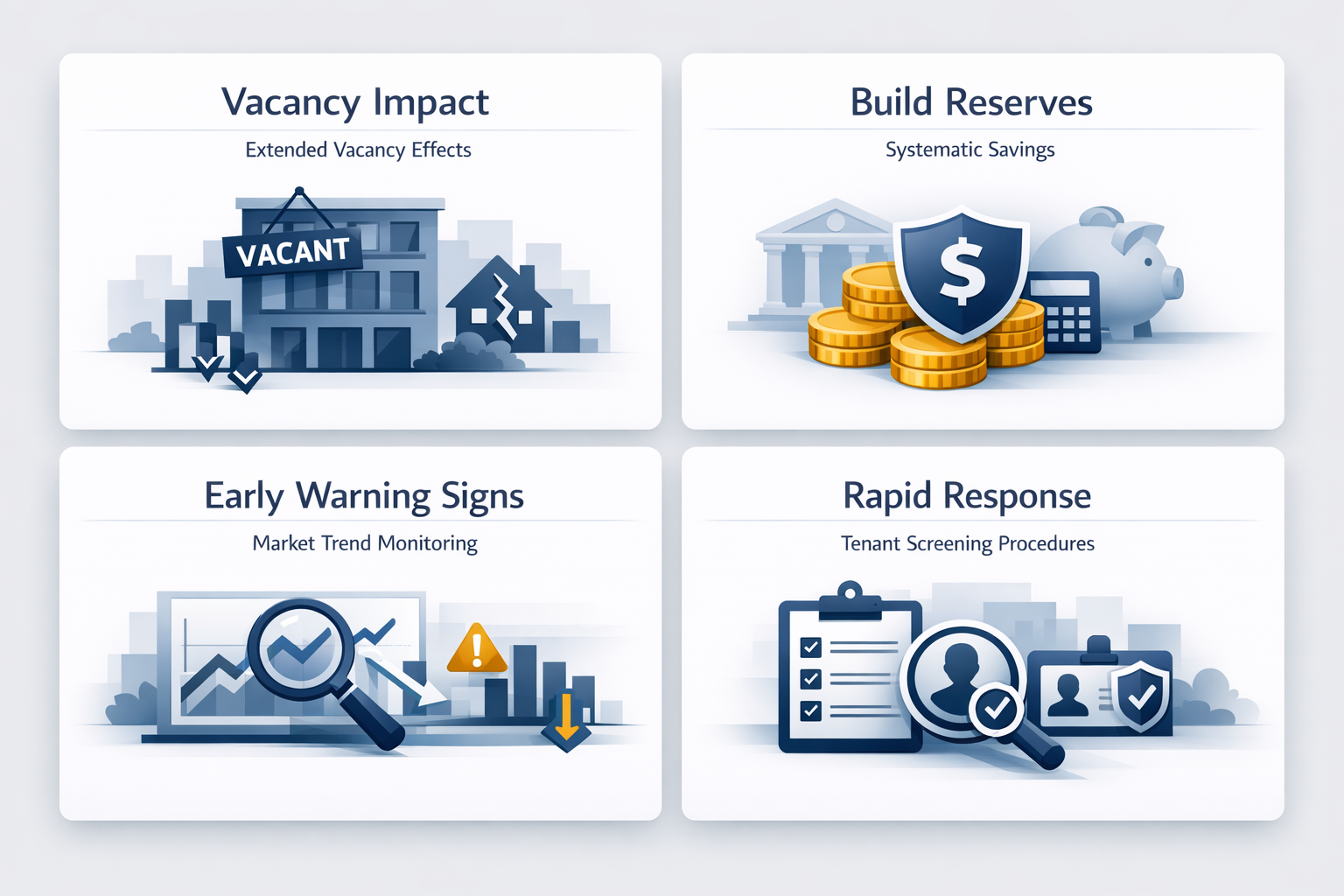
Calculate extended vacancy impact: Determine how 60-day, 90-day, and 120-day vacancy periods would affect your debt service coverage ratio and monthly obligations
Build vacancy reserves systematically: Establish dedicated accounts containing 3-6 months of mortgage payments plus operating expenses for each DSCR-financed property
Identify early warning signs: Monitor local rental market trends, tenant payment patterns, and seasonal vacancy rates that might indicate increased turnover risk
Develop rapid response procedures: Create streamlined processes for marketing vacant units, screening tenants quickly, and implementing necessary property improvements
Smart vacancy scenario planning often involves analyzing historical data from your local market. Understanding typical vacancy periods and seasonal patterns helps create realistic projections. Some markets experience predictable vacancy cycles, while others face more sporadic challenges.
Remember that vacancy costs extend beyond lost rent. Marketing expenses, utility costs during vacancy periods, and potential renovation needs can compound the financial impact significantly.
Rent Decline Scenario Preparation
Rent decline scenario preparation requires careful analysis of how reduced rental income might affect your debt service obligations and overall investment returns. Market conditions can force rent reductions even in previously strong markets.
Model various rent reduction percentages: Calculate how 10%, 15%, and 20% rent decreases would impact your DSCR and monthly cash flow requirements
Research comparable rental adjustments: Study recent rent changes in similar properties within your market to understand realistic adjustment ranges
Evaluate expense reduction opportunities: Identify which operating costs might be reduced without compromising property condition or tenant satisfaction
Consider lease structure modifications: Explore options like longer-term leases with smaller increases or tenant-paid utilities to maintain overall returns
Rent decline scenarios often develop gradually rather than suddenly. Economic pressures in local markets might reduce tenant ability to pay premium rents. New supply entering the market could increase competition and pressure existing rental rates.
Successful investors typically maintain flexibility in their rental strategies. This might include offering different lease terms, adjusting included amenities, or finding creative ways to add value that justifies existing rent levels.
Portfolio Stress Testing Methods
Portfolio stress testing methods help investors understand how their entire collection of DSCR-financed properties might perform under various adverse conditions. This systematic approach reveals portfolio vulnerabilities before they become serious problems.
Conduct comprehensive property audits: Review each property's current DSCR, rental history, maintenance needs, and local market position to identify potential weak points in your portfolio
Model combined scenario impacts: Test situations where multiple properties experience vacancy or rent reductions simultaneously, as market downturns rarely affect just one property
Analyze geographic concentration risks: Evaluate whether your properties are too concentrated in specific neighborhoods or markets that might decline together
Calculate portfolio-wide cash requirements: Determine total capital needs if 25%, 50%, or 75% of your properties require financial support simultaneously
Effective stress testing reveals patterns that might not be obvious when examining properties individually. Some investors discover that their portfolios are more vulnerable to specific economic sectors or demographic changes than initially realized.
The goal isn't to eliminate all risk but to understand it clearly. This knowledge enables better decision-making about future acquisitions, financing strategies, and reserve requirements.
Emergency Cash Flow Strategies
Emergency cash flow strategies provide immediate relief when rental income drops below debt service requirements. These approaches can help maintain loan compliance while working through temporary market challenges.
Establish multiple funding sources: Develop relationships with private lenders, maintain business lines of credit, and consider partnerships that could provide emergency capital when needed
Create liquid asset reserves: Maintain easily accessible funds equivalent to 6-12 months of total debt service across your DSCR loan portfolio for immediate deployment
Implement graduated response protocols: Design step-by-step procedures for addressing cash flow shortfalls, from using reserves to selling non-performing properties
Explore temporary income enhancement: Consider short-term rental strategies, additional parking fees, storage rentals, or other revenue streams that could boost property income quickly
Emergency strategies work best when implemented before they're needed. Scrambling to find solutions during a crisis often leads to accepting unfavorable terms or making hasty decisions that compound problems.
Some investors maintain relationships with property management companies that specialize in maximizing troubled property performance. These professionals often identify revenue opportunities that owners might overlook during stressful periods.
Long-Term Recovery Planning
Long-term recovery planning focuses on positioning your DSCR loan portfolio to emerge stronger from market downturns rather than simply surviving them. This strategic approach often separates successful investors from those who struggle repeatedly.
Recovery planning begins with honest assessment of each property's long-term viability. Some properties might be worth holding through difficult periods, while others could be better sold to preserve capital for stronger opportunities. Market downturns sometimes create acquisition opportunities for investors with available capital and strong credit positions.
Consider how changing demographics, employment patterns, and development trends might affect your properties over the next 3-5 years. Properties in declining areas might require different strategies than those in temporarily soft but fundamentally strong markets.
Successful recovery typically involves improving property competitiveness through strategic renovations, better management, or repositioning for different tenant demographics. These improvements should be planned and budgeted before they become urgent necessities through investor risk planning.
Developing a comprehensive DSCR loan market downturn plan requires careful preparation and realistic scenario planning. The mortgage market's evolution suggests that investors who prepare for various challenges will likely outperform those who assume current conditions will continue indefinitely.
Remember that market cycles are normal parts of real estate investing. The key lies in preparation rather than prediction. By implementing systematic approaches to vacancy scenarios, rent decline situations, and cash flow management, investors can maintain their portfolios through challenging periods.
Your DSCR loan strategy should include both defensive measures and offensive opportunities. While protecting existing investments remains paramount, downturns often create acquisition opportunities for prepared investors. Start implementing these planning strategies today, before market conditions demand their use.