Rural rental properties present unique opportunities for investors seeking less competitive markets and potentially higher returns. Yet, financing these properties in low population areas often comes with challenges that traditional mortgage products can't easily address. That's where a DSCR loan for rural rental properties becomes a powerful tool in your investment arsenal.
Unlike conventional loans that focus heavily on your personal income and employment history, DSCR loans evaluate the property's rental income potential against its operating expenses. This income-focused approach can be particularly advantageous when you're targeting rural markets where rent comps are sparse and appraisal adjustments may be necessary. For investors looking to expand into less populated regions, understanding how DSCR financing works in these unique markets could make the difference between a stalled deal and a profitable acquisition.
In this guide, we'll walk through the strategies, requirements, and considerations that matter most when using DSCR loans to finance rural rental properties. Whether you're evaluating your first rural investment or expanding an existing portfolio, these insights will help you navigate the specific challenges that come with rural real estate financing.
Essential Requirements for Rural DSCR Financing
Understanding the essential requirements for a DSCR loan for rural rental properties helps investors prepare stronger applications and set realistic expectations. These requirements often differ slightly from conventional loans due to the unique nature of rural markets.
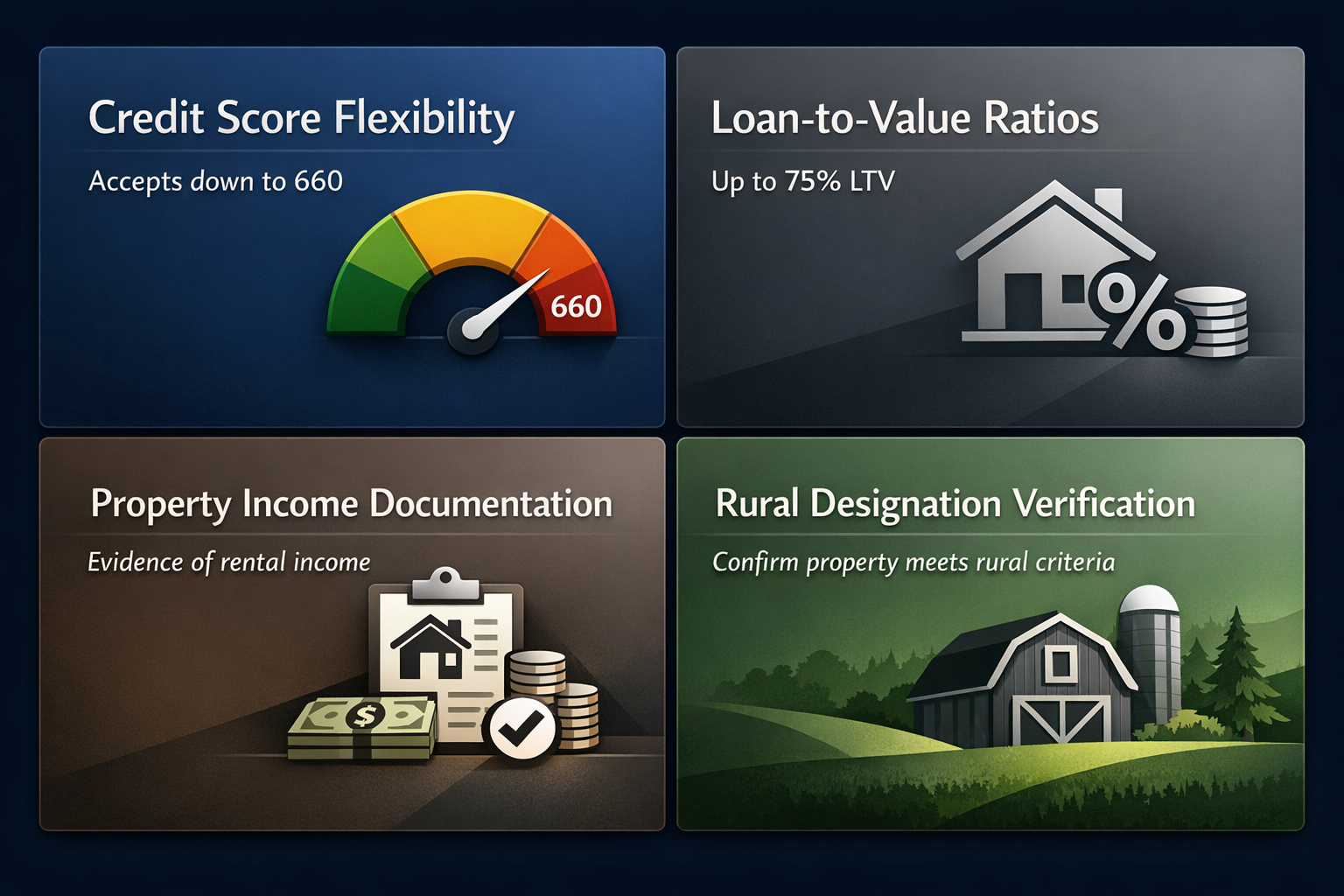
Credit Score Flexibility: Some lenders may accept credit scores down to 660 for rural properties, though higher scores typically unlock better rates and terms. This flexibility can help investors who might struggle with stricter conventional requirements.
Loan-to-Value Ratios: Rural DSCR loans might offer up to 75% LTV, meaning you'll need to prepare for a down payment of at least 25%. This conservative approach helps lenders mitigate risk in markets with fewer comparable sales.
Property Income Documentation: You'll need to provide evidence of current or projected rental income, often through lease agreements, market rent analyses, or appraisal rent schedules. This becomes the foundation of your DSCR calculation.
Rural Designation Verification: Confirming that your property meets the lender's definition of rural is critical. Misclassification could disqualify you from specialized rural loan products or cause delays in underwriting.
These requirements create a framework that shifts focus from your personal financial profile to the property's income-generating potential. For investors targeting low population areas where traditional employment verification might be challenging, this approach opens doors that conventional financing often keeps closed.
Overcoming Rent Comps Challenges in Low Population Areas
One of the biggest hurdles when financing rural rental properties involves establishing reliable rent comps. In low population areas, you might find very few comparable rental properties, making it harder to justify your projected rental income to lenders.
Expand Your Comp Search Radius: When local comps are scarce, appraisers and underwriters may look at properties in surrounding communities or similar rural markets. Understanding this broader approach helps you anticipate what data might support your application.
Leverage Multiple Rental Property Types: Short-term rentals, long-term leases, and seasonal rentals all exist in rural markets. Demonstrating income potential across different rental strategies can strengthen your case when traditional comps are limited.
Document Market Demand Indicators: Tourism activity, proximity to recreational areas, local employment centers, or agricultural operations can all support rental demand. Providing context around why renters would choose your property helps offset sparse comp data.
The rent comps challenge in rural markets isn't insurmountable. It simply requires investors to think more creatively about demonstrating income potential and working with lenders who understand the nuances of low-density real estate markets.
Navigating Appraisal Adjustments for Rural Properties
Appraisal adjustments become particularly important when evaluating rural rental properties. With fewer sales comparables and unique property characteristics common in low population areas, appraisers often need to make significant adjustments to arrive at fair market value.
Property Condition and Age: Rural properties might be older or have unique features not found in suburban markets. Appraisers adjust for these differences when comparing to available sales data, which can impact your loan amount.
Land Size and Outbuildings: Many rural properties include larger lots or additional structures like barns or workshops. These features require careful valuation adjustments that may not have direct comparables in the immediate area.
Location and Access: Distance from services, road conditions, and utility availability all factor into appraisal adjustments. Properties with limited access or off-grid utilities might see downward adjustments that affect financing.
Market Time Differences: Rural properties often take longer to sell, which appraisers consider when making market condition adjustments. This reality can influence both the appraisal value and lender confidence.
Understanding how appraisal adjustments work in rural contexts helps you set realistic purchase price expectations and prepare for potential valuation outcomes before you're deep into the financing process.
How to Calculate DSCR for Rural Income Properties
Calculating the DSCR for rural income properties follows a straightforward formula, but understanding how to apply it in low population areas is where many investors struggle. The DSCR calculation evaluates whether your property generates sufficient rental income to cover its debt obligations.
Step One: Determine Gross Rental Income. Start with the monthly rent your property can realistically command based on market analysis, existing leases, or appraisal rent schedules. In rural markets, this figure might require more conservative estimates due to limited comps.
Step Two: Calculate Total Monthly Debt Service. Add up your principal, interest, taxes, insurance, and HOA fees if applicable. This represents your property's monthly financial obligations that must be covered by rental income.
Step Three: Divide Income by Debt Service. The DSCR formula is simple: monthly rental income divided by monthly debt service. For example, if your property generates $1,500 in rent and has $1,200 in monthly obligations, your DSCR is 1.25.
Step Four: Meet Minimum Ratio Requirements. Most lenders require a DSCR of at least 1.0 to 1.25, meaning your rental income must equal or exceed your debt obligations by 25%. Higher ratios typically unlock better loan terms and pricing.
This income-focused evaluation method works particularly well in rural markets because it shifts attention away from local job markets or borrower employment, focusing instead on the property's ability to generate cash flow. For investors targeting low population areas, this approach may provide more favorable consideration than conventional loan products.
Confirming Rural Property Designation for DSCR Loans
Accurately confirming rural property designation is a critical step that many investors overlook until it creates problems during underwriting. Lenders use specific criteria to determine whether a property qualifies as rural, and misclassification can derail your financing plans.
Check USDA Rural Designation Maps. Many lenders reference USDA designations to determine rural status. These online tools let you enter a property address and immediately see whether it falls within designated rural boundaries, saving time and preventing surprises.
Review Lender-Specific Definitions. Not all lenders use identical rural criteria. Some may consider population density, distance from urban centers, or county classifications. Confirming your lender's specific requirements early prevents wasted effort on properties that won't qualify.
Understand Borderline Properties. Properties near the edge of rural designations can be tricky. If your investment sits in a transitional area, gathering documentation that supports rural classification, such as local zoning or census data, might help your case.
Document for Underwriting. Once you've confirmed rural status, include supporting documentation with your loan application. Proactive verification streamlines the underwriting process and demonstrates your thoroughness as an investor.
Taking time to verify rural designation before making offers or ordering appraisals protects your investment timeline and ensures you're targeting properties that truly align with DSCR loan for rural rental properties programs.
Short-Term Rental Opportunities in Rural Markets
Short-term rental strategies in rural markets represent an increasingly popular approach for investors using DSCR financing. Low population areas near recreational destinations, natural attractions, or seasonal tourism hubs can generate strong rental income that supports favorable DSCR calculations.
Identify Tourism and Recreation Drivers. Rural areas near lakes, mountains, national parks, or hunting lands often attract visitors seeking tranquil getaways. Properties in these locations may command premium nightly rates during peak seasons, boosting overall income potential.
Evaluate Seasonal Income Patterns. Unlike urban long-term rentals, rural short-term properties might experience significant seasonal fluctuations. Understanding these patterns helps you project annual income more accurately and satisfy lender income requirements.
Verify Short-Term Rental Acceptance. Some DSCR loan programs specifically support short-term rentals, while others may require traditional long-term lease structures. Confirming your lender's policy on short-term income before proceeding prevents complications during underwriting.
Account for Higher Operating Costs. Short-term rentals typically incur more expenses for cleaning, maintenance, utilities, and platform fees. These costs affect your net operating income and DSCR calculation, so build realistic expense projections into your analysis.
For investors willing to manage the unique demands of short-term rentals, rural markets can offer compelling returns. The key is finding properties where seasonal income patterns still support the consistent debt coverage lenders require for DSCR loans.
Key Takeaways for Rural DSCR Success
Successfully using a DSCR loan for rural rental properties requires understanding both the income-focused lending approach and the unique challenges that low population areas present. The shift from borrower-centric to property-centric evaluation creates opportunities for investors who might not qualify under conventional standards, but it also demands careful attention to income documentation, appraisal considerations, and rural designation verification.
Rural markets offer less competition, potentially higher yields, and unique rental strategies that can work well with DSCR financing. Whether you're pursuing long-term rentals in affordable rural communities or short-term vacation properties near recreational areas, the fundamental principle remains the same: your property's income must support its debt obligations with adequate margin.
By preparing thorough income documentation, understanding how appraisers handle rural properties, and working with lenders experienced in low-density markets, you can navigate the complexities that sometimes discourage other investors. That preparation might just give you the edge needed to build a profitable rural rental portfolio using DSCR financing strategies tailored to these distinctive markets.
Financing rental properties in rural markets doesn't have to mean jumping through endless hoops or settling for unfavorable terms. A DSCR loan for rural rental properties puts the focus where it belongs: on the income your property can generate rather than just your personal financial profile. This approach aligns particularly well with the realities of investing in low population areas where rent comps challenges and appraisal adjustments are simply part of the landscape.
As you evaluate rural investment opportunities, remember that success starts with understanding both the loan structure and the market dynamics at play. Take time to verify rural designation, gather solid income documentation, and work with lenders who truly understand the nuances of financing in less populated regions. The extra preparation typically pays off in smoother closings and stronger long-term returns.
At Trulo Mortgage, we specialize in investor-focused loan products designed for real-world scenarios, including the unique challenges rural properties present. If you're ready to explore how DSCR financing can support your rural rental strategy, reach out to discuss your specific investment goals and property details.