Understanding DSCR Loans for Solar-Equipped Investment Properties
Real estate investors increasingly encounter rental properties equipped with solar panel systems, and financing these assets through a DSCR loan for properties with solar panels requires careful consideration of several unique factors. Solar installations can affect property valuations, cash flow projections, and lender underwriting standards in ways that differ significantly from traditional rental financing.
Whether you're acquiring a property with an existing solar system or considering one as part of your investment strategy, understanding how these energy systems interact with debt service coverage ratio calculations is essential. The presence of solar panels might influence your qualifying rental income, appraisal value, and even your long-term return on investment.
This guide examines the key considerations investors face when seeking DSCR financing for solar-equipped properties, from navigating lease agreements to understanding how lenders evaluate energy savings in underwriting decisions.
Do's When Pursuing DSCR Financing for Solar Properties
Do's when pursuing DSCR financing for solar properties involve proactive steps that may strengthen your loan application and improve your chances of favorable terms. When solar panels are part of the investment equation, certain practices can help you navigate the underwriting process more effectively.
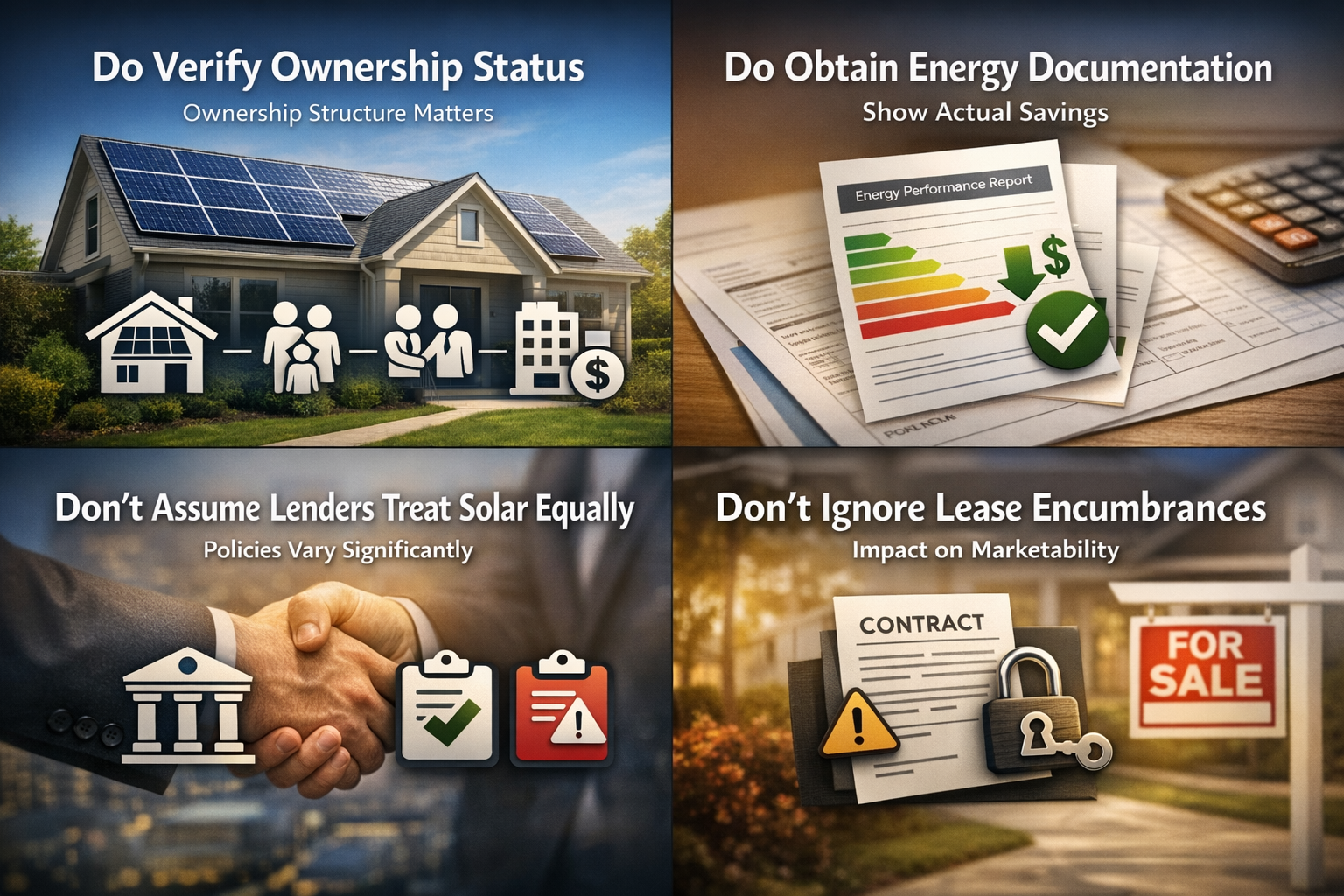
Do verify ownership status early: Determine whether the solar system is owned outright, financed through a loan, or operates under a lease or power purchase agreement. Ownership structure can significantly impact how lenders evaluate the property and calculate debt service coverage.
Do obtain detailed energy production documentation: Collect historical utility bills, solar generation reports, and any available performance data. This information might help demonstrate actual cost savings to lenders who factor energy efficiency into their valuations.
Do work with appraisers experienced in solar valuations: Request an appraiser familiar with renewable energy installations. Solar systems may require specialized knowledge to assess properly, and experienced appraisers could provide more accurate property valuations.
Do clarify maintenance responsibilities: Understand and document who is responsible for system maintenance, repairs, and insurance. Clear maintenance agreements can reduce perceived risk in the lender's evaluation.
Don'ts That Could Complicate Your Solar Property Financing
Don'ts that could complicate your solar property financing often involve oversights or assumptions that may delay approval or result in less favorable loan terms. Avoiding these pitfalls can streamline the underwriting process for a DSCR loan for properties with solar panels.
Don't assume all lenders treat solar equally: Lender policies vary considerably regarding solar installations. Some may view them favorably, while others might have limited experience evaluating these properties. Shopping around is important.
Don't ignore lease encumbrances: If the solar system operates under a lease or power purchase agreement, don't overlook how this affects the property's marketability and title. These agreements might create complications during underwriting or at resale.
Don't overestimate energy savings in your projections: While solar panels may reduce operating costs, be conservative when projecting energy savings. Lenders typically focus on actual rental income rather than theoretical utility cost reductions when calculating debt service coverage ratios.
Don't proceed without understanding transferability: Solar financing agreements and warranties may or may not transfer easily to new owners. This could impact both your exit strategy and the lender's assessment of the property's long-term value.
How Appraisal Considerations Affect Solar Property Values
How appraisal considerations affect solar property values is a critical factor when seeking a DSCR loan for properties with solar panels. The appraisal process for solar-equipped properties can differ from standard rental property evaluations in several meaningful ways.
Comparable sales analysis becomes more complex: Appraisers may struggle to find truly comparable properties with similar solar installations in the same market. This scarcity of comparable sales data could lead to more conservative valuations or require appraisers to make adjustments based on limited information.
Ownership versus lease arrangements create valuation differences: Properties with owned solar systems might receive added value in the appraisal, while leased systems could potentially reduce property value or create neutral impact. The distinction matters because lease obligations may transfer to the buyer and affect future cash flow.
Age and condition of the system influence value contribution: Newer solar installations with substantial remaining warranty periods might contribute more positively to property valuation than older systems approaching the end of their useful life. Appraisers typically consider the system's remaining productive years when determining value.
Local market acceptance varies by region: In markets where solar installations are common and well-understood, appraisers may more readily assign value to these systems. In areas where solar is less prevalent, appraisers might apply more conservative approaches or struggle to quantify the value contribution accurately.
Income approach considerations may apply: Some appraisers might factor energy cost savings into their income approach calculations, potentially viewing reduced utility expenses as a form of economic benefit that enhances the property's overall value to an investor.
Energy Savings Impact on Cash Flow Calculations
Energy savings impact on cash flow calculations represents one area where investor expectations and lender underwriting standards may diverge. While solar panels can reduce operating expenses for rental properties, how lenders incorporate these savings into DSCR calculations varies.
Rental income remains the primary DSCR factor: Most lenders calculate debt service coverage ratios based primarily on actual or projected rental income rather than utility cost savings. The property must generate sufficient rent to cover debt obligations, regardless of energy efficiency improvements.
Operating expense reductions might influence net operating income: In some cases, documented energy cost savings could be reflected in lower operating expense projections, potentially improving net operating income. However, lenders often require substantial documentation and may apply conservative estimates rather than theoretical maximums.
Tenant-paid utilities create different dynamics: When tenants pay their own electricity bills, the direct cash flow benefit to the investor may be less apparent in underwriting. The value proposition shifts more toward tenant attraction and retention rather than immediate operating expense reduction.
Energy savings alone rarely compensate for insufficient rent: If a property's rental income produces a marginal debt service coverage ratio, energy savings typically won't bridge the gap to meet lender requirements. Qualification still depends fundamentally on rental income sufficiency relative to the loan payment.
Long-term energy cost projections carry uncertainty: Lenders generally avoid basing current loan decisions on projections of future utility rate increases or solar production estimates. Conservative underwriting focuses on current, verifiable income and expenses rather than speculative future benefits.
Navigating Lease Agreements and Purchase Options
Navigating lease agreements and purchase options is essential when evaluating a DSCR loan for properties with solar panels that aren't owned outright. Solar lease arrangements and power purchase agreements create specific considerations that may affect financing approval and terms.
Lease obligations transfer with property ownership: When you acquire a property with a solar lease or power purchase agreement, you typically assume the existing contract obligations. These monthly payments become part of your operating expenses and might affect both your cash flow and the lender's underwriting assessment.
Lender policies on solar encumbrances vary widely: Some lenders may hesitate to finance properties with solar lease obligations, viewing them as complicating factors that could affect resale marketability. Others might be more comfortable if the lease terms are favorable and well-documented with reputable providers.
Prepayment or buyout options create flexibility: Many solar leases include provisions allowing property owners to purchase the system at fair market value or a predetermined price. Exercising this option before or shortly after acquisition might simplify financing, though it requires additional capital.
Remaining lease term affects risk assessment: The number of years remaining on a solar lease may influence lender comfort levels. Shorter remaining terms with reasonable payments might be viewed more favorably than long-term obligations that extend decades into the future.
Documentation requirements increase with leased systems: Expect lenders to request complete copies of solar lease agreements, payment histories, and contact information for the solar provider. Thorough documentation helps underwriters assess the obligation's impact on property cash flow and marketability.
Securing a DSCR loan for properties with solar panels involves navigating a more complex landscape than traditional rental property financing. The presence of solar installations introduces additional variables in property valuation, cash flow analysis, and lender risk assessment that investors must address proactively.
Success in this financing arena typically requires thorough due diligence regarding solar system ownership, comprehensive documentation of energy production and savings, and realistic expectations about how lenders will evaluate these features. Whether the solar panels are owned, leased, or subject to a power purchase agreement can significantly influence both the financing process and your long-term investment returns.
While solar panels might offer genuine operational benefits and could enhance property appeal to environmentally conscious tenants, these advantages don't automatically translate into easier loan qualification or higher property valuations. Investors should approach solar-equipped properties with the same disciplined analysis they apply to any rental asset, ensuring that rental income alone can support debt service obligations.
Working with lenders experienced in evaluating properties with renewable energy systems and appraisers knowledgeable about solar installations can help streamline the financing process. As solar technology becomes more prevalent in residential real estate, understanding how these systems interact with DSCR loan underwriting will become an increasingly valuable skill for real estate investors building diversified rental portfolios.