Understanding DSCR Loans for Properties with Multiple Income Streams
Real estate investors today face a growing need for flexible financing solutions that recognize the full revenue potential of their properties. A dscr loan for properties with multiple income streams offers a strategic advantage by focusing on the property's overall cash flow performance rather than relying heavily on personal financial documentation. This approach can simplify the underwriting complexity that often accompanies mixed-income properties, allowing investors to leverage rent plus ancillary income sources effectively.
Traditional mortgage products typically evaluate borrower income through tax returns, W-2s, and debt-to-income ratios. In contrast, DSCR loans shift the focus to what matters most for investment properties: the property's ability to generate sufficient income to cover its debt obligations. For investors managing properties with diverse revenue streams, including short-term rental income, laundry facilities, parking fees, or storage units, this financing model may provide greater access to capital and portfolio expansion opportunities.
Understanding the approval rules and how lenders assess properties with multiple income sources can help you position your next acquisition for success. Let's explore how these loans work and what investors need to know to maximize their financing potential.
How DSCR Loans Evaluate Mixed Income Properties
How DSCR loans evaluate mixed income properties differs significantly from conventional mortgage underwriting. The primary qualification metric centers on the Debt Service Coverage Ratio, which measures whether the property's total income can cover its monthly debt obligations.
Cash flow focus: Lenders typically analyze the property's gross rental income plus documented ancillary income sources to determine whether the investment generates sufficient cash flow. This means you might qualify based on property performance rather than personal earnings.
Income documentation: While personal tax returns may not be heavily weighted, you'll often need to provide lease agreements, rental history, and documentation for additional income streams such as parking fees, vending machines, or storage unit revenue.
Property evaluation: The underwriting complexity increases with multiple income sources, as lenders must verify each revenue stream and assess its stability. Properties with well-documented, consistent ancillary income may receive more favorable consideration than those with sporadic or unverifiable income.
Ratio requirements: Most lenders look for a DSCR of at least 1.0 to 1.25, meaning the property's income should exceed its debt payments by that margin. Properties with diverse, stable income streams might meet this threshold more easily than single-source rental properties.
The approval rules for DSCR loans can vary between lenders, but the core principle remains consistent: the property must demonstrate its capacity to service the debt. For investors with properties generating rent plus ancillary income, this model offers a pathway to financing that aligns directly with investment performance rather than personal financial complexity.
Types of Income Streams That May Qualify
Types of income streams that may qualify under a dscr loan for properties with multiple income streams extend beyond traditional monthly rent. Lenders recognize that modern investment properties often generate revenue from various sources, each contributing to the overall debt service capacity.
Primary rental income: Long-term tenant rent remains the foundation of most investment property income. Documented lease agreements with consistent payment history provide the strongest evidence of stable cash flow.
Short-term rental revenue: Income from platforms offering temporary stays may be considered, though lenders often require substantial documentation and may apply conservative calculations to account for seasonal fluctuations and vacancy rates.
Ancillary property services: Additional income sources such as parking spaces, laundry facilities, storage units, pet fees, utility reimbursements, and vending machines can strengthen your qualification. The key is providing clear documentation that these revenue streams are consistent and verifiable.
Commercial components: Mixed-use properties with both residential and commercial tenants may present opportunities for diversified income, though underwriting complexity typically increases with the variety of tenant types and lease structures.
Each income source carries different weight in the underwriting process. Lenders generally prefer documented, recurring income over variable or seasonal revenue. When preparing your loan application, organize documentation for each income stream separately and be prepared to explain how each contributes to the property's overall financial performance.
Advantages for Portfolio Investors
Advantages for portfolio investors using DSCR loans become particularly clear when managing multiple properties with diverse income profiles. This financing structure can remove several traditional barriers that limit portfolio growth.
No loan count restrictions: Unlike conventional financing, which often caps the number of financed properties, DSCR loans may allow investors to expand their holdings without arbitrary limits. Each property's cash flow is evaluated independently, enabling continued acquisition based on investment merit rather than portfolio size.
Simplified debt-to-income treatment: By removing or minimizing DTI requirements, these loans can help investors whose personal income appears stretched across multiple properties. The focus shifts to each property's ability to cover its own debt, which may better reflect the true financial picture of a successful investor.
Faster qualification process: Without the need for extensive personal financial documentation, the approval process might move more quickly. This speed can prove valuable in competitive markets where delayed financing could mean losing a deal.
Flexibility across property types: Investors managing a mix of single-family rentals, small multifamily buildings, and properties with ancillary income can often use the same financing tool across their portfolio, simplifying their lending relationships and streamlining management.
These advantages align well with the needs of active investors who view real estate as a business rather than a personal asset. The ability to secure financing based on property performance, rather than personal financial capacity, often allows for more aggressive portfolio expansion strategies.
Navigating Underwriting Complexity with Multiple Income Sources
Navigating underwriting complexity with multiple income sources requires careful preparation and clear documentation. While DSCR loans simplify many aspects of qualification, properties with diverse revenue streams can present evaluation challenges for lenders.
Organize income documentation systematically: Create a clear summary of each income source with supporting documentation. For rent, provide lease agreements and payment records. For ancillary income, supply contracts, receipts, bank statements, or reports that demonstrate consistent revenue over time.
Demonstrate income stability: Lenders typically prefer income streams with documented history. If you're introducing new revenue sources, be prepared to explain the business model and provide market comparisons or projections. Properties with established, consistent ancillary income often receive more favorable underwriting treatment than those with newly implemented income strategies.
Calculate conservative DSCR: Before approaching lenders, calculate your property's DSCR using conservative assumptions. Include only verifiable income and account for realistic vacancy rates, seasonal variations, and operating expenses. This preparation helps you understand your position and address potential lender concerns proactively.
Work with experienced lenders: Not all lenders have equal experience evaluating properties with multiple income streams. Choosing a lender familiar with mixed-income properties can reduce underwriting complexity and improve approval odds. These lenders may have established guidelines for evaluating ancillary income, streamlining the process.
The underwriting complexity shouldn't deter investors from pursuing DSCR financing for properties with multiple income streams. With proper documentation and realistic expectations, these loans can provide access to capital that might otherwise be unavailable through conventional channels.
Common Approval Rules and Requirements
Common approval rules and requirements for DSCR loans vary by lender but typically follow recognizable patterns that investors can prepare for in advance.
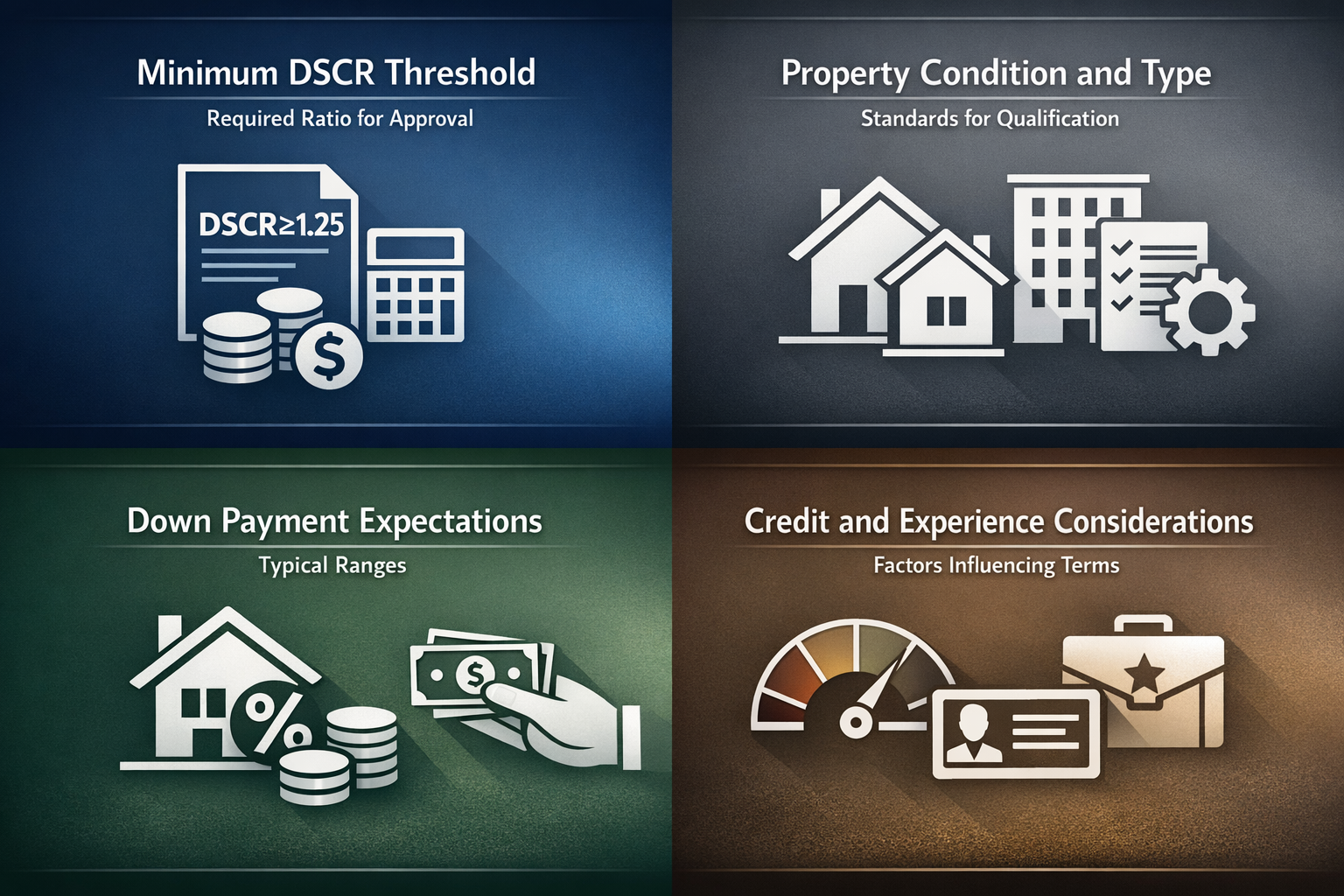
Minimum DSCR threshold: Most lenders require a DSCR of at least 1.0, meaning the property's income equals its debt payment. However, many prefer ratios of 1.20 or higher, providing a cushion for vacancies or unexpected expenses. Properties with strong, diversified income streams may qualify more easily at lower down payment levels.
Property condition and type: The property must typically meet minimum condition standards and fall within acceptable property types. While single-family homes and small multifamily properties often qualify easily, properties with unusual configurations or significant deferred maintenance might face additional scrutiny.
Down payment expectations: DSCR loans generally require larger down payments than owner-occupied mortgages, often ranging from 15% to 25% depending on the property's DSCR, condition, and the borrower's experience. Stronger cash flow performance might enable lower down payment requirements.
Credit and experience considerations: While personal income receives less emphasis, lenders still typically review credit scores and may consider your real estate investment experience. These factors can influence rate, terms, and maximum loan amounts.
Reserve requirements: Lenders often require cash reserves equivalent to several months of payments, providing a buffer for vacancy periods or unexpected expenses. The reserve requirement might increase for properties with less stable or more complex income structures.
Understanding these approval rules helps investors position their applications effectively and select properties that align with DSCR loan parameters. By targeting properties with strong, documentable income streams and maintaining appropriate reserves, you can improve your chances of smooth approval and favorable terms.
Strategic Considerations for Investors
Strategic considerations for investors exploring a dscr loan for properties with multiple income streams extend beyond simple qualification. These loans can shape your investment strategy and portfolio composition in meaningful ways.
First, consider how diverse income streams might improve your investment resilience. Properties generating revenue from multiple sources may prove less vulnerable to single-tenant vacancy or market disruptions affecting one income category. This diversification can justify premium purchase prices if the income stability improves your long-term returns and financing options.
Second, think about documentation systems early in your investment process. Establishing clear record-keeping for all income sources, from day one of ownership, simplifies future refinancing or portfolio expansion. Investors who treat ancillary income casually often struggle to verify these revenue streams when applying for financing, potentially leaving money on the table.
Third, evaluate whether the property improvements that generate ancillary income deliver sufficient returns to justify their cost. Adding laundry facilities, parking, or storage might increase your DSCR and property value, but only if the additional income exceeds the investment and ongoing maintenance costs. Calculate these returns carefully before committing capital to income-generating improvements.
Finally, consider your exit strategy. Properties with multiple income streams may appeal to a broader buyer pool, including other investors seeking cash flow and owner-occupants valuing the amenities. This flexibility might improve your eventual sale prospects, though it could also complicate valuation if buyers weight income sources differently than lenders do.
A dscr loan for properties with multiple income streams offers real estate investors a flexible financing tool that recognizes the full revenue potential of modern investment properties. By focusing on property cash flow rather than personal income documentation, these loans can simplify approval and enable portfolio expansion for active investors.
The key to success lies in understanding how lenders evaluate mixed-income properties, documenting all revenue streams thoroughly, and positioning your investments to meet DSCR thresholds with comfortable margins. While underwriting complexity might increase with diverse income sources, the strategic advantages often outweigh these challenges for investors with well-performing properties.
Whether you're acquiring your first rental property with ancillary income potential or expanding an established portfolio, DSCR loans provide a pathway to financing that aligns with investment performance. By leveraging rent plus ancillary income effectively and working with lenders experienced in these products, you can access capital that might otherwise remain out of reach through conventional mortgage channels.
As you evaluate your next investment opportunity, consider how multiple income streams might not only improve property returns but also strengthen your financing options. The right property with documented, stable income from diverse sources could open doors to growth that traditional financing models might keep closed.