Real estate investors targeting rental properties in flood-prone regions face a unique set of challenges that go beyond the typical underwriting process. A DSCR loan for properties in flood zones can offer flexible financing, but it also introduces additional costs and requirements that directly affect your bottom line. Understanding these factors upfront can mean the difference between a profitable deal and one that drains your cash flow month after month.
Flood insurance premiums, stricter lender requirements, and risk adjustments all play a role in determining whether your investment property will qualify for favorable loan terms. In this article, we'll break down the key considerations that investors need to account for when pursuing financing in flood zones, helping you make informed decisions that protect your portfolio and maximize returns.
What Investors Ask About Flood Zone Financing
When evaluating a DSCR loan for properties in flood zones, investors often face questions that traditional mortgage guides don't address. Flood zone financing isn't just about getting approved; it's about understanding how additional costs and requirements reshape your investment strategy.
Q: Do DSCR lenders always require flood insurance for properties in designated flood zones?
Yes, flood insurance is typically mandatory for properties located in flood zones, regardless of the lender. This requirement applies to DSCR loans just as it does to conventional financing. Lenders need assurance that the collateral is protected against flood damage, and failure to maintain proper coverage could jeopardize your loan terms or even trigger default clauses. For investors, this means incorporating flood insurance into your cash flow projections from day one, not as an afterthought.
Q: How much does flood insurance typically add to monthly carrying costs?
Flood insurance in high-risk zones can add anywhere from approximately $2,000 to $5,000 annually to your property expenses. That translates to roughly $165 to $415 per month in additional costs. These premiums vary based on the property's elevation, flood zone designation, and coverage limits. For DSCR loan qualification, these costs are part of your PITIA calculation, which means higher insurance costs can directly impact the debt service coverage ratio you need to meet lender requirements.
Hidden Insurance Costs That Impact Cash Flow
Hidden insurance costs that impact cash flow are often underestimated by investors who are new to flood zone properties. Beyond the obvious premium, there are several layers of expense that can catch you off guard if you're not prepared.
Replacement Cost Value requirements: Many lenders require insurance policies that cover Replacement Cost Value rather than Actual Cash Value. This ensures the property can be rebuilt to its original condition without depreciation adjustments. RCV policies typically carry higher premiums but provide better protection and satisfy lender requirements for DSCR loans in flood-prone areas.
Annual premium increases: Flood insurance rates can increase year over year, especially in areas where FEMA updates flood maps or risk assessments. These increases might not be predictable at the time of purchase, so investors should build a buffer into their cash flow projections to accommodate potential premium hikes over the holding period.
Separate deductibles and coverage limits: Flood insurance operates separately from standard property insurance, with its own deductibles and coverage caps. Investors may need to purchase additional coverage beyond the base policy to fully protect their investment, adding another layer of cost that affects overall profitability.
How Flood Zones Affect Your DSCR Ratio
How flood zones affect your DSCR ratio is a critical calculation that determines whether your deal qualifies for financing. The debt service coverage ratio measures your property's net operating income against its debt obligations, and higher insurance costs in flood zones can tip that balance unfavorably.
Higher PITIA reduces net cash flow: Principal, interest, taxes, insurance, and association dues all factor into your monthly debt service. When flood insurance adds several hundred dollars to your PITIA, it reduces the net income available to cover the loan payment, which can lower your DSCR and make qualification more challenging.
Lender adjustments for high-risk zones: Some lenders may require a higher minimum DSCR for properties in flood zones to offset perceived risk. Where a standard rental property might qualify with a 1.0 DSCR, a flood zone property could require 1.15 or higher, depending on the lender's risk appetite and underwriting guidelines.
Rent projections must account for market perception: Properties in flood zones may experience longer vacancy periods or require lower rents to attract tenants who are concerned about flood risk. This can further compress your net operating income, making it harder to achieve the DSCR threshold that lenders require for approval.
Lender Requirements for Flood Zone Properties
Lender requirements for flood zone properties go beyond standard documentation and can vary significantly depending on the institution and the specific flood risk profile of your investment. Understanding these lender requirements upfront helps you avoid delays and surprises during underwriting.
Flood zone certification and elevation certificates: Lenders typically require a flood zone certification to determine whether the property is located in a Special Flood Hazard Area. In some cases, an elevation certificate may also be required to assess the property's risk level and determine appropriate insurance coverage and premium costs.
Proof of adequate coverage: Before closing, you'll need to provide proof that flood insurance is in place and meets the lender's minimum coverage requirements. This often includes ensuring that the policy covers at least the loan amount or the property's replacement cost, whichever the lender deems necessary for risk mitigation.
Escrow for insurance premiums: Many lenders will require that flood insurance premiums be escrowed along with property taxes and standard insurance. This ensures that coverage remains active throughout the loan term and protects the lender's collateral, but it also increases your monthly payment and affects your cash-on-cash return calculations.
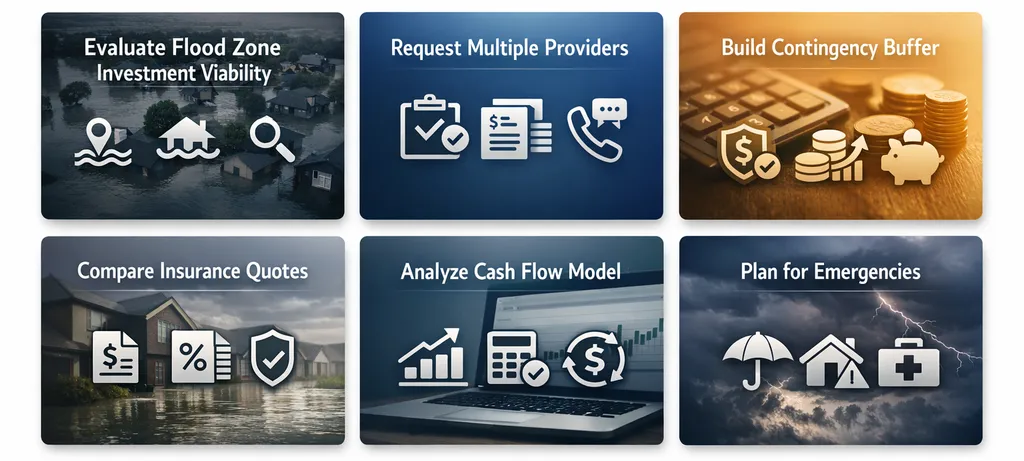
5 Steps to Evaluate Flood Zone Investment Viability
Evaluating flood zone investment viability requires a methodical approach that goes beyond the standard deal analysis. Here's a step-by-step process to help you determine whether a property in a flood zone makes financial sense for your portfolio.
Obtain a preliminary flood zone determination: Before making an offer, get a flood zone determination report to understand the property's designation. This will tell you whether the property is in a high-risk area and give you an early indication of potential insurance costs.
Request insurance quotes from multiple providers: Contact several flood insurance providers to get accurate premium estimates. Quotes can vary significantly, and shopping around can save you thousands of dollars annually, directly improving your cash flow and DSCR.
Calculate total monthly PITIA with flood insurance included: Add the estimated flood insurance premium to your principal, interest, taxes, and standard insurance costs. This gives you a complete picture of your monthly debt service and allows you to calculate an accurate DSCR based on your projected rental income.
Assess market rental demand in the flood zone: Research comparable rental properties in the same flood zone to gauge demand and achievable rents. Properties in flood zones may face tenant resistance, so it's important to confirm that your rent projections are realistic and account for potential vacancy periods.
Build a contingency buffer into your cash flow model: Insurance premiums can increase, and flood zones can be remapped, potentially raising costs further. Include a contingency buffer of at least 10 to 15 percent in your expense projections to protect against unexpected cost escalations over the life of your investment.
Risk Adjustments and Rate Implications
Risk adjustments and rate implications for flood zone properties can affect the interest rate and terms you receive on a DSCR loan. Lenders price risk into their loan products, and properties in flood-prone areas may be subject to adjustments that increase your cost of capital.
Interest rate premiums for higher risk: Some lenders may add a premium to the interest rate for properties located in high-risk flood zones. This adjustment compensates the lender for the increased likelihood of damage and potential loss, but it also raises your monthly payment and reduces your overall return on investment.
Loan-to-value restrictions: Lenders might impose lower maximum loan-to-value ratios for flood zone properties, requiring you to bring more cash to closing. A lower LTV reduces the lender's exposure but increases your capital requirement and can impact your leverage strategy.
Shorter amortization or term limits: In some cases, lenders may offer shorter loan terms or require more frequent policy reviews for properties in flood zones. These adjustments can lead to higher monthly payments and require more active management of your financing, but they also reflect the lender's desire to minimize long-term exposure to flood risk.
Securing a DSCR loan for properties in flood zones is entirely possible, but it requires careful planning and a realistic assessment of the costs involved. Flood insurance premiums can add significant expense to your monthly carrying costs, and lenders may impose stricter requirements or risk adjustments that affect your loan terms and interest rates. By accounting for these factors upfront, you can make informed decisions that protect your investment and ensure your property's cash flow remains strong.
Real estate investors who take the time to understand insurance costs, lender requirements, and risk adjustments will be better positioned to negotiate favorable terms and avoid surprises down the road. Whether you're expanding into new markets or adding flood zone properties to your existing portfolio, a thorough analysis of the financial implications will help you maximize returns while managing risk effectively. With the right preparation, flood zone investing can still offer profitable opportunities for those willing to do the homework.