Real estate investors often face situations where their original loan terms might not align with current market conditions or property performance. Understanding your dscr loan extension options becomes crucial when you need additional time to optimize your investment strategy or navigate unexpected challenges. DSCR loans typically offer more flexibility than traditional mortgages, but knowing how to leverage this flexibility can make the difference between a successful deal and a missed opportunity.
Whether you're dealing with a property that needs more time to reach optimal cash flow or market conditions that have shifted since your original loan approval, having a clear understanding of your extension and modification options empowers you to make strategic decisions. The key lies in understanding what lenders typically offer and how to position your request for the best possible outcome.
Essential Preparation Steps Before Requesting Extensions
Essential preparation steps before requesting extensions can significantly improve your chances of approval and favorable terms. Proper documentation and financial positioning demonstrate your commitment to the investment and your ability to service the extended loan.
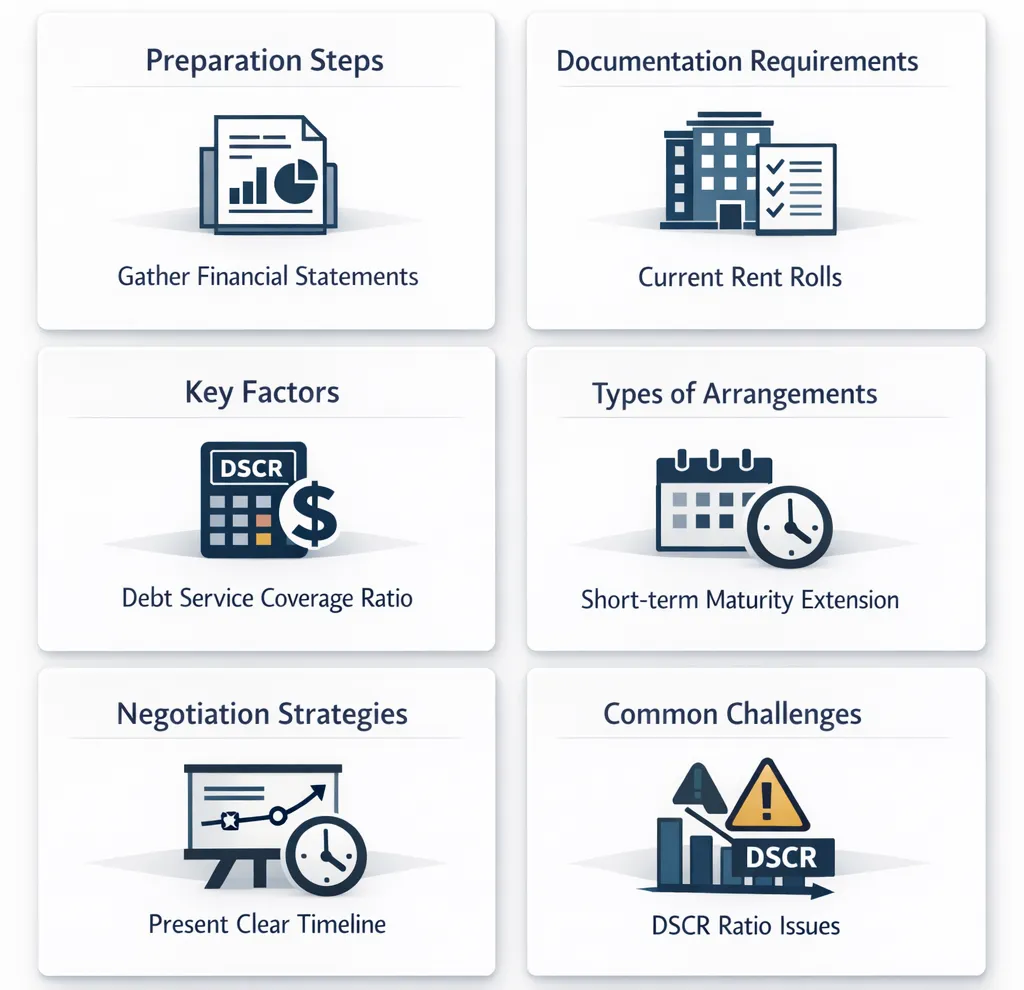
Gather comprehensive property financial statements showing rental income, expenses, and current DSCR calculations to demonstrate the property's performance potential
Prepare updated market analysis and comparable rental data to justify your extension request and show the property's continued viability
Document any property improvements or renovations that have increased the asset's value or rental income potential since the original loan
Compile your personal financial statements and credit reports to show continued financial stability and investment capacity
Documentation Requirements for Loan Modification Requests
Documentation requirements for loan modification requests vary by lender, but comprehensive preparation typically strengthens your position. Having organized financial records ready can expedite the review process and demonstrate your professionalism as an investor.
Current rent rolls and lease agreements showing stable tenant relationships and income consistency
Property tax assessments and insurance documentation reflecting current coverage and asset value
Bank statements demonstrating cash reserves and ability to continue servicing debt during the extension period
Written business plan outlining your strategy for the extended loan term and projected property performance improvements
Key Factors Lenders Consider for Extension Approval
Key factors lenders consider for extension approval often center around the property's current and projected performance. Understanding these evaluation criteria helps you present your request in the most favorable light possible.
Current debt service coverage ratio and trends showing the property's ability to generate sufficient cash flow
Loan-to-value ratio based on current market conditions and any property improvements that have increased asset value
Your track record as a borrower, including payment history and overall portfolio performance with the lender
Market conditions in the property's location and rental demand trends that support continued investment viability
Types of Extension Arrangements Available to Investors
Types of extension arrangements available to investors can vary significantly based on your specific situation and lender policies. Understanding these options helps you choose the most appropriate structure for your investment goals.
Short-term maturity extension typically ranging from six months to two years, allowing time for property performance improvement or market conditions to stabilize
Loan modification with adjusted terms such as interest rate changes, amortization schedule adjustments, or payment restructuring to better align with current cash flow
Refinance extension where the lender agrees to extend the current loan while you pursue long-term refinancing options with better terms
Performance-based extensions that tie extension approval to specific property milestones such as occupancy rates or rental income targets
Negotiation Strategies for Favorable Extension Terms
Negotiation strategies for favorable extension terms require understanding both your position as a borrower and the lender's risk assessment priorities. Effective negotiation often involves presenting multiple scenarios and demonstrating flexibility while protecting your core interests.
Present a clear timeline with specific milestones showing how you'll use the extension period to improve the property's performance or market position
Offer additional collateral or personal guarantees if needed to reduce lender risk and improve your negotiating position
Propose graduated payment increases or performance bonuses that align lender interests with your property's improving cash flow
Research current market rates and terms to ensure your extension request reflects competitive market conditions
Common Challenges and How to Address Them
Common challenges and how to address them can help you anticipate potential obstacles in the extension process. Being proactive about these issues often leads to smoother negotiations and better outcomes.
DSCR ratio below lender requirements can be addressed by demonstrating concrete plans for rental increases, expense reductions, or property improvements that will improve cash flow
Changed market conditions since origination may require updated appraisals, market studies, or revised business plans that reflect current realities
Lender policy changes or portfolio adjustments might necessitate exploring alternative lenders or restructuring your request to meet new criteria
Personal financial changes affecting your borrower profile can be mitigated by focusing on property performance and providing additional documentation of your investment experience
Strategic Takeaways for Successful Extensions
Strategic takeaways for successful extensions center around preparation, timing, and relationship management. The most successful investors approach dscr loan extension options as part of their broader investment strategy rather than emergency measures. Building strong relationships with lenders, maintaining excellent documentation practices, and understanding market dynamics positions you for favorable outcomes when extensions become necessary. Remember that lenders typically prefer working with existing borrowers who demonstrate professionalism and clear communication, making your extension request part of an ongoing business relationship rather than a one-time transaction.
Successfully navigating dscr loan extension options requires strategic planning, thorough preparation, and clear communication with your lender. By understanding the various types of extensions available and positioning your request professionally, you can often secure the additional time needed to optimize your investment returns.
The key to successful loan modifications and extensions lies in demonstrating that your request serves both your interests and the lender's risk management objectives. Whether you need a simple maturity extension or more complex loan modification terms, approaching the process with comprehensive documentation and a clear business rationale typically yields the best results for serious real estate investors.