Refinancing rental properties can be one of the most powerful tools in your investment toolkit, but only if you choose the right strategy. When you're evaluating a DSCR loan cash out vs rate term refinance, you're essentially deciding between two distinct paths: extracting equity to fuel new investments or optimizing your existing loan terms to improve cash flow.
For real estate investors managing rental portfolios, this decision directly impacts your ability to scale, your monthly obligations, and your overall return on investment. Rate-and-term refinancing focuses on securing better loan conditions such as lower interest rates or adjusting your loan duration without tapping into property equity. Meanwhile, cash-out refinancing allows you to convert built-up equity into liquid capital, giving you funds to acquire additional properties or make strategic improvements.
The choice between these two refinancing approaches isn't always straightforward. Market conditions, your portfolio goals, and your current financial position all play a role. What works for an investor focused on stabilizing cash flow might not suit someone aggressively expanding their holdings. Let's break down the key differences, benefits, and strategic considerations to help you make an informed decision.
Three Essential Tips for Evaluating Rate-and-Term Refinancing
Rate-and-term refinancing can be a smart move when you're looking to optimize your existing loan structure without pulling equity out of your properties. This approach typically offers lower interest rates compared to cash-out options and might help reduce your monthly payments or shorten your loan term.
Focus on improving your debt service coverage ratio. When you secure a lower interest rate through rate-and-term refinancing, your monthly payments typically decrease, which can improve your property's DSCR. This stronger ratio not only improves cash flow but may also position you better for future financing opportunities on additional properties.
Consider the breakeven timeline carefully. While rate-and-term refinancing often comes with closing costs, these expenses are usually lower than cash-out transactions. Calculate how long it will take for your monthly savings to offset these upfront costs, ensuring the refinance makes financial sense for your investment timeline.
Lock in favorable terms during market dips. Interest rate environments change, and rate-and-term refinancing allows you to capitalize on lower rates without changing your loan balance. This strategy can be particularly valuable when market conditions shift in your favor but you're not ready to extract equity for new investments.
Three Key Advantages of Cash-Out Refinancing for Investors
Cash-out refinancing converts property equity into usable capital, offering investors liquidity that can be strategically deployed across their portfolio. While this option typically comes with higher interest rates than rate-and-term refinancing, the access to capital can outweigh the additional cost for growth-focused investors.
Unlock capital for portfolio expansion. By tapping into accumulated equity, you can generate substantial funds for down payments on additional rental properties. This leverage allows you to scale your portfolio faster than waiting to save capital from other sources, potentially increasing your overall return on investment across multiple properties.
Fund value-add improvements strategically. Cash extracted through refinancing can be reinvested into property upgrades that increase rental income or property value. Whether you're renovating units to command higher rents or adding amenities that attract quality tenants, this capital gives you flexibility to enhance your assets without depleting operational reserves.
Consolidate higher-cost debt efficiently. If you're carrying other financing with less favorable terms, cash-out refinancing might provide an opportunity to consolidate debt at a lower overall cost. This strategy can simplify your financial structure while potentially reducing your total monthly obligations across your investment portfolio.
Critical Tips for Assessing Equity Extraction Differences
The fundamental distinction in a DSCR loan cash out vs rate term refinance comes down to equity extraction. Understanding how each approach affects your loan-to-value ratio and available capital helps you align refinancing decisions with your broader investment strategy.
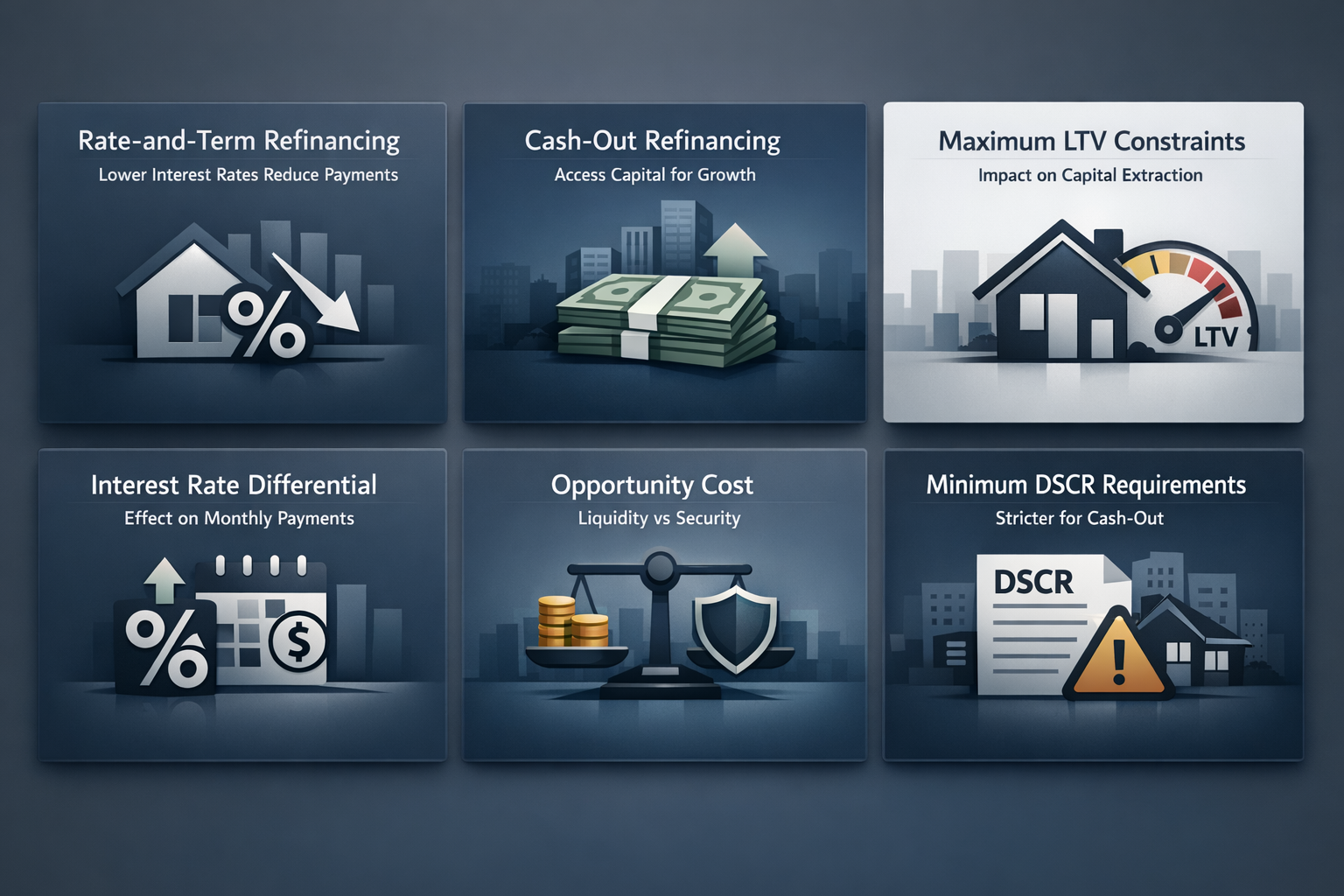
Evaluate your maximum LTV constraints carefully. Cash-out refinances often come with lower maximum LTV ratios compared to rate term refinance options, which means lenders may require you to maintain more equity in the property. This limitation can affect how much capital you can actually extract and should factor into your planning for future investments or improvements.
Account for the interest rate differential. Lenders typically price cash-out refinances at higher interest rates than rate-and-term transactions because extracting equity introduces additional risk. This rate difference directly impacts your monthly payment and long-term cost, so calculate whether the equity you're extracting justifies the increased expense over the life of the loan.
Measure opportunity cost against cash flow impact. While rate-and-term refinancing preserves your equity position, it might mean missing opportunities to deploy capital into higher-returning investments. Conversely, extracting equity improves liquidity but increases your leverage and monthly obligations, so weigh the potential returns from redeployed capital against the security of maintaining lower debt levels.
How Payment Impact Differs Between Refinancing Strategies
Your monthly payment obligations shift differently depending on which refinancing path you choose. These payment differences have immediate implications for your cash flow, DSCR calculations, and ability to service debt across your portfolio.
Rate-and-term refinancing typically reduces monthly payments. When you refinance to a lower interest rate without increasing your loan balance, your principal and interest payments usually decrease. This reduction can significantly improve your property's cash flow and strengthen your debt service coverage ratio, making the investment more profitable on a monthly basis.
Cash-out refinancing usually increases payment obligations. Because you're borrowing a larger amount when you extract equity, your new loan balance will be higher than your previous one. Even if you secure a similar or slightly better interest rate, the increased principal typically results in higher monthly payments, which can compress your cash flow margins.
Payment changes affect your refinancing capacity on other properties. Lenders evaluate your overall debt service when considering new loans, so increased payments from cash-out refinancing might temporarily limit your ability to qualify for additional financing. On the other hand, reduced payments from rate-and-term refinancing may improve your borrowing capacity for future acquisitions.
Strategic Investor Approaches to Refinancing Decisions
Choosing between DSCR loan cash out vs rate term refinance depends heavily on your current investment phase, market conditions, and portfolio objectives. Different strategies serve different goals, and aligning your refinancing approach with your broader investment plan is essential.
Growth-phase investors often favor cash-out refinancing. If you're actively building your portfolio and have identified strong acquisition opportunities, extracting equity provides the capital needed to move quickly on deals. The higher payments may be justified by the returns generated from deploying that capital into additional properties or value-add projects.
Stabilization-focused investors typically prefer rate-and-term refinancing. Once you've built a portfolio to your target size, optimizing cash flow becomes paramount. Rate-and-term refinancing allows you to reduce expenses, improve your DSCR across properties, and strengthen the financial foundation of your existing holdings without increasing leverage.
Market-timing investors adjust strategy based on conditions. During periods of rising property values and strong rental demand, cash-out refinancing can capture appreciation and redeploy it strategically. Conversely, when interest rates drop or market uncertainty increases, rate-and-term refinancing helps lock in favorable terms and preserve equity as a buffer against potential downturns.
Lending Criteria and Qualification Considerations
DSCR loans evaluate your property's income rather than your personal income, but the specific requirements can vary between cash-out and rate-and-term refinancing. Understanding these differences helps you prepare documentation and set realistic expectations.
Minimum DSCR requirements may differ by refinance type. Some lenders apply stricter DSCR thresholds for cash-out refinancing compared to rate-and-term transactions. This difference reflects the increased risk associated with extracting equity, and it might affect whether your property qualifies or what interest rate you'll receive.
Documentation requirements are typically similar but not identical. Both refinancing types require property income documentation, but cash-out transactions might involve additional scrutiny of how you plan to use the extracted funds. Being prepared to articulate your investment goals can streamline the underwriting process.
Loan-to-value limits create practical constraints. Cash-out refinancing typically caps at lower LTV ratios than rate-and-term options, often in the range that requires maintaining more equity in the property. This limitation directly impacts how much capital you can access and should inform your decision about which refinancing approach fits your needs.
Deciding between a DSCR loan cash out vs rate term refinance comes down to your specific investment objectives and current portfolio position. Rate-and-term refinancing excels when your priority is optimizing existing loan conditions, reducing monthly obligations, and strengthening cash flow without increasing leverage. This approach typically offers lower rates and preserves your equity position, making it ideal for investors focused on stabilization and long-term hold strategies.
Cash-out refinancing, meanwhile, serves investors who need liquidity for growth. By converting accumulated equity into deployable capital, this strategy enables portfolio expansion, value-add improvements, or strategic debt consolidation. The trade-off is typically higher interest rates and increased monthly payments, but for investors with strong opportunities on the horizon, access to capital can generate returns that justify these costs.
Neither approach is universally superior. Your choice should reflect where you are in your investment journey, current market conditions, and your specific financial goals. Consider running detailed projections that account for payment impacts, interest rate differences, and the potential returns from any capital you extract. By carefully evaluating both options against your investment strategy, you can make a refinancing decision that truly supports your long-term success as a real estate investor.