DSCR Loan Approval for Mixed Use Property: Your Complete Guide
Securing DSCR loan approval for mixed use property can unlock significant opportunities for real estate investors looking to diversify their portfolios. These unique properties, which combine residential and commercial elements, offer multiple income streams but require specialized financing approaches. Mixed use properties present distinct challenges in the underwriting process, particularly around income allocation and meeting lender requirements for the commercial residential split. Understanding these nuances is crucial for investors who want to leverage DSCR loans effectively for properties that generate revenue from both residential tenants and commercial businesses.
Essential Pre-Application Steps for Mixed Use DSCR Loans
Preparing for DSCR loan approval on mixed use properties requires careful groundwork before you even submit your application. These preliminary steps can significantly impact your approval chances and loan terms.
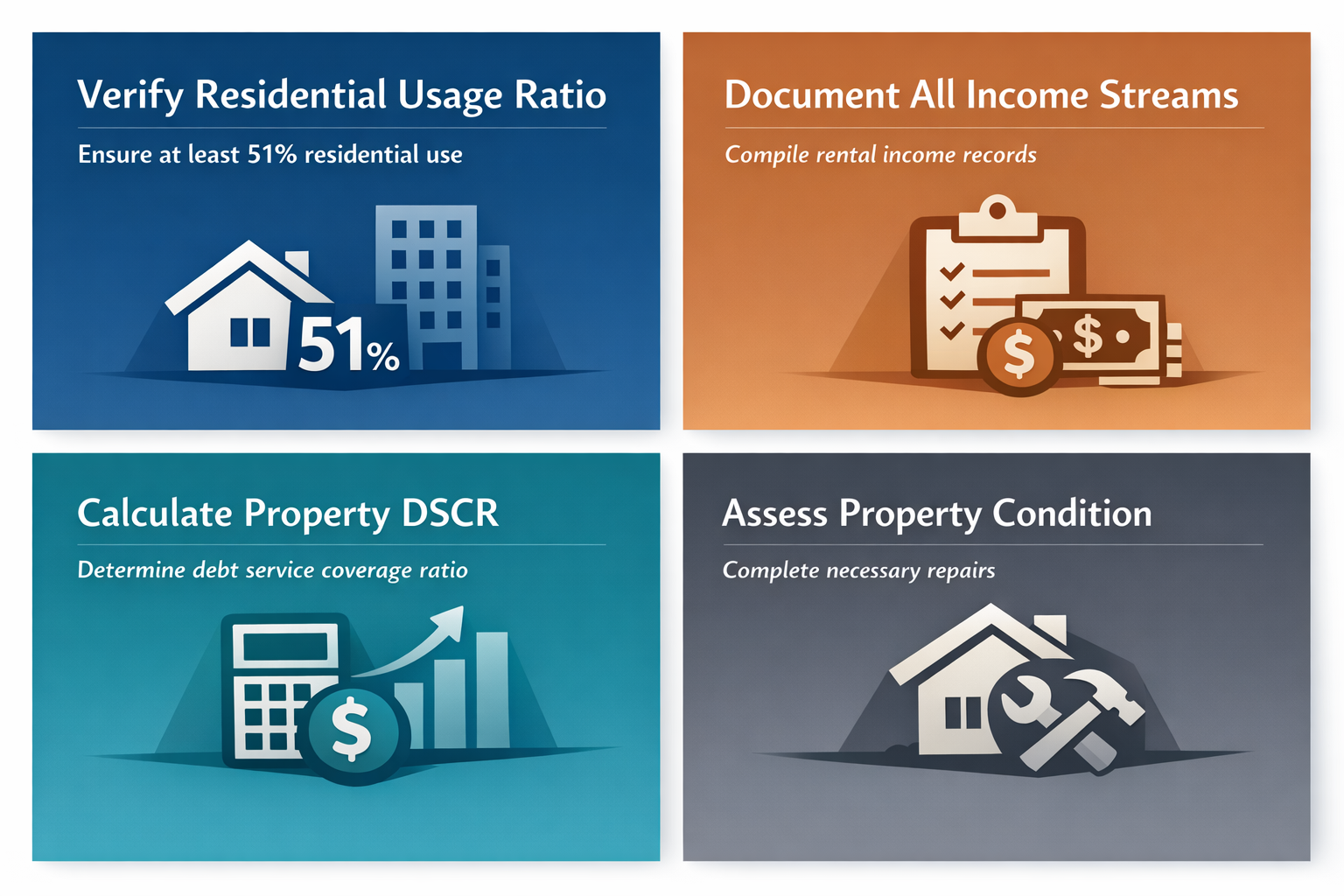
Verify Residential Usage Ratio: Ensure your property meets the typical requirement of at least 51% residential use, as lenders generally require mixed use properties to be primarily residential for DSCR loan qualification.
Document All Income Streams: Compile comprehensive rental income records from both residential and commercial tenants, including current leases, rental rolls, and historical occupancy rates to demonstrate consistent cash flow.
Calculate Property DSCR: Determine your debt service coverage ratio using the property's net operating income, ensuring it meets or exceeds the typical minimum requirement of 1.00 to 1.25 that lenders expect for mixed use properties.
Assess Property Condition: Complete any necessary repairs or improvements that might affect the property's income potential or appraised value, as mixed use properties often require higher standards due to their commercial components.
Understanding Underwriting Rules for Commercial Residential Properties
The underwriting process for mixed use properties involves specific rules that differ from traditional residential or purely commercial loans. Lenders evaluate these properties through a unique lens that considers both components.
Primary Use Classification: Lenders typically require that residential use comprises the majority of the property, with commercial space serving as the secondary component to qualify for DSCR loan programs designed for mixed use assets.
Income Stability Assessment: Underwriters examine the reliability of both residential and commercial income streams, often giving preference to properties with established, long-term commercial tenants and stable residential occupancy histories.
Property Type Evaluation: The specific mix of residential units and commercial spaces affects loan terms, with some lenders preferring certain combinations such as ground-floor retail with upper-level apartments over more complex mixed use configurations.
Market Analysis Requirements: Lenders may require detailed market studies showing demand for both the residential and commercial components in your specific location, demonstrating the property's long-term viability.
Strategic Income Allocation Methods for Optimal Approval
Proper income allocation between residential and commercial components is critical for DSCR loan approval and can significantly impact your loan terms and approval likelihood.
Separate Income Documentation: Maintain distinct records for residential and commercial income streams, providing clear documentation that allows lenders to evaluate each component's contribution to the overall debt service coverage ratio.
Weighted Income Analysis: Present income allocation that reflects the actual square footage and market value contribution of each component, ensuring the analysis aligns with the property's physical and economic reality.
Vacancy Factor Considerations: Apply appropriate vacancy assumptions to each component separately, as residential and commercial spaces may have different typical vacancy rates in your market that affect projected income calculations.
Lease Structure Optimization: Structure lease agreements to demonstrate stable, predictable income streams that support the DSCR requirements, potentially including escalation clauses or longer-term commitments where beneficial.
Key Lender Requirements and Qualification Criteria
Mixed use property DSCR loans come with specific lender requirements that investors must understand and meet to secure approval successfully.
Loan Size Flexibility: Many lenders offer DSCR loans for mixed use properties up to substantial amounts, potentially reaching several million dollars, which allows investors to pursue larger, more complex mixed use opportunities.
Property Condition Standards: Lenders typically require mixed use properties to meet higher condition standards due to their commercial components, often requiring current certificates of occupancy and compliance with commercial building codes.
Experience Requirements: Some lenders prefer borrowers with previous experience managing mixed use or commercial properties, as these assets require more sophisticated property management skills than purely residential investments.
Reserve Requirements: Expect higher reserve requirements compared to residential-only properties, as mixed use assets may require larger capital expenditures for both residential maintenance and commercial tenant improvements.
Common Approval Challenges and Solutions
Understanding potential obstacles in the DSCR loan approval process for mixed use properties helps investors prepare effective solutions and improve their success rates.
Appraisal Complexity: Mixed use properties can be challenging to appraise due to limited comparable sales, which may require working with specialized commercial appraisers familiar with mixed use assets in your market.
Income Verification Difficulties: Commercial tenants may have more complex lease structures than residential tenants, requiring additional documentation and potentially longer processing times for income verification.
Zoning and Compliance Issues: Ensure the property's current use aligns with local zoning requirements and that all necessary permits are in place, as lenders will scrutinize compliance more thoroughly for mixed use properties.
Market Perception Risks: Some lenders may view mixed use properties as higher risk due to their complexity, making it important to work with lenders experienced in this property type and to present comprehensive market analysis supporting the investment.
Successfully navigating DSCR loan approval for mixed use property requires thorough preparation, strategic income documentation, and working with experienced lenders who understand the unique aspects of these investments. By following the essential steps outlined above and addressing potential challenges proactively, investors can position themselves for approval and unlock the significant opportunities that mixed use properties offer. The key lies in demonstrating the property's income stability, meeting residential usage requirements, and presenting a clear picture of how both components contribute to the overall investment performance. With proper preparation and the right financing partner, mixed use properties can become valuable additions to any real estate investment portfolio.