5 Powerful DSCR Cash-Out Refinance Strategies for BRRRR
August 7, 2026
•
9 min read
How DSCR Cash-Out Refinance Transforms BRRRR Method Investing
The BRRRR method has become a cornerstone strategy for real estate investors looking to scale their portfolios without constantly injecting fresh capital. Buy, Rehab, Rent, Refinance, Repeat sounds straightforward on paper, but the refinance step often trips up investors who've exhausted their traditional mortgage options or can't document the income lenders typically demand.
That's where DSCR cash-out refinance for BRRRR method investors changes the game entirely. Instead of relying on your tax returns, W-2s, or personal employment history, this financing approach evaluates your property's ability to generate rental income. Once you've rehabbed a property and placed a tenant, you can pull out equity based on the new appraised value and the rent the property collects. The cash you free up goes straight into your next deal, keeping the cycle spinning.
For investors running multiple projects or those whose personal financials don't reflect their real estate success, this refinancing strategy offers a clear path forward. It separates your portfolio's performance from your personal income documentation, giving you the liquidity and flexibility to grow without selling assets or waiting for conventional loan approval. Let's break down exactly how this works and why it matters for your investment strategy.
Why DSCR Loans Work Perfectly for BRRRR Investors
Why DSCR loans work perfectly for BRRRR investors comes down to alignment between how the loan qualifies you and how the BRRRR method actually operates. Traditional refinancing asks for proof of personal income, stable employment, and a debt-to-income ratio that fits within narrow guidelines. But when you're flipping properties into rentals, your personal tax returns might not capture the cash flow your portfolio generates, especially if you're using depreciation and other tax strategies.
DSCR stands for Debt Service Coverage Ratio, and it measures whether a property's rental income can cover its mortgage payment. Lenders calculate this by dividing the monthly rental income by the monthly debt obligation. If the ratio hits the lender's threshold, typically around 1.0 or higher, the property qualifies. Your personal salary, bonuses, or side business income don't enter the equation.
This structure fits the BRRRR model like a glove. After you've rehabbed a property and secured a tenant, the rental income becomes your qualification tool. The lender orders an appraisal to confirm the new value post-rehab, then evaluates the lease agreement or market rent to determine cash flow. Once those numbers check out, you can access the equity you've created through renovation without touching your personal financial profile.
Rental income replaces personal income: Your lease agreements and market rent comparables become the primary qualification criteria, letting you refinance properties even when your taxable income is low or offset by deductions.
Portfolio scalability without documentation limits: Since each property qualifies on its own merit, you can layer multiple DSCR refinances across your portfolio without hitting the debt-to-income caps that traditional loans impose.
Faster closing timelines: Without the need to gather years of tax returns, pay stubs, and employment verification letters, the underwriting process tends to move more quickly, helping you recycle capital into your next project sooner.
How the Cash-Out Refinance Unlocks Equity in Rehabbed Rentals
How the cash-out refinance unlocks equity in rehabbed rentals is the financial lever that makes the BRRRR method repeatable. When you buy a distressed property, invest in renovations, and increase its market value, you've created equity. But that equity sits locked in the property until you either sell or refinance. Selling defeats the purpose of building a rental portfolio, so refinancing becomes the logical exit from your initial acquisition financing.
A DSCR cash-out refinance lets you tap into that newly created value. Once the property is stabilized with a tenant in place and rental income flowing, a lender will order a new appraisal reflecting the post-rehab condition. That appraisal often comes in significantly higher than your purchase price plus rehab costs, especially if you bought below market and executed the renovation well. The lender then offers a loan based on a percentage of that appraised value, commonly up to 75% to 80% loan-to-value depending on the loan program and property type.
The cash you receive at closing can cover several strategic needs. Many investors use it to pay off the original acquisition loan, whether that was a hard money loan, private financing, or a bridge loan with higher rates. The difference between the new loan amount and what you owed becomes cash in hand, which you can deploy toward your next purchase, another rehab, or reserves for future projects. This process transforms illiquid equity into working capital without requiring you to liquidate the asset itself.
Pay off high-cost acquisition financing: Hard money loans and bridge loans often carry rates in the double digits with short terms, so refinancing into a DSCR loan with a lower rate and longer amortization improves your monthly cash flow immediately.
Fund additional acquisitions: The cash you pull out can serve as down payments on new BRRRR deals, letting you acquire more properties without bringing new money from outside sources.
Build cash reserves: Setting aside liquidity for vacancy, maintenance, or market downturns strengthens your position and reduces the risk of distress sales if a property sits empty temporarily.
Refinancing Rehabbed Rental Properties Using Rental Income Alone
Refinancing rehabbed rental properties using rental income alone is the defining advantage of the DSCR cash-out refinance structure. Unlike conventional mortgage programs that scrutinize your personal tax returns, employment letters, and pay stubs, DSCR lenders focus exclusively on the property's income-generating ability. This shift in underwriting criteria opens doors for investors whose personal finances are structured for tax efficiency rather than loan approval.
When you apply for a DSCR cash-out refinance, the lender will request a current lease agreement showing the monthly rent, or they'll order a rent schedule based on comparable properties in the area if the property is newly leased. They'll also require an appraisal to establish the property's current market value after your renovations. The DSCR calculation divides the gross monthly rent by the proposed monthly mortgage payment, including principal, interest, taxes, insurance, and any association fees. If that ratio meets the lender's minimum, typically 1.0 or above, the loan moves forward.
This approach benefits BRRRR investors in several ways. First, it removes the burden of proving personal income, which can be especially challenging if you've left a W-2 job to invest full-time or if your income fluctuates with deal flow. Second, it treats each property as an independent business unit, so you're not penalized for owning multiple properties the way you might be under conventional debt-to-income calculations. Third, it rewards strong property performance, so investors who select markets carefully and rehab intelligently see faster approvals and better terms.
No tax return requirements: You won't need to provide two years of personal or business tax returns, eliminating the documentation headache and the waiting period after filing.
Self-employment friendly: Full-time investors, freelancers, and business owners who write off expenses can qualify without the income verification challenges that traditional lenders impose.
Property performance drives approval: The quality of your tenant, the strength of your lease, and the market rent levels become the key factors, aligning lender interests with your investment strategy.
Qualifying for a DSCR Cash-Out Refinance: What Lenders Evaluate
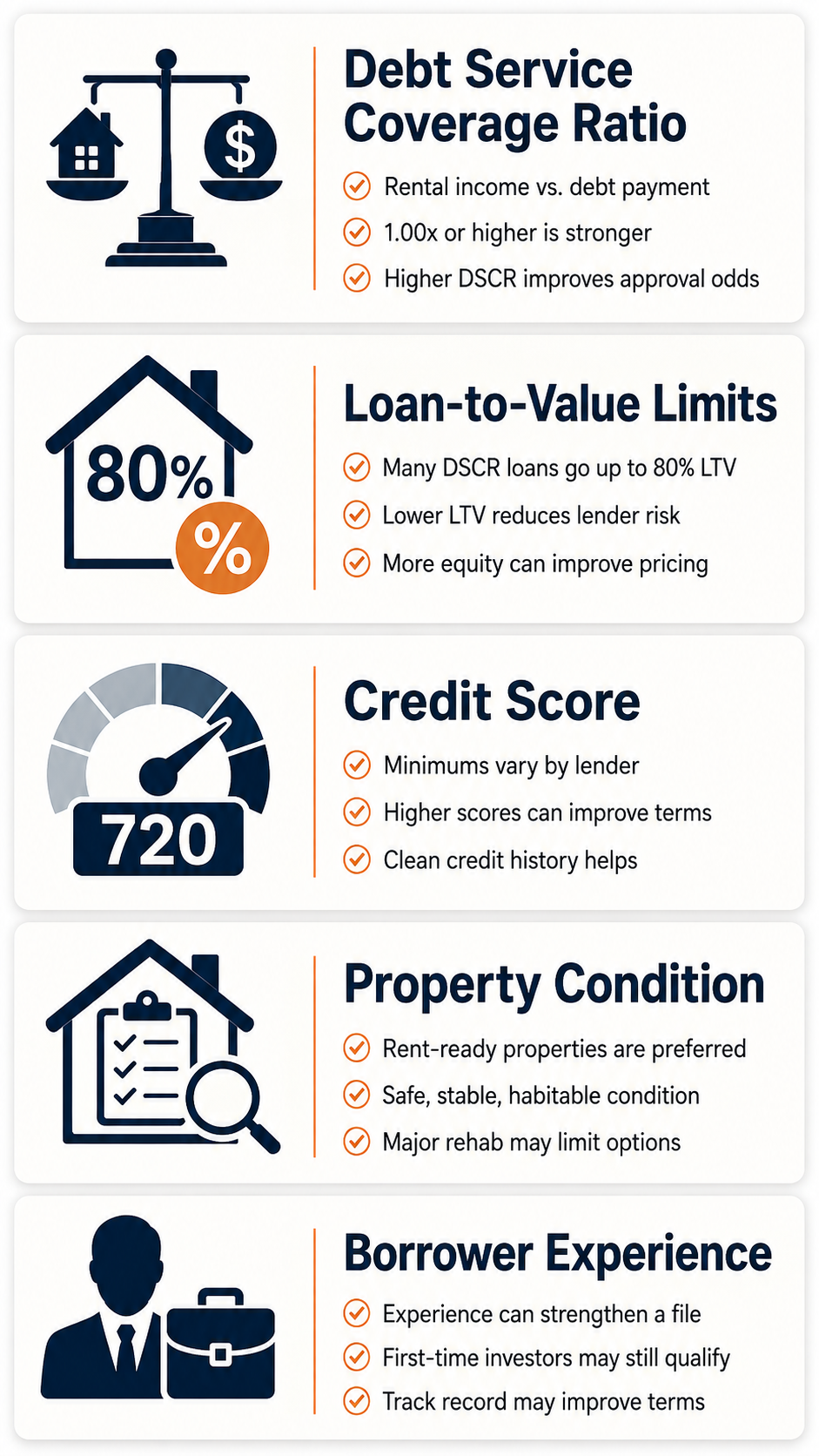
Qualifying for a DSCR cash-out refinance involves meeting specific property and borrower criteria that differ from traditional mortgage underwriting. While personal income and employment don't dominate the conversation, lenders still assess several key factors to ensure the loan performs well and the property supports the debt. Understanding these evaluation points helps you prepare your property and documentation before you apply.
Lenders typically look at the following areas during the qualification process:
Debt Service Coverage Ratio calculation: The lender divides the property's gross monthly rent by the total monthly mortgage payment to determine the DSCR. Most programs require a ratio of at least 1.0, meaning the rent covers the debt service exactly. Some lenders prefer 1.1 or higher to provide a cushion for vacancies and maintenance. Higher ratios can sometimes unlock better interest rates or higher loan-to-value limits.
Loan-to-value limits and appraisal results: The appraised value of your rehabbed property determines how much cash you can pull out. Lenders typically cap cash-out refinances at 75% to 80% LTV, though some programs go higher depending on property type, location, and borrower experience. The appraisal must reflect the current condition of the property, including all completed renovations and improvements that add market value.
Credit score and financial reserves: While DSCR loans don't require income documentation, lenders still review your credit score to gauge financial responsibility. Most programs set a minimum score around 620 to 660, though stronger credit can improve your rate. Lenders also look for cash reserves, often requiring three to six months of mortgage payments in liquid accounts to cover potential vacancies or repairs.
Property condition and lease status: The property must be habitable and up to code, with all major systems functional. Lenders prefer properties with tenants already in place and a signed lease, though some programs allow refinancing based on market rent if the property is vacant but rent-ready. Short-term rental properties may qualify under certain programs, provided the income can be documented through rental performance history or market analysis.
Borrower experience and entity structure: Some lenders consider your track record as an investor, particularly if you're requesting higher leverage or refinancing multiple properties simultaneously. Holding properties in an LLC or other legal entity is often allowed and sometimes preferred, especially for investors building a portfolio under a single business structure.
Strategic Uses for Cash-Out Proceeds in the BRRRR Cycle
Strategic uses for cash-out proceeds in the BRRRR cycle determine how quickly and efficiently you can scale your portfolio. The cash you extract from a rehabbed rental isn't just a win on paper, it's working capital that fuels your next move. Smart investors deploy these funds with clear objectives, whether that's acquiring another property, reducing risk, or optimizing their capital structure.
Here's how experienced BRRRR investors typically allocate their cash-out proceeds:
Acquiring the next BRRRR property: The most common use is rolling the cash directly into another purchase. If you pulled out enough equity to cover a down payment, closing costs, and initial rehab expenses, you can start a new BRRRR cycle without tapping external capital. This keeps the flywheel spinning and accelerates portfolio growth without waiting to save up for another deal.
Paying down high-interest debt: If you used hard money or private financing to acquire and rehab the property, those loans often carry double-digit interest rates and short terms. Refinancing into a DSCR loan at a lower rate and longer amortization improves your monthly cash flow and reduces the pressure to refinance or sell under tight deadlines. The cash you pull out can retire that expensive debt, leaving you with a stable, long-term loan and better margins.
Building cash reserves for portfolio stability: Setting aside liquidity for vacancies, capital expenditures, and unexpected repairs protects your portfolio from forced sales or missed payments. Many investors allocate a portion of each cash-out to a reserve account, ensuring they can weather tenant turnover or surprise maintenance issues without disrupting their operations or borrowing at unfavorable terms.
Funding improvements or expansions on existing properties: Some investors use cash-out proceeds to add value to other properties in their portfolio, whether that's finishing a basement, adding a bedroom, or upgrading systems to command higher rents. These improvements can boost cash flow across the portfolio and set up additional refinance opportunities down the line.
Diversifying into new markets or property types: Once you've established a track record in one market or asset class, cash-out proceeds give you the flexibility to test new strategies. Whether that's moving from single-family homes to small multifamily properties or expanding into a different metro area, the liquidity you unlock through refinancing provides the capital to experiment and diversify your holdings.
Common Pitfalls to Avoid When Refinancing BRRRR Properties
Common pitfalls to avoid when refinancing BRRRR properties can derail your timeline, reduce your cash-out amount, or leave you stuck with unfavorable terms. Even experienced investors sometimes overlook details that impact the refinance process. Being aware of these mistakes helps you prepare better and close smoother.
Here are the traps that tend to catch BRRRR investors off guard:
Refinancing too early before the property stabilizes: Some lenders require the property to have a tenant in place for a minimum period, often 30 to 90 days, before they'll approve a cash-out refinance. Trying to refinance immediately after placing a tenant can result in delays or denials. Additionally, properties without a lease history might be evaluated using conservative market rent estimates, which can lower your DSCR and reduce the loan amount. Waiting until the property has a solid rental track record often results in better appraisal support and smoother underwriting.
Underestimating the impact of appraisal results: Your entire cash-out amount hinges on the appraised value, so any shortfall directly reduces the equity you can access. Investors sometimes assume the appraiser will hit the number they need, only to find the appraisal comes in lower due to comparable sales, neighborhood conditions, or missed details in the renovation. To mitigate this risk, provide the appraiser with a detailed list of improvements, receipts, and before-and-after photos. Choosing properties in strong rental markets with solid comparable sales also reduces appraisal risk.
Overleveraging and ignoring cash flow margins: Maximizing your loan-to-value might seem appealing, but it can leave you with thin or negative cash flow if rents dip, vacancies extend, or expenses rise. A property that barely meets the 1.0 DSCR threshold has no cushion for market fluctuations. Conservative investors target higher ratios, around 1.2 or above, to ensure the property generates positive cash flow even when things don't go perfectly. This approach protects your portfolio and reduces the risk of distress if you need to carry a vacant property for a few months.
Neglecting to shop lenders and compare terms: Not all DSCR loan programs are created equal. Interest rates, loan-to-value caps, prepayment penalties, and reserve requirements vary widely between lenders. Settling for the first quote you receive might cost you thousands in extra interest or limit your cash-out potential. Taking the time to compare multiple lenders and negotiate terms can improve your rate, increase your proceeds, and give you more flexibility in how you structure the loan.
How to Maximize Your DSCR Cash-Out Refinance Results
How to maximize your DSCR cash-out refinance results starts with preparation long before you contact a lender. The decisions you make during acquisition, rehab, and tenant placement all influence the appraisal value, rental income, and loan terms you'll receive. Investors who plan the refinance step from day one tend to pull out more equity and secure better financing than those who treat refinancing as an afterthought.
Start by selecting properties in strong rental markets with solid comparable sales. An appraisal relies heavily on recent sales of similar properties, so buying in a neighborhood with active investor interest and rising values gives you a better chance of hitting your target appraisal. Avoid properties in declining areas or markets with limited rental demand, as these factors will suppress both your appraised value and your ability to command strong rents.
During the rehab phase, focus on improvements that add measurable value and appeal to tenants. Kitchens, bathrooms, flooring, and curb appeal tend to deliver the highest return on investment in appraisals and rental pricing. Keep detailed records of all work completed, including invoices, permits, and photos. This documentation supports the appraiser's evaluation and helps justify the higher post-rehab value. Skipping permits or cutting corners on quality might save money upfront but can hurt your appraisal and limit your refinance proceeds.
Tenant selection and lease structure also matter. A signed lease with a creditworthy tenant at market rent strengthens your DSCR calculation and reassures the lender that the income is reliable. Avoid underpricing rent to fill the property quickly, as this lowers your DSCR and reduces the loan amount you qualify for. Similarly, offering excessive concessions or signing short-term leases can raise red flags during underwriting. Aim for market-rate leases with standard terms and tenants who have verifiable income and clean rental histories.
Finally, maintain strong credit and cash reserves throughout your investing journey. Even though DSCR loans don't require personal income documentation, your credit score and liquidity still influence your rate and loan-to-value options. Paying bills on time, keeping credit utilization low, and building a cash cushion in business accounts all improve your borrowing profile and give you more negotiating power with lenders.
The BRRRR method only works when you can execute the refinance step efficiently and repeatedly. DSCR cash-out refinance for BRRRR method investors removes the personal income barriers that slow down traditional mortgage approvals, letting you unlock equity based on what your properties earn rather than what you report on your tax return. This distinction matters immensely for investors scaling portfolios, optimizing tax strategies, or transitioning from W-2 employment to full-time real estate.
By focusing on rental income, property performance, and post-rehab value, DSCR loans align perfectly with how the BRRRR strategy actually operates. You're rewarded for selecting the right properties, executing strong renovations, and placing quality tenants. The cash you pull out becomes the fuel for your next deal, creating a repeatable cycle that builds wealth without constantly requiring fresh capital from outside sources.
If you're ready to put this strategy into action and pull equity from your rehabbed rentals, explore your DSCR cash-out refinance options and see how rental income can power your next investment move.