Real estate investors building portfolios often wonder whether coming back to the same lender earns them a discount. After all, repeat business matters in most industries, so it's natural to ask: do repeat borrowers get better DSCR loan rates, or does every transaction start from scratch?
The short answer is that loyalty pricing for returning investors isn't typically advertised or guaranteed the way credit unions might reward long-term checking customers. However, several factors related to repeat borrowing can improve your rate, and understanding which levers actually move the needle can save you thousands per loan. This article breaks down what influences DSCR loan pricing, whether returning to the same lender offers any real advantage, and how to position yourself for the best possible terms on every deal.
We'll walk through the core drivers of DSCR loan rates, explain how lender relationships work in practice, and highlight strategies that genuinely reduce your cost of capital as an active investor.
What Actually Determines Your DSCR Loan Rate
DSCR loan pricing hinges on risk assessment, not tenure with a particular lender. Every loan application is evaluated on its own merits, and lenders focus on a handful of quantifiable factors that predict repayment probability. While repeat business may smooth the process, the rate itself remains anchored to these fundamentals.
Credit Score: Your personal credit score is one of the strongest predictors of your rate. Higher scores typically unlock lower rates because they signal lower default risk. Even a 20-point improvement can shift you into a better pricing tier.
Loan-to-Value Ratio: The amount you borrow relative to the property's appraised value directly affects risk. Lower LTV ratios mean more equity cushion for the lender, which often translates to better rates. Investors putting 25% or more down tend to see more favorable pricing than those financing at 80% LTV.
Debt Service Coverage Ratio: The DSCR itself measures how much rental income the property generates compared to the debt payment. A DSCR of 1.25 or higher demonstrates that the property cash flows comfortably, reduces lender risk and often improving your rate. Properties with weaker cash flow may face higher rates or require larger down payments.
Property Type and Condition: Single-family rentals in strong markets generally qualify for better rates than multi-unit properties or assets in tertiary locations. Lenders also consider property condition, with turnkey rentals often priced more competitively than those requiring rehab.
These variables form the backbone of every rate quote, whether you're a first-time borrower or your tenth transaction with the same lender. Understanding them helps you focus your negotiation and deal analysis on what truly moves the number.
How Repeat Borrowing Affects the Underwriting Process
Even if repeat borrowers don't automatically receive lower rates, they often benefit from a smoother, faster underwriting experience. Lenders who've closed loans with you before already have documentation on file, understand your investment strategy, and have confidence in your ability to close.
Faster Approvals: When a lender knows your file and payment history, they can expedite verification steps. This speed advantage helps you compete in tight markets where sellers value certainty and quick closes.
Less Documentation Hassle: Repeat borrowers may not need to re-submit every bank statement or tax return if the lender has recent records. This reduces back-and-forth and makes each subsequent transaction less burdensome.
Relationship Capital: A track record of on-time payments and successful closings builds trust. While this doesn't guarantee a rate cut, it can make underwriters more willing to approve borderline deals or overlook minor documentation gaps that might trip up a new applicant.
Portfolio Consideration: Some lenders view repeat borrowers as portfolio clients and may offer preferential treatment on turnaround time or flexibility in structuring terms, even if the rate sheet itself remains standard.
These process benefits add real value, especially for active investors closing multiple deals per year. Efficiency improvements compound over time, freeing up bandwidth to focus on deal sourcing rather than paperwork.
Do Lenders Offer Loyalty Pricing for Returning Investors?
Loyalty pricing in the DSCR loan space is rare and generally not formalized the way consumer products or credit card rewards programs operate. Most lenders price each loan independently based on the risk factors outlined earlier, and rate sheets are typically standardized across borrower profiles.
No Automatic Discounts: Unlike some portfolio lenders who might shave a quarter point for clients with multiple loans in good standing, DSCR lenders usually apply the same pricing grid to everyone. Your rate depends on your credit, LTV, and DSCR, not how many loans you've closed with that lender.
Negotiation Leverage: While formal loyalty programs don't exist, experienced investors with strong payment histories sometimes negotiate better terms by shopping competing offers. If you can demonstrate that another lender quoted you a lower rate, your existing lender may match or beat it to retain your business.
Volume Discounts: Investors closing multiple loans simultaneously or within a short window might secure a small rate concession or reduced fees. This isn't loyalty pricing per se but rather a volume-based incentive tied to the efficiency of processing several files at once.
Portfolio Lender Exception: A small subset of portfolio lenders who hold loans on their own balance sheet may reward repeat borrowers with modestly better rates, especially if those borrowers have pristine payment records and bring consistent deal flow. However, these lenders are less common in the DSCR space and often have stricter geographic or property-type restrictions.
In practice, your best strategy as a returning investor is to continue shopping every deal. Loyalty may earn you faster service and a smoother process, but the lowest rate still comes from comparing multiple quotes and leveraging competition.
Steps to Secure the Best Rate on Every DSCR Loan
Optimizing your DSCR loan rate requires a proactive approach focused on the factors lenders actually weigh. Whether you're a first-time borrower or a seasoned investor, these steps can help you lock in the most competitive terms available.
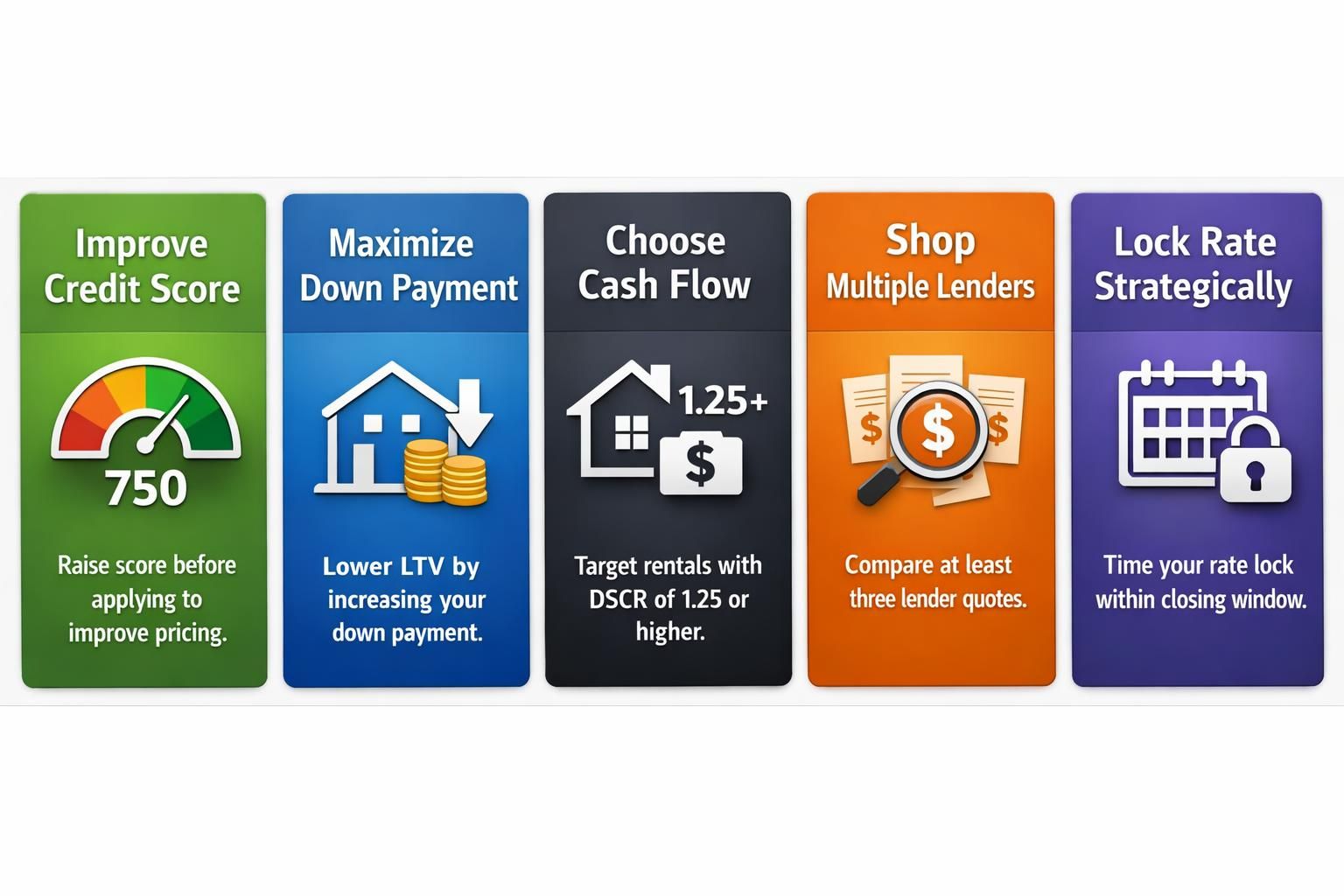
Improve Your Credit Score Before Applying: Even a modest increase in your credit score can move you into a better pricing tier. Pay down high-balance credit cards, dispute any inaccuracies on your report, and avoid opening new accounts in the months leading up to your loan application. A 740 score typically unlocks significantly better rates than a 680.
Maximize Your Down Payment: If cash reserves allow, increasing your down payment lowers your LTV and reduces lender risk. Dropping from 80% LTV to 75% LTV can sometimes yield a rate improvement of a quarter point or more, which compounds to substantial savings over the loan term.
Choose Properties with Strong Cash Flow: Target rental properties that generate a DSCR of 1.25 or higher. Stronger cash flow not only improves your rate but also makes the deal more resilient to market fluctuations. If a property's numbers are borderline, consider whether raising rents or reducing operating expenses could push the DSCR into a more favorable range before you apply.
Shop Multiple Lenders: Even if you've had a great experience with one lender, compare offers from at least three sources. Rate quotes can vary by half a percentage point or more for the same borrower profile, and shopping around gives you leverage to negotiate. Use those competing quotes to push your preferred lender to match or beat the best offer.
Lock Your Rate Strategically: Interest rates fluctuate, and timing your rate lock can save or cost you money. Monitor market trends and lock when rates are favorable, but don't wait so long that you risk missing your closing window. Many lenders offer 30- to 60-day locks, so plan your timeline accordingly.
These tactics put you in control of the variables that actually matter. While repeat borrowing may earn you goodwill and process efficiencies, these five steps directly improve the rate you'll pay on every loan.
Comparing Current DSCR Loan Rate Trends
Rate environments shift over time, and staying informed about current trends helps investors make smarter financing decisions. As of September 2026, DSCR loan rates reflect a combination of broader economic conditions and investor-specific risk factors.
Monitor Weekly Rate Updates: DSCR loan rates can change week to week based on bond market movements and lender appetite. Checking weekly rate reports helps you understand whether rates are trending up, down, or holding steady. This knowledge informs whether to move quickly on a deal or wait for a more favorable window.
Compare Rates Across Multiple Lenders: Different lenders price risk differently, and their rate sheets can vary significantly. Some lenders specialize in high-credit borrowers and offer more competitive rates for that segment, while others focus on flexibility for investors with lower scores or unconventional properties. Comparing offers from multiple sources ensures you're not leaving money on the table.
Understand Rate Variability by Scenario: Rates can differ based on whether you're purchasing or refinancing, the property's location, and the loan amount. For example, a purchase loan on a single-family rental in a strong market might price differently than a cash-out refinance on a multi-unit property in a secondary market. Recognizing these nuances helps you set realistic expectations for each deal.
Factor in Discount Points: Some lenders allow you to buy down your rate by paying discount points upfront. If you plan to hold the property long term, paying points to lower your rate can reduce your total interest cost. Run the break-even math to determine whether this strategy makes sense for your investment horizon.
Stay Updated on Market Conditions: Economic indicators, Federal Reserve policy, and real estate market performance all influence DSCR loan pricing. Investors who stay informed about these trends can time their financing decisions more effectively and avoid locking in rates during unfavorable periods.
Keeping a pulse on rate trends and lender competition allows you to act decisively when opportunities arise and avoid overpaying for capital.
So, do repeat borrowers get better DSCR loan rates? The evidence suggests that while formal loyalty pricing is uncommon, returning investors often enjoy smoother processes, faster approvals, and stronger negotiating positions. However, the rate itself remains anchored to credit score, LTV, DSCR, and property fundamentals, not the number of times you've worked with a particular lender.
Your best strategy is to treat every loan as a fresh opportunity to optimize terms. Improve your credit, shop multiple lenders, structure deals with strong cash flow, and leverage competition to secure the lowest possible rate. Repeat business builds relationship capital that can streamline closings, but the most competitive pricing still comes from disciplined preparation and aggressive comparison shopping.
If you're ready to explore your options and see how your borrower profile stacks up, get a personalized DSCR loan quote and compare rates tailored to your next investment property.