The commercial real estate landscape is shifting dramatically, with industry analysts predicting a significant distressed property wave for investors on the horizon. Current market conditions suggest that distress rates could reach 14.5-15% by the end of 2026, creating unprecedented opportunities for strategic investors. This market downturn may present acquisition opportunities that haven't been seen in over a decade, particularly in Class C multifamily properties where occupancy challenges and delinquency issues are creating potential value-add scenarios.
Smart investors are already positioning themselves to capitalize on these emerging opportunities through strategic financing arrangements and repositioning strategies. Understanding how to navigate this distressed property wave for investors requires careful analysis of market trends, proper financing structures, and tactical execution timing.
Identifying Prime Distressed Property Opportunities
Recognizing quality distressed property opportunities requires a systematic approach to market analysis and property evaluation. The current environment presents specific indicators that investors should monitor closely.
Class C Multifamily Properties: Properties experiencing lower occupancy rates and delinquency issues may offer significant discounts from peak valuations
Commercial Real Estate with Rising NOI Gaps: Properties where net operating income has declined due to market pressures, creating repositioning potential
Markets with Supply Pressure Relief: Areas where new construction has slowed, potentially improving absorption rates for existing inventory
Properties with Financing Challenges: Assets where current owners face refinancing difficulties, creating acquisition windows for prepared investors
Market Downturn Acquisitions Strategy Framework
Developing a comprehensive market downturn acquisitions approach involves understanding both timing and execution elements that could maximize investor returns during distressed periods.
Due Diligence Acceleration: Streamlined property evaluation processes to move quickly on time-sensitive opportunities
Capital Deployment Timing: Strategic reserve management to ensure liquidity during peak distress periods
Portfolio Diversification Balance: Mixing distressed acquisitions with stable performers to manage overall risk exposure
Exit Strategy Planning: Clear repositioning timelines and market stabilization assumptions built into acquisition models
Essential Financing Preparations for Distressed Acquisitions
Securing appropriate financing solutions for distressed property acquisitions requires understanding how lenders may adjust their criteria and terms as market conditions evolve.
DSCR Loan Qualification Readiness: Understanding how debt service coverage ratios might be evaluated differently for distressed properties
Bridge Financing Arrangements: Short-term funding solutions for quick closings on time-sensitive opportunities
Renovation Capital Access: Additional funding sources for value-add improvements and repositioning projects
Lender Relationship Cultivation: Establishing pre-approval processes and communication channels with experienced distressed property lenders
Step-by-Step Distressed Property Evaluation Process
A systematic evaluation process helps investors assess distressed properties efficiently while identifying the most promising repositioning opportunities.
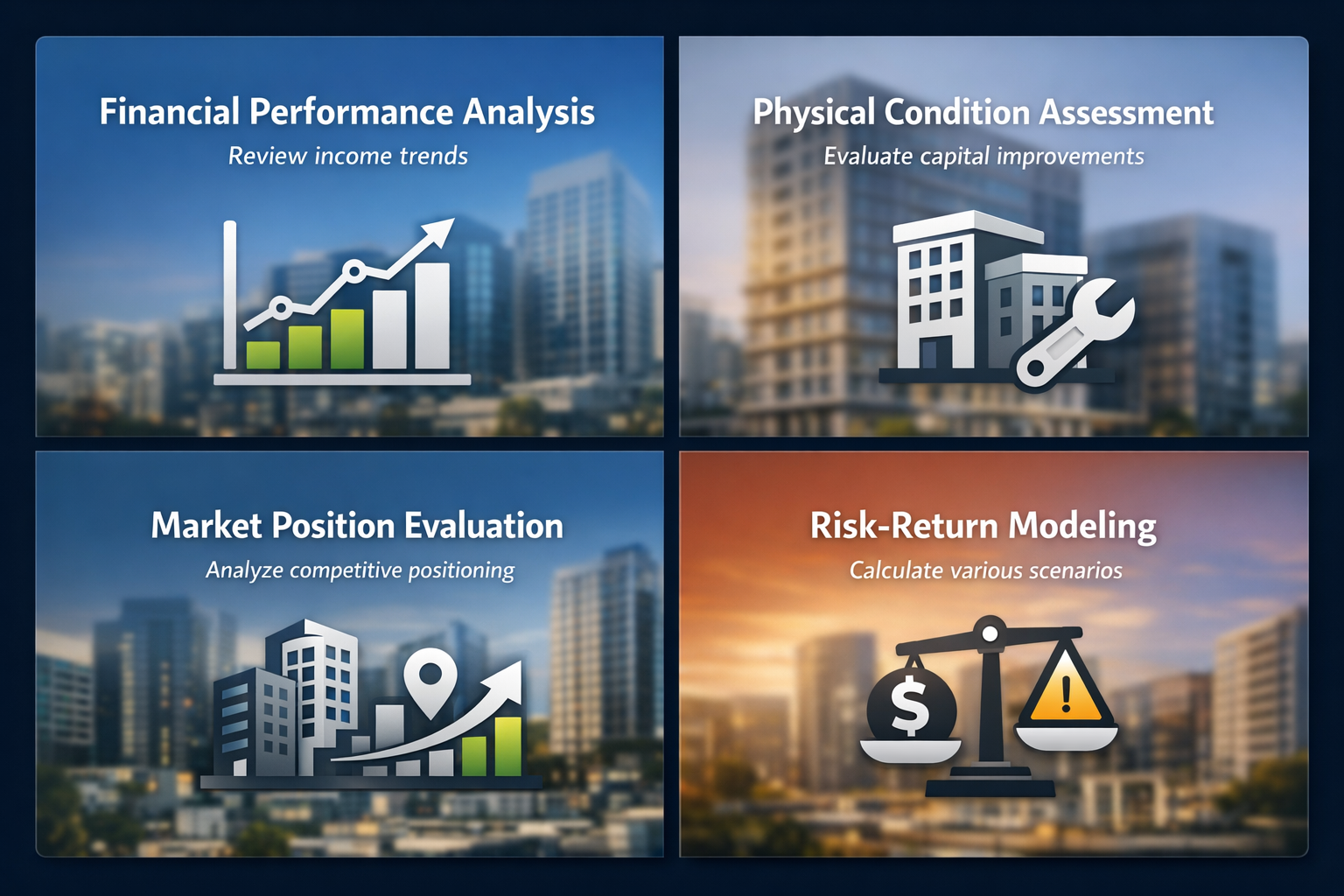
Financial Performance Analysis: Review historical income and expense trends to understand the root causes of distress and potential for improvement
Physical Condition Assessment: Evaluate required capital improvements and their impact on repositioning costs and timeline
Market Position Evaluation: Analyze competitive positioning and potential for rent growth or occupancy improvement post-acquisition
Risk-Return Modeling: Calculate various scenarios including best-case repositioning outcomes and conservative stabilization projections
Successful repositioning of distressed properties requires a structured approach that addresses both immediate stabilization needs and long-term value enhancement.
Immediate Stabilization Focus: Address critical maintenance issues and occupancy challenges to halt further deterioration in property performance
Revenue Optimization Implementation: Analyze rent roll opportunities and implement market-appropriate pricing strategies for unit turnover
Operational Efficiency Improvements: Streamline property management processes and expense structures to improve net operating income
Capital Improvement Prioritization: Sequence renovations and upgrades based on return on investment and market positioning requirements
Exit Timeline Management: Monitor market recovery indicators to optimize hold periods and disposition timing
Maximizing Returns Through Strategic Timing
The distressed property wave for investors presents a unique window where strategic acquisition tactics could significantly impact overall investment returns. Market analysts suggest that the peak distress period may create the most favorable acquisition conditions, but investors must balance opportunity with execution capability. Properties acquired during peak distress periods might offer the greatest discounts from stabilized values, while those purchased during early recovery phases could benefit from improving market sentiment and financing availability. Understanding these timing dynamics helps investors optimize their capital deployment and repositioning strategies for maximum effectiveness.
The approaching distressed property wave for investors represents one of the most significant acquisition opportunities in recent market history. With commercial real estate distress rates potentially reaching 14.5-15% by year-end 2026, prepared investors have the chance to acquire quality assets at substantial discounts. Success in this environment requires careful preparation, strategic financing arrangements, and disciplined execution of repositioning strategies.
Investors who position themselves with appropriate rental financing options, clear evaluation processes, and systematic repositioning approaches may find themselves well-positioned to capitalize on these market conditions. The key lies in maintaining both the financial flexibility to act quickly and the operational expertise to execute successful turnaround strategies.
As market conditions continue to evolve, staying informed about distress trends and maintaining strong lender relationships will be crucial for maximizing opportunities in this changing landscape.